Cambridge IGCSE is offered in Singapore mainly through private international schools, since local MOE schools follow the Singapore-Cambridge GCE syllabus instead. Among the IGCSE schools in Singapore, Global Indian International School (GIIS) Singapore is one of the most established options, offering the Cambridge IGCSE programme for Grades 9 and 10 (ages 14–16) at its SMART Campus in Punggol, with a consistent track record of A* and distinction results.
If you’re a parent researching secondary education options in Singapore, you’ve probably noticed that ‘IGCSE’ comes up often — and for good reason. It’s one of the most internationally recognised qualifications a teenager can hold before moving into pre-university programmes like the IB Diploma or A Levels. This guide explains what Cambridge IGCSE actually involves, where you can study it in Singapore, what it costs and how the admissions process works — using GIIS Singapore as a worked example of what a well-run IGCSE programme looks like in practice.
Key Takeaways:
- Cambridge IGCSE in Singapore: Mainly offered through private international schools.
- MOE Schools: Follow the Singapore-Cambridge GCE syllabus instead of IGCSE.
- GIIS Singapore: One of the established international schools offering Cambridge IGCSE.
- Grades & Ages: IGCSE is offered for Grades 9–10, typically ages 14–16.
- Academic Results: GIIS has a track record of A* and distinction results.
What Is Cambridge IGCSE?
The Cambridge International General Certificate of Secondary Education (IGCSE) is a two-year secondary school qualification developed by Cambridge Assessment International Education (CAIE), a department of the University of Cambridge. It’s designed for students aged 14 to 16 and is typically taken across Grade 9 and Grade 10.
Unlike a single fixed syllabus, Cambridge IGCSE gives schools access to a bank of more than 70 subjects, including around 30 languages. This flexibility lets each school build a subject combination suited to its student population, while still meeting Cambridge’s global assessment standards. Students are graded on a scale from A* to G, using a combination of statistical benchmarking and examiner judgement and results are recognised by universities and employers worldwide.
For parents, the practical value is straightforward: an IGCSE certificate signals that a student has been assessed against an internationally benchmarked standard — not just a locally set one. This matters a great deal for expatriate families who may relocate again and for Singapore-based families planning an international university pathway.
Examination timeline: Cambridge IGCSE exams are held in May/June and October/November each year, with results released in August and January respectively. This differs slightly by school and cohort, so always confirm exact windows with your chosen school.
Where Can You Study Cambridge IGCSE in Singapore?
Singapore’s Ministry of Education (MOE) mainstream schools follow the Singapore-Cambridge GCE O-Level or N-Level pathway, not Cambridge IGCSE. To study Cambridge IGCSE in Singapore, families generally look toward:
- International schools authorised by Cambridge Assessment International Education to deliver the IGCSE syllabus
- Schools that combine IGCSE with a clear progression route into IB Diploma, A Levels, or another recognised pre-university qualification
- Schools registered with Singapore’s Committee for Private Education (CPE), which regulates private education institutions in the country
This is where school selection becomes important. Not every private school offering ‘international curriculum’ is Cambridge-authorised and not every Cambridge school has the same depth of subject offering, teacher experience, or results track record. Parents evaluating IGCSE schools in Singapore should look specifically for CAIE authorisation, CPE registration and a transparent multi-year results history — not just marketing claims of being ‘the best.’
Why IGCSE at GIIS Singapore Stands Out? A Cambridge IGCSE School Worth Knowing
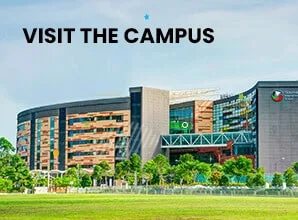
Global Indian International School (GIIS) Singapore, based at the SMART Campus in Punggol, is one of the schools offering Cambridge IGCSE as part of a structured academic pathway. A few specifics worth noting:
- GIIS introduces Cambridge education from Grade 6, running through Cambridge Lower Secondary (CLSP) in Grades 6–8 before students move into Cambridge IGCSE in Grades 9 and 10. This continuity means students aren’t parachuted into an unfamiliar assessment style at age 14 — they’ve been building toward it for years.
- The school is registered with Singapore’s Committee for Private Education (CPE Reg No. 200912349N) and holds EduTrust certification, two markers parents can independently verify when assessing legitimacy and governance standards.
- GIIS is part of the Global Schools Group, which operates campuses across multiple countries, giving the Singapore campus access to shared curriculum research, teacher training and academic benchmarking across its international network.
This kind of structural continuity — from CLSP through to IGCSE at GIIS Singapore — is one of the practical reasons GIIS is frequently mentioned among the best IGCSE schools in Singapore as students experience a single, coherent academic philosophy rather than switching schools or curricula mid-secondary.
What is the Success Rate of Cambridge IGCSE Results at GIIS Singapore?
Results are one of the clearest ways to evaluate any school’s academic delivery. Over the past three academic years, GIIS Singapore has reported:
| Metric | Result |
| Distinction/Merit rate | 100% |
| Students scoring A* and A overall | 80% |
| Students consistently scoring A* | 85%+ |
These figures reflect a sustained pattern rather than a single strong year, which is a more reliable signal of academic quality than an isolated result. Parents comparing schools should ask directly for multi-year data like this — a credible school should be able to provide it without hesitation.
What are the Subjects Offered in the Cambridge IGCSE Programme?
At GIIS Singapore, the IGCSE curriculum spans Grades 9 and 10, with core and elective subjects designed to build both academic depth and cross-disciplinary skills.
| Subject Area | Grade 9 Subjects | Grade 10 Subjects |
| English | English | English and Literature in English |
| Mathematics | Mathematics | Mathematics (without coursework) |
| Second Languages | Language 2 (French, Hindi, or Tamil) | English as a Second Language
Hindi as a Second Language Foreign Language (French) Tamil GCE ‘O’ |
| Science | Science (Biology, Chemistry, Physics) | Biology, Physics, Chemistry |
| Humanities & Business | Social Studies (SST) | Economics
Business Studies Environmental Management |
| Technology | Information and Communication Technology (ICT) | Computer Science |
| Global Perspectives | Global Perspectives | Global Perspectives |
| Physical Education | Physical Education | Physical Education |
This range reflects the broader Cambridge philosophy: students aren’t forced into an early, narrow specialisation. Instead, they build a foundation across sciences, humanities, languages and applied subjects like ICT and Global Perspectives — the latter specifically designed to develop research and critical-thinking skills that carry into IB Diploma or university-level work.
What are the Cambridge IGCSE Fees in Singapore?
Fee transparency is one of the most common concerns parents raise when comparing IGCSE schools in Singapore and it’s a fair one — international school fees vary widely and are typically reviewed annually.
At GIIS Singapore, the published fee structure includes:
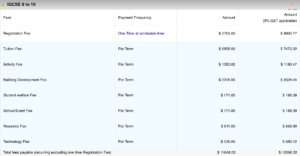
Because tuition fees are updated annually and can vary by grade and intake year, the most accurate and current figures should always be confirmed directly through the school’s official fee structure page or by speaking with an admissions counsellor.
Tip for parents: When comparing fees across schools, ask specifically what’s included — registration fees, tuition, exam entry fees, uniform and resource fees are sometimes quoted separately. A like-for-like comparison protects you from underestimating the total annual cost.
How Admissions Works for Cambridge IGCSE in Singapore?
The admissions process for Cambridge IGCSE at GIIS Singapore follows the same general structure used across the school’s other curricula, which keeps things predictable for families with children in multiple grade levels.
- Submit an enquiry through the school’s enquiry form or admissions counsellor
- Attend a counselling session to discuss curriculum fit, subject choices and academic history
- Assessment — students take a placement assessment to determine their level of understanding across core subjects
- Document submission, typically including:
- Student’s birth certificate
- Residential address proof
- Parent’s income certificate
- Medical certificate
- Recent passport-sized photographs
- Application review, with confirmation communicated by the admissions team and trackable through the MyGIIS parent portal
Applications are accepted year-round, with seats confirmed on a first-come, first-served basis subject to availability. Families relocating to Singapore mid-year should note that rolling admissions make it possible to enrol outside the traditional academic-year start.
Rounding Off: How to Evaluate Any IGCSE School in Singapore?
To evaluate whether a school offering Cambridge IGCSE curriculum in Singapore is the right fit for your family, ask the following questions:
- Is the school CAIE-authorised to deliver the Cambridge IGCSE syllabus?
- Is it registered with Singapore’s CPE and does it hold valid EduTrust certification?
- Can the school show multi-year results data, not just a single strong cohort?
- Is there a clear pathway after IGCSE — into IB Diploma, A Levels, or another recognised pre-university programme?
- Is the fee structure published and itemised, with registration, tuition and other costs clearly separated?
- What subject range is actually offered, versus what’s theoretically available under the Cambridge syllabus?
- What support exists for transitioning students — especially relevant for expatriate families arriving mid-year?
A school that answers these questions clearly and without hesitation is generally a stronger long-term choice than one relying primarily on rankings language or promotional claims.
GIIS Singapore meets each of these criteria with a documented results history, CPE registration, EduTrust certification and a structured Cambridge pathway running from Grade 6 through IGCSE and into IBDP. For families who want to see this in practice rather than read about it, the most useful next step is a direct conversation with the school’s admissions team or a campus tour — the details that matter most to your child’s specific situation (subject fit, transition support, current fees) are best confirmed there.
Frequently Asked Questions
What is Cambridge IGCSE?
Cambridge IGCSE is an internationally recognised secondary school qualification developed by Cambridge Assessment International Education, typically taken by students aged 14–16 over a two-year programme.
Is Cambridge IGCSE the same as Singapore’s O-Level?
No. Singapore’s mainstream MOE schools follow the Singapore-Cambridge GCE O-Level syllabus, which is separate from the international Cambridge IGCSE offered by private international schools like GIIS.
How many subjects can a student take in IGCSE?
Cambridge offers over 70 subjects globally and students typically take between 5 and 14, with English, Mathematics and Science forming the core.
Which grades does GIIS Singapore offer Cambridge IGCSE for?
GIIS Singapore offers Cambridge IGCSE for Grade 9 and Grade 10 students, generally aged 14 to 16.
What comes after Cambridge IGCSE at GIIS Singapore?
Students typically progress into the IB Diploma Programme (IBDP), offered at GIIS Singapore for Grades 11 and 12, as a pre-university pathway.
Team GIIS
Team GIIS is a group of enthusiastic writers who bring the vibrant world of GIIS in Singapore to life through engaging blog posts. Dedicated to highlighting the school’s teaching methodology, innovative learning environment, and diverse curriculum options like IB, Cambridge and CBSE, they aim to connect with parents, educators and students, sharing insights and stories that inspire and inform the school community.