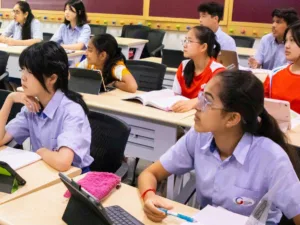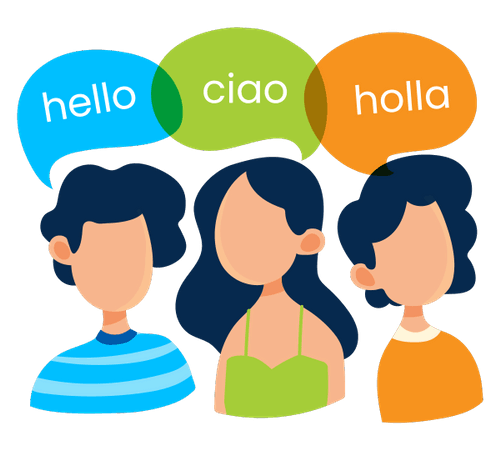
There are various activities or exercises that can help improve your kid’s ability to exchange information; one of them is communication games. There are many communication games, such as Can You Hear Me Now, Telephone, Mad Gab, and many more.
The main purpose of these games is to show the importance of proper communication to improve kids’ verbal and nonverbal conversational skills. In Singapore IB school, your kid will be taught fun communication games similar to the connection and team-building games.
What Are Communication Games?
Communication games are activities or exercises that enhance your child’s ability to exchange information. There are various communication games for students that can help strengthen your child’s verbal and nonverbal conversation skills.
Why Are Communication Games Important?
Communication exercises and games can help teammates to practice interacting and exchanging ideas in a fun yet challenging environment. These games are important as they can help improve your child’s conversation and writing abilities, improve their listening skills and make them mindful of messages.
Benefits of Communication Games in the Classroom
There are several kinds of things that a teacher can do in the classroom to improve a student’s participation and help them learn new vocabulary. The teachers also help your child learn more about other students and so much more. There are various benefits of communication games and activities that your child can take advantage of:
● It can help your child develop their speech and ability to think. They will be more confident, have better control, and know how they relate to other family members, other people, and the society in which they live.
● It can improve their vocabulary.
● It can encourage your child to participate in group activities and take turns playing with others.
● As your child grows, they will learn how to follow and fit properly into structured programs, e.g., school activities, if they take part in communication and play activities during their early years.
● It can help boost creative thinking and strategic thinking when your child grows older.
How to Teach Communication Skills to Students?
Some of the ways teachers in Singapore International schools teach students communication skills are as follows:
● They teach kids empathy
When teaching students how to communicate, the teachers look to develop empathy and a sense of what the other individual is thinking and feeling. For some students, it needs to be taught explicitly. When the students begin to see that their viewpoint is not the only one, they will become better listeners and speak respectfully with others.
● They teach conversational skills.
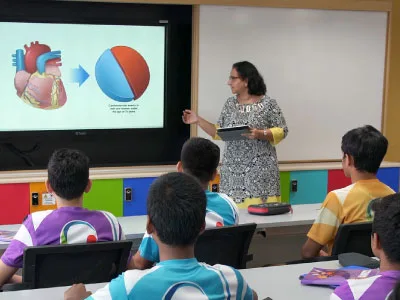
Sometimes, teachers can explicitly teach students how to have good conversations with others. There are many activities in the world, but most of them will prove worthless in helping students develop their skills. Teachers usually act as models to the students on how to have a productive conversation.
Though puppets are excellent tools and can be used for role-playing, the preferred method is through video modeling; this is where professional actors look to model examples of communication and non-communication skills. There are many classroom games for learning communication that your kid can be a part of.
Tips to Improve Communication Skills in Students
There are many tips that can help your child improve their communication skills as a student:
● They need to develop the habit of listening
People mostly want to know that they are being heard, and it is important that students listen to what the other person is saying. Your child must develop the habit of listening and try to understand what the other person is speaking instead of looking to formulate a response. They can choose to ask for clarifications to avoid any sort of misunderstanding, and at that point, the person speaking to them would be the most important.
● It is important to who you are talking to
It is okay for students to use acronyms and informal language when communicating with their buddies. But students should understand that there is a specific way to talk to teachers, and they cannot use informal messages.
● Body language is important
The best games to improve communication skills can also help to improve the body language of young students. It is important for kids to learn about good body language and maintain that in front of their elders, especially parents and teachers.
● Things should be written down
You must take notes while you are talking to your teacher or an elder. While being part of important classes or activities, it is also important to not only rely on memory but also write the important things down.
● You must maintain a positive attitude and smile
A positive attitude and a smile are good signs of proper body language. This is because your kid’s positive attitude will shine through, and the other person will know it. It is important to smile often and bring out a positive attitude in the top schools in Punggol.
21 Communication Games for Students
In an international school, your child can improve their communication via the best communication games for students. There are more than 20 communication games for students that can help them enhance their communication.

6 Communication Games for Elementary Students
The six best communication games for elementary students are as follows:
● Telephone
● Emotional Charades
● Internet resources
● Audiobook interaction
● Role-playing
● Follow all the instruction activities
Out of all these games, the last one is easily the most informative and exciting of them all. The top teachers in Singapore International schools will provide these communication games to elementary students to enhance their communication skills.
5 Communication Games for Middle and High School Students
There are many communication games for middle and high school students that can improve their communication skills; they are as follows:
● Famous Pairs
● The Enigmatic self
● The best part of our school
● Blindfold game
● Stand up for fillers
All of these are exciting communication games that can easily be played in the classroom itself. These games will help middle and high school students to improve their communication skills for further studies.
5 Verbal Communication Games
The top five verbal communication games for your kids are as follows:
● Play telephone
● Show and tell
● Role-playing
● Point and Tell
● The Best Parts of our school.
These are the most exciting verbal games that top teachers in International schools will teach your children that can help improve communication skills. This is why you should enroll your kids in GIIS (Global Indian International School) in Singapore.
5 Nonverbal Communication Games
There are some nonverbal communication games that your kids can take advantage of, they are as follows:
● You don’t say
● Mimes
● Picture Telling with writing
● Mirrors
● Movement sticks
All the above games are nonverbal and will help your kids at International schools improve their communication skills for use in later years. The best teachers there can guide your kids to help develop good communication.
See Also – How To Help Your Child Find Their Passion ?
Conclusion
As parents, you would want to enroll your kids in a school that will be bright for your future; this is why it is important you choose a good school and syllabus. GIIS is the best International school where your child can enhance their communication skills and study under an internationally recognized syllabus. With the help of the best communication games and activities, your child will develop great communication skills.

Team GIIS
Team GIIS is a group of enthusiastic writers who bring the vibrant world of GIIS in Singapore to life through engaging blog posts. Dedicated to highlighting the school’s teaching methodology, innovative learning environment, and diverse curriculum options like IB, Cambridge and CBSE, they aim to connect with parents, educators and students, sharing insights and stories that inspire and inform the school community.