While being a student may seem easy, actual learning takes hard work, techniques and perseverance. Moreover, effective learning strategies can improve learning, leading to greater student success.
In this article, we’ll explore 13 simple yet powerful study techniques that students, across age groups, can implement to enhance their learning experiences as well as outcomes. Whether you’re a primary school or high school student, these techniques will help you optimise your study routine to reach your full potential.

1. Use active learning techniques
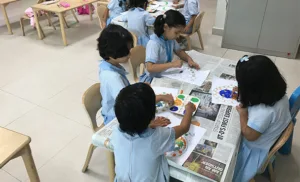
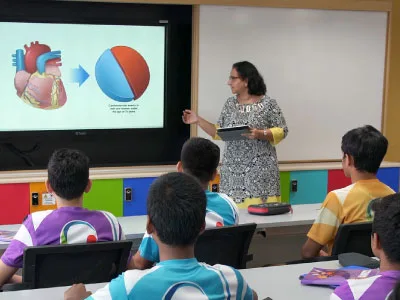
Active learning techniques can be individual or group tasks. Engaging in such techniques, such as, summarising concepts in your own words, teaching your siblings, friends, peers or participating in group discussions, help you to enhance your comprehension and retention.
Some examples are techniques like ‘Think, pair, share’, where you can think about a question individually, discuss your thoughts with a partner, and eventually share the learning with a bigger group. Similarly, problem-based learning, where you work along with a group to solve complex problems through knowledge application, can help enhance learning outcomes.
2. Practice retrieval and spaced repetition
The retrieval strategy requires you to ‘pull out’ information you already know, which greatly helps in boosting your learning. Instead of passive learning like reviewing your notes, you actively test your knowledge. For example using flashcards or regular quizzing to test your knowledge.
Recalling information from memory can enhance its long-term retention. Combine this technique with spaced repetition, where you revise concepts at regular intervals to reinforce learning. You can also try breaking down study material into smaller chunks and review them at spaced intervals. This helps in building up your knowledge over a period of time. Make use of AI-powered tools like Quizlet or Anki to schedule your flashcard reviews.
3. Try out mnemonics
Mnemonic devices are memory aids that help one to remember information in an effective manner. Techniques, such as acronyms, visualisation of the information to be retained, creating rhymes can make it easier to recall complex concepts, dates, or formulas.
You can start with the simple ones for eg. many younger students use Please Excuse My Dear Aunt Sally to remember PEDMAS (Parenthesis, Exponent, Multiplication, Division, Addition, Subtraction). Then, gradually move on to creating complex mnemonics. Remember this technique is only limited by your imagination!
4. Enhance learning through visuals
Some students learn better through visuals due to the way their brains process and retain information. Visual-spatial learning or the ability to perceive, analyse and understand information through visuals can help some students to better establish connections between different concepts.
Visual aids, such as diagrams, flowcharts or mind maps can be powerful tools to organise information, thereby enhancing the overall learning outcomes.
Also read: 7 easy ways to improve the reading skills of primary school students
5. Create your own study schedule
Determine the most productive hours of the day for you and build your schedule around those hours to accommodate your other commitments.
By dedicating time slots to tasks in hand you can prioritise tasks, avoid procrastination and maintain consistency in your studies. It will help you to set realistic goals for yourself, optimise your time and ultimately lead to reaping the benefits.
6. Lay down clear goals
Remember, goal setting is the first step towards achieving your goals — it helps you to keep yourself motivated and focused. To make the process fruitful, define specific, measurable, achievable, relevant, and time-bound (SMART) goals for each study session. This will provide you a sense of direction and make your learning purposeful.
7. Have a breather
Study shows that taking meaningful breaks, even if they are short 5-10 min breaks, help when you are planning to study for a longer period of time. They help you refresh your mind and body, increasing your productivity as you process the information better.

8. Optimise your study environment
Creating an environment conducive to learning can bring many benefits. For example, finding a study space with minimal distraction, good lighting, and comfortable seating can help you to focus better.
You can even customise your study area with tools and resources that facilitate your productivity. Check for simple things to begin with, like, see if your study area has bright light that helps you to improve your focus.

9. Stay healthy and well-rested
A healthy body supports a healthy mind. Therefore, prioritise your overall wellness by maintaining a nutritious diet, staying hydrated, and getting enough sleep. A well-rested mind is more alert and better equipped to learn and retain knowledge.
10. Collaborate with peers
Engaging in group study sessions can provide varied perspectives and foster a collaborative learning environment. You can do it through study groups, group projects, peer tutoring, peer review, collaborative note-taking, interactive workshops etc. Explaining concepts to peers and discussing challenging topics with your friends can deepen your understanding of subject matter.
11. Use technology judiciously
In today’s modern world, where technology is paving the way for our present and future, students must leverage technology to enhance their learning experience.
Efficient use of this huge vault of assets for students — that includes educational apps, online resources, and digital tools that can align with your learning style – can work wonders! However, you have to be mindful of potential distractions and set boundaries to stay focussed on your individual goals.
12. Don’t hesitate to ask questions
An oft repeated direction by parents and teachers – ask questions, when in doubt!
When you encounter difficulties while studying, you must seek clarification. It stimulates active engagement and critical thinking, thereby helping you to understand complex topics better.
13. Be open to multimodal learning
Different students may benefit from learning modalities. For example, some learn better through visuals, some are auditory learners (learning through hearing), some are kinesthetic learners who reap the maximum benefits through hands-on activities. Alternatively, students can try adopting multimodal learning where they learn through a combination, including online learning.
If you are keen to know more about GIIS, please don’t hesitate to reach out to our admissions counsellors.

Shubhdarshani Mitra
Shubhdarshani has over 10 years of experience in content creation, curation and editing. She has worked for Indian newspapers, school magazines and international news websites where she worked closely with the leadership on the execution and communication of the content strategy. Aside from work, she’s a passionate B&W photographer and storyteller.