Global
All Cities
Where would you like to study? Select cities to refine your search.
Any Curriculum
Find a campus based on the curriculum offered.
Global
Global
All Cities
Where would you like to study? Select cities to refine your search.
Any Curriculum
Find a campus based on the curriculum offered.
Search

From Screen Time to Learning Time: How students can benefit from Digital Literacy

Learning

Technology and the usage of technological devices are, for the most part, unavoidable in our current times. Even young children now have access to and make use of computers, tablets and smartphones to communicate with their families, as part of a play activity or in everyday life.

Screens and devices, as a result, have become very much a part of our children’s education, communication and entertainment needs. However, we know that too much screen time may harm children. For example, digital overuse could result in young children experiencing shorter attention spans, increased risk of obesity, decreased creativity and other such concerns.

As teachers and parents, the key question to address is not just how much time children are spending in front of a screen. According to an authority on this subject, the American Academy of Pediatrics says it’s more crucial to know, monitor and guide what children are engaging in during their screen time.

By teaching children digital literacy, parents and educators can help children maximise the positive benefits of technology while staying safe and not overusing their devices.

‍

Digital Literacy: Why is it important?

Digital literacy is the ability to effectively navigate digital platforms and understand, evaluate, use and create content to communicate using a range of digital tools. Digital literacy is also sometimes called information literacy and includes internet safety.

By becoming digitally literate, our children learn to use technology safely, competently and responsibly.

‍

‍

Digitally literate students can:

1. Navigate the digital world smoothly. Since they have been taught right from wrong, they learn to exercise ethical decision-making skills while browsing and accessing resources online. Students can conduct research for class assignments, explore new technological developments and applications, and create their own content confidently.

‍

2. Evaluate information and sources. As part of their digital awareness, students are taught to distinguish between reliable and unreliable sources of information. In higher grades, they are able to select high-quality and trusted websites to conduct their research and to identify bias in media, data and online resources.

‍

‍

3. Create content and communicate aptly. Children of all ages are now able to create their own content and express themselves through blogs, vlogs, podcasts, app-creation and more. Digital literacy enables students to understand the importance of attribution of others’ work, while they stay creative and do their own research for their original content.

‍

4. Be digitally safe. While younger children need monitoring when using devices and online resources, all children are taught digital safety rules as part of a digital literacy programme. They know how to set strong passwords, protect their personal information, avoid contact with strangers online and to check with an adult before downloading anything they don’t already know about.

‍

Also read:  Digital safety and Well-being: 5 ways to navigate through the online world

‍

Online risks and the longevity of digital footprints

With the amount of new online apps, multiple ways of accessing information and media sources, and the proliferation of false news, it is an on-going challenge for everyone, not just students, to stay aware of the constantly changing landscape and understand the risks involved (existing and new) in the online world.

It is therefore important for students to be guarded in how they use technology, to report incidents of bullying and be gracious in their online interactions, just as they are in real life.

Older students must realise that it is important to manage their digital footprint right from their student days, because the information that they put online or on social media platforms may live there forever. Recruiters are now accustomed to doing online background checks and while some platforms are purely for personal use, it is advisable to be careful about what we post and share online, for perhaps, eternity.
‍

‍


Digital Well-being and Information Literacy at GIIS

The teachers and staff at GIIS prioritise each child’s holistic well-being. As part of our commitment to prepare your child for the future, we implement and support digital literacy initiatives for students throughout their time at GIIS and talk to them about how they can promote their digital well-being.

We incorporate age-appropriate lessons on netiquette and proper online research techniques. Additionally, our counsellors share valuable tips on digital wellness during formal and informal sessions. We place educational posters across campus that feature vibrant illustrations and informative messages that remind children to be mindful of digital well-being.

Well-being captains support your children and are trained to identify unwelcome behaviour and report any concerns to teachers.

GIIS maintains a helpline for students in any sort of crisis. All students are welcome to access this resource. For GIIS Singapore, this number is +65 9723 4938.

Finally, we promote offline activities that support your child’s physical, emotional and mental health. Available activities include yoga, sports competitions, co-curricular activity clubs and classes like reading, dance and music, culinary arts, science clubs and many more.

If you’d like to know more about GIIS students’ technology usage and how we encourage digital well-being in our students, do reach out to us if you are able to visit us in person, we welcome you to book a campus tour for your family.

‍

Selina D Souza

Selina D'souza is a Senior Communications specialist with 10+ years of marketing communications experience in the B2B and B2C IT and Education sector. She is a passionate curator of good content, believes that schools can be a place of creativity and innovation if the right mindset and practices are adopted, and is always looking for more sustainable lifestyle choices.
Featured Blogs

Cambridge IGCSE

What Is the Cambridge IGCSE? A Guide for Parents and Students

A secondary school curriculum plays an important role in shaping a child's academic journey. It influences how a teenager learns, thinks and is assessed, while also affecting the pathways available for senior high school and university. For parents in Singapore exploring different curriculum options, the Cambridge IGCSE is often part of the conversation. As one of the world's most widely recognised secondary qualifications, it offers an internationally oriented approach to education.

Cambridge IGCSE

Cambridge IGCSE Results 2026: Everything Students and Parents Need to Know

If your child is preparing to enter Grade 9 or Grade 10, you have likely already encountered the term ‘IGCSE results’ in parent meetings, school communications, and open days. For those currently comparing IGCSE schools in Singapore, one practical question often stands out: how can a school's results be verified as genuinely reliable, rather than simply a marketing claim

IGCSE

Where Can You Study Cambridge IGCSE in Singapore? Best Schools, Fees & Admissions

Cambridge IGCSE is offered in Singapore mainly through private international schools, since local MOE schools follow the Singapore-Cambridge GCE syllabus instead. Among the IGCSE schools in Singapore, Global Indian International School (GIIS) Singapore is one of the most established options, offering the Cambridge IGCSE programme for Grades 9 and 10 (ages 14–16) at its SMART Campus in Punggol, with a consistent track record of A* and distinction results.

IGCSE Results

Understanding Your Cambridge IGCSE Results: A Complete Guide to Grades, Grading Scales and What Your Results Mean

Cambridge IGCSE results are graded on a scale from A* (highest) to G (lowest), based on a student's Uniform Mark achieved in each subject. An A* reflects a mark of 90–100%, while a G reflects 20–29%. Grades are issued per subject, not as an overall aggregate and are recognised by universities and employers in more than 160 countries.

Top Scholarships

Dr APJ Abdul Kalam Global Skills Scholarship

Eligibility:

Talent Based - Technology

More from same author
Trending Blogs

Cambridge IGCSE

What Is the Cambridge IGCSE? A Guide for Parents and Students

A secondary school curriculum plays an important role in shaping a child's academic journey. It influences how a teenager learns, thinks and is assessed, while also affecting the pathways available for senior high school and university. For parents in Singapore exploring different curriculum options, the Cambridge IGCSE is often part of the conversation. As one of the world's most widely recognised secondary qualifications, it offers an internationally oriented approach to education.

Cambridge IGCSE

Cambridge IGCSE Results 2026: Everything Students and Parents Need to Know

If your child is preparing to enter Grade 9 or Grade 10, you have likely already encountered the term ‘IGCSE results’ in parent meetings, school communications, and open days. For those currently comparing IGCSE schools in Singapore, one practical question often stands out: how can a school's results be verified as genuinely reliable, rather than simply a marketing claim

IGCSE

Where Can You Study Cambridge IGCSE in Singapore? Best Schools, Fees & Admissions

Cambridge IGCSE is offered in Singapore mainly through private international schools, since local MOE schools follow the Singapore-Cambridge GCE syllabus instead. Among the IGCSE schools in Singapore, Global Indian International School (GIIS) Singapore is one of the most established options, offering the Cambridge IGCSE programme for Grades 9 and 10 (ages 14–16) at its SMART Campus in Punggol, with a consistent track record of A* and distinction results.

IGCSE Results

Understanding Your Cambridge IGCSE Results: A Complete Guide to Grades, Grading Scales and What Your Results Mean

Cambridge IGCSE results are graded on a scale from A* (highest) to G (lowest), based on a student's Uniform Mark achieved in each subject. An A* reflects a mark of 90–100%, while a G reflects 20–29%. Grades are issued per subject, not as an overall aggregate and are recognised by universities and employers in more than 160 countries.

GIIS

Mid-Year & Transfer Admissions: Moving Your Child to a Singapore International School (2026)

Relocating to Singapore rarely happens on a school's neat academic calendar. A posting can start in June, a lease can begin in September, a visa can clear in November—and somewhere in between, a child still needs a classroom, a timetable and a group of friends. This is the reality behind expat school admissions mid year in Singapore and it's a far more common situation than most parents expect.

GIIS

Choosing Subjects for IGCSE: A Parent’s Guide to Streams, Options & Future Careers

By age 14, most children have never had to make a decision that shapes their next ten years. Choosing IGCSE subjects is exactly that decision and for parents, it often arrives with more questions than answers. Which subjects matter for university? Does dropping a science close doors? Is a 'safe' combination actually the right one?

Search
History Menu Icon

Our vision is to become a global role model for teaching and learning.

History Menu Icon Secondary

Since its inception in 2002, GIIS has spread quality education through 17 campuses across the globe.

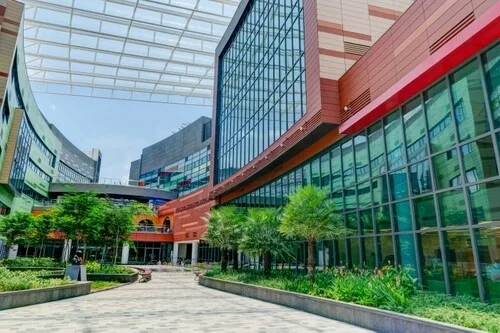
Global Indian International School Singapore smart campus learning environment

SMART Campus

A green, tech-enabled campus with extensive sports facilities that enables a holistic education

  • Kindergarten program at GIIS Singapore smart campus

    Montessori education with a modern touch.

  • Primary school curriculum at GIIS Singapore

    International primary programmes with best holistic learning.

  • Secondary school students learning at GIIS Singapore

    International middle school programmes with best foundation for high school.

  • High school education and curriculum at GIIS Singapore

    International high school programmes with beat launchpads for university.

21st century learning campus at GIIS Singapore

Facilities which are collaborative, creative and adaptable to individual needs.

Holistic education approach with 9 Gems at GIIS Singapore

Award-winning framework for all-round student development

Co-curricular activities at GIIS Singapore

Extra-curricular activities are those activities, often sports-based, that take place outside of the GIIS classroom

Extra curricular activities at GIIS Singapore

Talent shows, performances, competitions, clubs and additional classroom work.

Admission Process Icon

Get an overview of the admissions process

Campus Tour Icon

Register for a tour of the campus to learn more about the school first hand

Book Meeting Icon

You can talk to our Admissions Counsellor online or in-person, as per your convenience.

Admissions Form Icon

Find all forms related to admissions procedure here

Fees Icon

Get information on our fee structure for different grades

Scholarship Icon

Thank you for considering GIIS as a prospective school for your child. Our goal is to make the admissions.