In a Singapore international school like GIIS, holistic education means academics sit alongside eight other areas of development — sport, arts, leadership, innovation, community service, personality growth, skills, and values — inside one structured framework. It isn’t a marketing phrase; it’s how the timetable and activities are actually organised.
It’s natural to wonder what it actually means for your child. Ask ten different parents and you’ll probably hear ten different answers — and that’s okay. This guide breaks down the meaning of holistic education in plain language, explains what holistic learning looks like day to day and shows how it compares to a traditional, exam-first model.
By the end, you’ll have a practical framework for evaluating whether a school’s claim of being ‘holistic’ is real or just a word on a page.
How GIIS Supports Holistic Education Through 9GEMS
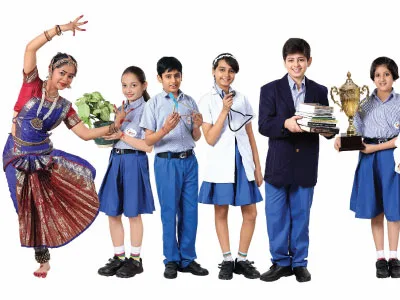
Holistic education supports a child’s academic, physical, social and emotional development. GIIS describes 9GEMS as an award-winning framework that promotes excellence beyond academics, built around nine areas students can explore to become well-rounded individuals and global citizens. Here’s what holistic learning in GIIS’ 9GEMS framework covers under this model:
| GEM | What it covers |
|---|---|
| Academic Excellence | Rigorous, experiential curriculum supported by digital classrooms and data-driven teaching |
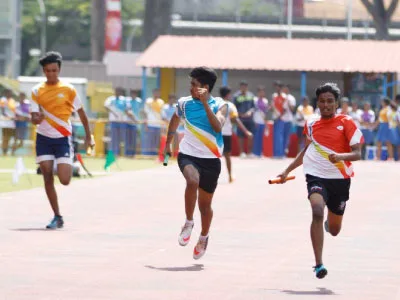
| Sports Excellence | Cricket, football, basketball, tennis, and athletics, building teamwork through competitive sport |
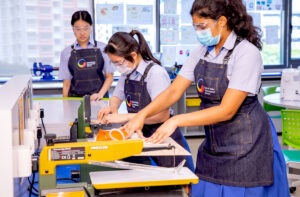
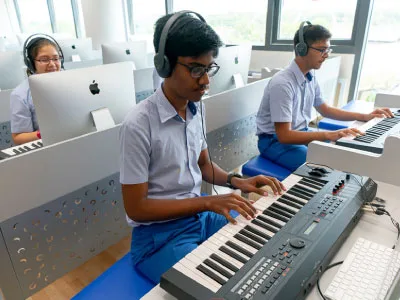
| Skills Development | Hands-on spaces like radio stations, TV studios, and drama studios |
| Visual & Performing Arts | Music, dance, and drama studios with mentorship from subject experts |
| Entrepreneurship & Leadership | Workshops such as the Entrepreneurship Boot Camp, building leadership under guidance |
| Innovation & Creativity | Events like the Real World Challenge Convention, where students solve real problems |
| Personality Development | Mindfulness, meditation, and sport aimed at self-awareness and empathy |
| Community & Care | Charity drives and community events, students’ experiences evaluated to understand their overall development |
| Universal Values | A values programme centred on peace, brotherhood, and empathy, run across all campuses |
What Is Holistic Learning? Understanding the Learning Process Itself
It helps to separate two related ideas: holistic education (the overall philosophy and school structure) and holistic learning (what happens inside the actual learning process).
Holistic learning refers to a method of learning where new information is connected to a child’s existing knowledge, experiences and emotions — rather than memorised in isolation. Instead of asking, ‘Can the child recall this fact?’, holistic learning asks, ‘Can the child understand this fact well enough to apply it, question it and connect it to something else they already know?’
In practice, holistic learning tends to rely on:
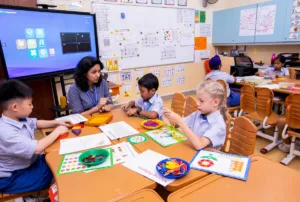
- Inquiry-based learning — students ask questions and investigate, rather than only receiving answers
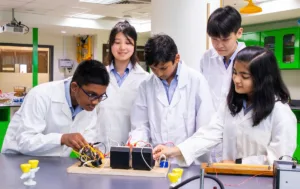
- Project-based and experiential learning — applying knowledge to real, often interdisciplinary problems
- Collaborative learning — working with peers to build understanding
- Reflective learning — students regularly evaluate their own progress, not just their scores
Extracurriculars vs Co-Curriculars: What’s the Difference?
Parents researching Singapore international school extracurriculars often find the terms ECA and CCA used interchangeably, but GIIS in Singapore draws a clear line between them as students are required to choose at least one CCA and one ECA..
| Feature / Category | Extra-Curricular Activities (ECAs) | Co-Curricular Activities (CCAs) |
| Timing & Schedule | Take place after school hours | Built directly into the regular school day timetable |
| Primary Focus | Mostly sports-related (e.g., football, cricket, basketball, tennis) | Creative, artistic, and scientific pursuits (e.g., visual & fine arts, music, performing arts, science clubs) |
| Key Highlights & Events | Athletic training and sports practice | Talent shows, performances, and competitions |
| Requirement Level | Students are required to choose and take at least one ECA | Integrated as a core part of the standard school curriculum |
Holistic Education vs Traditional Schooling: A Side-by-Side Comparison
Parents researching schools often want a direct answer to holistic education vs traditional schooling. Here’s an honest comparison — not every traditional school is rigid and not every holistic school gets it right, but these are the general tendencies.
| Dimension | Traditional Schooling | Holistic Education |
| Primary success measure | Exam scores, class rank | Academic + social-emotional + character growth |
| Teaching method | Lecture-based, content delivery | Inquiry-based, project-based, discussion-driven |
| Role of CCAs | Optional, secondary to academics | Core, structured, resourced |
| Assessment style | Frequent evaluation and tests | Mix of continuous, formative and summative assessment |
| Pace | Uniform pace for all students | Differentiated, often ability- or interest-based |
It’s worth noting: these two models aren’t always opposites. Holistic education complements academic learning as many strong schools blend rigorous academics with holistic structures. The real question for parents isn’t ‘academic vs holistic.’ It’s whether a school treats holistic development as a genuine, resourced priority or not.
How Singapore’s National Framework Makes Holistic Education a Government Policy
This is where Singapore stands apart from many education systems. Holistic education isn’t only a private-school marketing phrase here — it’s an explicit national policy direction from the Ministry of Education.
The Desired Outcomes of Education
MOE’s overarching goal is for every Singaporean student to leave school as a confident person, self-directed learner, active contributor and concerned citizen.
| Policy / Initiative | Core Focus | Impact on Holistic Education | Link to know more |
| Framework for 21st Century Competencies (21CC) | Core values, social-emotional skills, and future-ready competencies integrated across all subjects. | Underpins the national curriculum to prepare students to thrive in a globalised world. | Click here to view Framework for 21st Century Competencies (21CC) |
| PSLE Scoring Reform (Achievement Levels) | Replaced the old T-score system with wider Achievement Level (AL) bands. | Reduces excessive competition and shifts focus from peer ranking to individual mastery. | Click here to view PSLE Scoring Reform (Achievement Levels) |
| Edusave Enhancements (eligibility and approved usage rules apply) | Government-funded accounts for non-academic enrichment | Provides financial support for co-curricular growth and formally recognises non-academic achievements. Singapore Citizen children outside MOE-funded schools receive annual contributions from ages 7 to 16 | Click here to view Edusave Enhancements |
What this means for parents: When evaluating an international school, ask how its own curriculum and programmes support your child’s overall development.
How to Evaluate a School’s Holistic Education Claims: A Parent’s Checklist
Almost every school will tell you it offers a ‘holistic education.’ Here’s how to test that claim during a school visit or open house:
- Ask for the timetable: Is there dedicated, protected time for values education, sport and the arts or is it squeezed in only when exam preparation allows?
- Ask how CCAs are staffed: Are they run by trained coaches and specialist teachers, or informally supervised?
- Ask how progress is reported: Do reports cover only academic grades, or do they also track character, participation and social-emotional growth?
- Ask about class sizes and pastoral ratios: Genuine individual attention requires a workable teacher-to-student ratio.
- Ask how the school defines ‘success’ for a graduating student: A strong answer will go beyond university offers and exam grades.
- Look at the physical campus: Are sports facilities, art studios and maker spaces genuinely used and resourced?
If a school can answer these questions with specifics, its holistic education claim is more likely to be real.
Final Thoughts
Holistic education is about nurturing well-rounded children who grow academically, socially, emotionally and physically. At GIIS Singapore, the 9GEMS approach brings this vision to life by balancing academic excellence with sports, arts, innovation, values and leadership, helping students develop the skills and confidence they need to thrive beyond the classroom.
Book a campus tour at GIIS in Singapore to discover how the 9GEMS approach supports your child’s all-round development.
Frequently Asked Questions
What is the 9GEMS framework at GIIS in Singapore?
It’s a nine-part holistic education framework covering academics, sport, skills, arts, entrepreneurship, innovation, personality development, community care, and universal values, applied across all GIIS campuses.
How do extracurricular activities fit alongside academics at GIIS in Singapore?
At GIIS in Singapore, extracurricular and co-curricular activities are built into the same framework as academics rather than treated as separate from it, with both published results and a dedicated wellbeing survey used to track outcomes.
How is character education taught in a Singapore international school?
Through dedicated programmes rather than incidental lessons. GIIS in Singapore runs a Universal Values Programme focused on peace, brotherhood, and empathy, alongside a separate Personality Development gem covering mindfulness and self-awareness.
What should I look for when choosing a holistic school in Singapore?
Look for dedicated timetabled hours for CCAs and values education, trained specialist staff (not just supervising teachers), transparent reporting that covers more than grades, manageable class sizes and a clear, specific description of what the school considers ‘student success.’

Team GIIS
Team GIIS is a group of enthusiastic writers who bring the vibrant world of GIIS in Singapore to life through engaging blog posts. Dedicated to highlighting the school’s teaching methodology, innovative learning environment, and diverse curriculum options like IB, Cambridge and CBSE, they aim to connect with parents, educators and students, sharing insights and stories that inspire and inform the school community.