Global
All Cities
Where would you like to study? Select cities to refine your search.
Any Curriculum
Find a campus based on the curriculum offered.
Global
Global
All Cities
Where would you like to study? Select cities to refine your search.
Any Curriculum
Find a campus based on the curriculum offered.
Search

10 Life Skills to Teach Your Child at An Early Age

Learning

According to the World Health Organization, life skills are the abilities required for ‘adaptive and positive behaviour’, empowering individuals to effectively navigate the challenges of daily life.” UNICEF characterises life skills as an approach focused on developing behaviour, aiming to strike a balance between knowledge, attitudes, and skills. In this blog, we’ll explore 10 such life skills that can have a positive impact on a child.

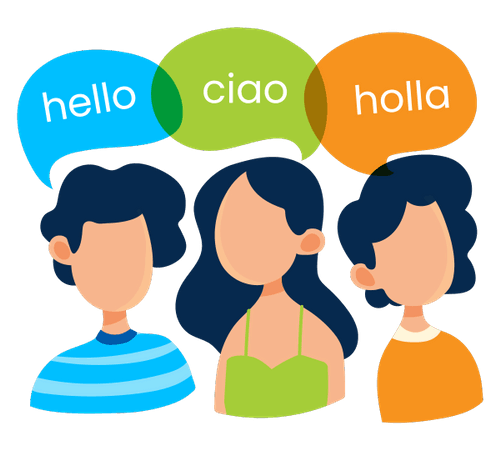
1. Communication skills

Effective communication is important for young learners for their language development, social interaction, self-expression and cognitive skills. Children use language to reason, and make sense of the world around them. Encourage your child to engage in discussions, express themselves confidently, and listen actively.

2. Self-management skills

Self-management, self awareness, self-evaluation are skills that can help young learners deal with their own daily challenges. This could simply mean finishing home assignments after school hours or using a gadget wisely. Encourage them to be creative,  enjoy their own company, and develop a sense of independence.

3. Emotional intelligence

It is also important that children learn to recognise and manage their emotions as well as understand and empathise with the emotions of others. This skill helps them build healthier relationships and navigate social situations more effectively.

4. Navigating skills

Developing navigation skills early helps foster independence. Learning about maps and directions enhances spatial awareness of young learners. It helps children grasp concepts like distance, location, and scale, which are valuable for understanding their surroundings and the world at large. These skills have real-life applications. As children grow, they will need to navigate public transportation and find their way in unfamiliar surroundings.

5. Critical thinking and problem solving

Critical thinking is the ability to analyse a situation objectively to form a judgement, thereby helping to come up with reasonable solutions. It is helpful if the child is able to assess the potential outcomes of their actions. Moreover, they should be capable of identifying alternative solutions and analysing their own, as well as the values of those in their surroundings.

6. Digital literacy skills

With the digital world at their fingertips, teaching children to consume online content mindfully is essential – helping them understand the difference between informative and mindless content. Early digital literacy opens educational doors, enhances creativity, and teaches online safety. Familiarity with digital tools empowers our students to become confident, responsible digital citizens in a tech-driven world.

7. Financial literacy skills

Introducing financial concepts early lays the foundation for responsible financial decision-making in later years. Children can grasp basic principles like spending, and sharing. Concepts like counting money, budgeting, and understanding income and expenditure help reinforce Math skills.

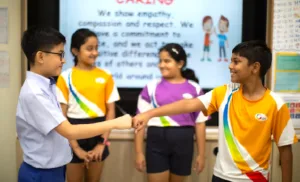
8. Empathy

Empathy is a fundamental social and emotional skill that helps children understand and connect with others on an emotional level. It helps children appreciate and respect diversity. It allows them to understand and accept people from different backgrounds, cultures, and perspectives.

9. Wellbeing skills

Wellbeing encompasses physical, emotional, and mental health. It ensures children develop in a balanced and wholesome manner, laying a strong foundation for their future growth. Wellbeing supports positive behaviour. Children who feel emotionally and physically well are more likely to exhibit good conduct, leading to them being more  productive in school and in general.

10. Leadership skill

Leadership involves effective communication, including speaking, listening, and understanding others. These skills are essential for success in academics and personal relationships. Leadership roles come with responsibilities, teaching children the importance of accountability and reliability. They learn to take ownership of their actions.

Also read: How we plan the teaching and learning for IB PYP students at GIIS

IB Primary Years Programme at GIIS

Enrolling in the inquiry-based IB Primary Years Programme at GIIS Singapore, encourages and harnesses students’ natural curiosity, promoting active learning and improved knowledge retention. At GIIS, alongside classroom resources, experiential learning is prioritised, allowing students to engage directly with topics.

This student-centered approach emphasises knowledge, skills, and conceptual understanding. Inquiry-based learning cultivates evidence-based reasoning and problem-solving abilities, fostering the habit of asking questions and making observations to deepen learning.

If you are keen to learn more about IB PYP at GIIS, please feel free to contact our admissions counsellors.

Shubhdarshani Mitra

Shubhdarshani has over 10 years of experience in content creation, curation and editing. She has worked for Indian newspapers, school magazines and international news websites where she worked closely with the leadership on the execution and communication of the content strategy. Aside from work, she’s a passionate B&W photographer and storyteller.
Featured Blogs

GIIS

Extra-Curricular Activities (ECA) at GIIS Singapore: Sports, Arts & Clubs Guide

A child’s growth extends far beyond academics. At Global Indian International School (GIIS) Singapore, Extra-Curricular Activities (ECAs) and Co-Curricular Activities (CCAs) are thoughtfully designed to nurture leadership, creativity, teamwork, confidence, and physical wellbeing alongside academic excellence.

IB Curriculum

IB Schools in Singapore: Top Schools, Fees & How to Choose (2026)

Choosing the right IB school in Singapore is one of the most important decisions for families seeking an internationally recognised education. With Singapore being home to some of Asia’s leading International Baccalaureate (IB) schools, parents today have access to a wide range of institutions offering strong academics, global exposure, and holistic learning environments.

Singapore Education System

PSLE vs International School Singapore: Which Path is Right for Your Child?

Every parent wants to choose the educational pathway that will best support their child’s confidence, happiness, academic growth, and future opportunities.

CBSE

Secondary School Fees in Singapore: CBSE, IGCSE & IB Compared (2026-27)

Choosing the right secondary school in Singapore involves balancing academic quality, curriculum options, future opportunities, and affordability. With multiple international curricula available, including CBSE, IGCSE, and IB, parents often compare tuition fees alongside campus facilities, learning approaches, and long-term value.

Top Scholarships

Dr APJ Abdul Kalam Global Skills Scholarship

Eligibility:

Talent Based - Technology

More from same author
Trending Blogs

GIIS

Extra-Curricular Activities (ECA) at GIIS Singapore: Sports, Arts & Clubs Guide

A child’s growth extends far beyond academics. At Global Indian International School (GIIS) Singapore, Extra-Curricular Activities (ECAs) and Co-Curricular Activities (CCAs) are thoughtfully designed to nurture leadership, creativity, teamwork, confidence, and physical wellbeing alongside academic excellence.

IB Curriculum

IB Schools in Singapore: Top Schools, Fees & How to Choose (2026)

Choosing the right IB school in Singapore is one of the most important decisions for families seeking an internationally recognised education. With Singapore being home to some of Asia’s leading International Baccalaureate (IB) schools, parents today have access to a wide range of institutions offering strong academics, global exposure, and holistic learning environments.

Singapore Education System

PSLE vs International School Singapore: Which Path is Right for Your Child?

Every parent wants to choose the educational pathway that will best support their child’s confidence, happiness, academic growth, and future opportunities.

CBSE

Secondary School Fees in Singapore: CBSE, IGCSE & IB Compared (2026-27)

Choosing the right secondary school in Singapore involves balancing academic quality, curriculum options, future opportunities, and affordability. With multiple international curricula available, including CBSE, IGCSE, and IB, parents often compare tuition fees alongside campus facilities, learning approaches, and long-term value.

IB Curriculum

What is the IB Curriculum? A Parent’s Simple Guide to PYP, MYP & Diploma (2026)

Choosing the right curriculum is one of the biggest decisions parents make for their child’s future. With more families in Singapore exploring international education pathways, the International Baccalaureate (IB) curriculum has become one of the most respected and future-focused learning frameworks globally.

CBSE

What is CBSE? A Complete Guide for Parents in Singapore

For Indian families relocating to Singapore, choosing the right curriculum is one of the most important educational decisions. Many parents prefer the CBSE curriculum because it offers academic continuity, strong conceptual learning, and preparation for competitive examinations such as JEE and NEET.

Search
History Menu Icon

Our vision is to become a global role model for teaching and learning.

History Menu Icon Secondary

Since its inception in 2002, GIIS has spread quality education through 17 campuses across the globe.

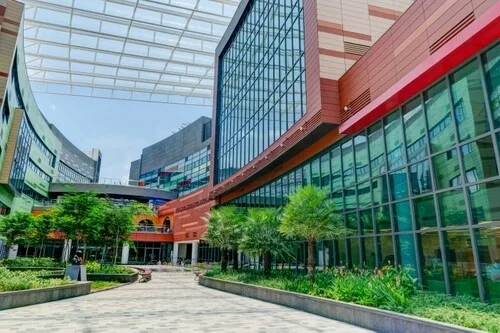
Global Indian International School Singapore smart campus learning environment

SMART Campus

A green, tech-enabled campus with extensive sports facilities that enables a holistic education

  • Kindergarten Menu Image

    Montessori education with a modern touch.

  • Primary School Menu Image

    International primary programmes with best holistic learning.

  • Secondary School Menu Image

    International middle school programmes with best foundation for high school.

  • High School Menu Image

    International high school programmes with beat launchpads for university.

21st Century Learning Campus

Facilities which are collaborative, creative and adaptable to individual needs.

Holistic Education Menu

Award-winning framework for all-round student development

CCA Menu Image

Extra-curricular activities are those activities, often sports-based, that take place outside of the GIIS classroom

ECA Menu Image

Talent shows, performances, competitions, clubs and additional classroom work.

Admission Process Icon

Get an overview of the admissions process

Campus Tour Icon

Register for a tour of the campus to learn more about the school first hand

Book Meeting Icon

You can talk to our Admissions Counsellor online or in-person, as per your convenience.

Admissions Form Icon

Find all forms related to admissions procedure here

Fees Icon

Get information on our fee structure for different grades

Scholarship Icon

Thank you for considering GIIS as a prospective school for your child. Our goal is to make the admissions.