Singapore, also called the ‘Lion City, is a door unto diverse cultures. This multi-ethnic country is one of the most densely populated places in the world. Famous for its Botanic Garden and world-class infrastructure makes Singapore a popular tourist attraction. A global financial center and a shopper’s paradise, Singapore offers almost anything. It is also called ‘Instant Asia’ because of the Asian influence brought in by immigrants.
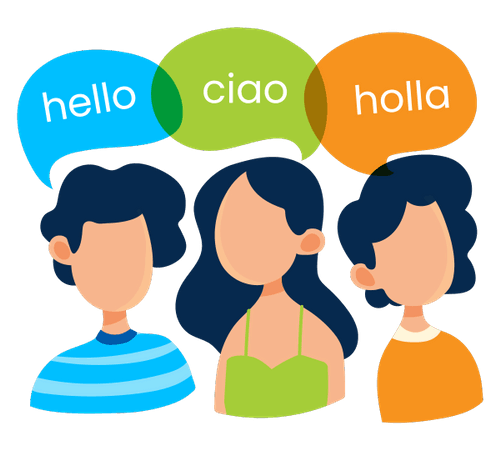
Rich in Arts, Culture, and Economy, the country is a booming open economy and a global air hub. Singapore’s population is diversified, as a result of extensive previous immigration. Because of the ethnic diversity, English, Mandarin Chinese, Malay, and Tamil are all recognized as official languages. English is the dominant language of teaching in schools in Singapore and remains the principal medium for administration, commerce, and industry.
Education in Singapore
Six years of compulsory education in elementary schools in singapore, four years of secondary school, and One to Three years of post-secondary education. Kindergarten, often known as preschool, is a voluntary program offered by both the Ministry of Education and private providers.
Primary Education
Primary education is free for up to six years; the language of instruction is English. Children must study one of the three official languages as a second language. Secondary school students are divided into academic, vocational, and commercial tracks. Academically inclined students are directed to four- or five-year programs of study. Academic achievement determines eligibility for higher education, which normally entails two or three years of pre university teaching before enrolling in a university or technical institution.
Desired Outcomes of Education
The national curriculum, which includes “Desired Outcomes of Education,” is overseen by the Singapore Ministry of Education. These outcomes of education are sorted into eight key skills-
● Character development
● self-management skills
● social and cooperative skills
● literacy and numeracy
● communication skills
● information skills
● thinking skills and creativity
● knowledge application skill
Before you choose a primary school in Singapore, it is important to understand what role primary education plays in your child’s life.
What is the role of Primary Education?
The basic goal of primary education is to raise children’s consciousness, open doors to chances for self-development. It’s the first step toward establishing welfare and a community. Primary education is an absolute requirement for ongoing growth and development from as early as three years. The child first learns how to interact with others, the basics of social, natural, cognitive and cultural skills in the family. Once these basics are in place, primary education enhances these abilities.
Primary education is the breeding ground for tomorrow’s leaders, intellectuals, and inventors. Primary school teachers face a difficult task in preparing young brains and then use that information to construct instructional tactics that keep students engaged in curricular subjects. Primary school teachers are accountable for delivering standardized learning in order to achieve defined educational requirements. Primary education is the stage during which kids can be positively or negatively influenced. A child’s future is entirely dependent on his or her primary education. Primary education will increase your child’s self-esteem and provide them with the necessary skills for long-term success in this competitive environment.
Here’s How Your Child Will Benefit From a Primary School
1. Aids Emotional and Social Development
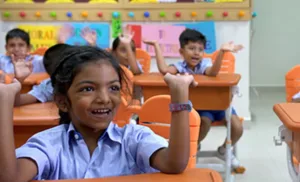
At primary school the group interaction enables youngsters to acquire a sense of respect for others, understand the difference between right and wrong, how to play cooperatively, the value of sharing, resolve conflicts, follow directions, and express themselves. This develops their emotional and social skills.
2. Instills Confidence
It is an established truth that children who attend a preschool that provides a good and loving atmosphere are more confident than those who do not. Early education provides a safe, pleasant, and healthy environment in which children can develop a sense of self and learn about themselves by exploring new things.This improves confidence and makes them young achievers.
3. Strengthens Communication skills
A child’s speaking and reading abilities are linked to their basic schooling. A child’s communication abilities grow between the ages of three and five, which is why primary school is so important for a child’s entire development. Preschoolers have significantly higher reading and speaking skills than those who do not attend preschool. Bringing that knowledge to primary school helps them learn faster.
Primary Schools in Singapore
The primary school curriculum emphasizes on student’s proficiency in English, their native language (native language education given for Chinese, Malay, and Tamil speaking students), and mathematics. Civics and moral education, pastoral care, national education, physical education, and project work are among the extracurricular activitieselements. Science and social studies are taught in the later stages of primary school. At all stages of schooling, teachers examine their students on a regular basis. This assessment is informal and based on student work done in and out of the classroom, on a daily basis. All students take the Primary School Leaving Examination (PLSE) at the end of primary school (age 12). Schools divide students into test levels based on the subjects they studied in their primary school in their fifth and sixth year. Consider primary education as a crucial phase in a child’s learning years. Therefore, it is important to strengthen this base that leads to physical and mental development.
The decision that now matters is to select the right IB Kindergarten Curriculum for your child. The right curriculum should have a mix of academics and extra-curricular activities to ensure holistic growth of your child. Primary schools in Singapore focus on introducing subject based learning from Primary 5 and 6. They are offered subjects like Mathematics, Science, Social Studies, Mother Tongue Language (MTL) on the basis of the Primary 4 results. Students may also receive a higher level of MTL depending on their previous grade results in that subject. Some schools also go for the acclaimed Global Montessori Program for Primary curriculum.
Another renowned primary curriculum is the IB Primary Years Program. PYP is a curriculum framework based on the idea that students are agents of their own learning and should be treated as equal partners throughout the learning process. This notion allows individuals to take charge of their education, gain cooperation and communication skills, and build confidence via a deeper comprehension of topics while remaining stress-free. Subjects are taught in a transdisciplinary manner, with topics that make students self-aware of themselves and their surroundings.
Conclusion
In primary school children learn that they are a unit of society and how to cohabit. This helps them in appreciating knowledge, comprehending concepts, and connecting them to abilities and personal characteristics. It can help youngsters develop their language skills and broaden their perspectives on various languages and cultures. The primary base should be set and strong, since it is the foundation for secondary education.
Team GIIS
Team GIIS is a group of enthusiastic writers who bring the vibrant world of GIIS in Singapore to life through engaging blog posts. Dedicated to highlighting the school’s teaching methodology, innovative learning environment, and diverse curriculum options like IB, Cambridge and CBSE, they aim to connect with parents, educators and students, sharing insights and stories that inspire and inform the school community.