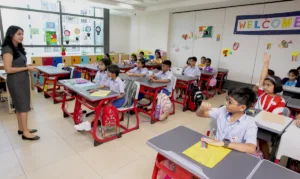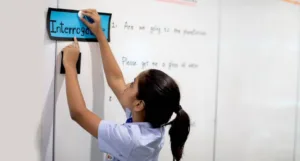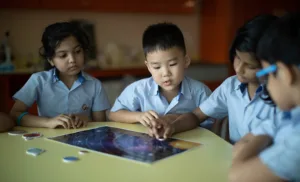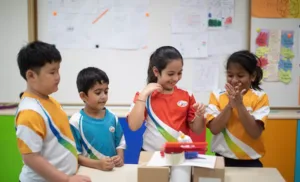
Every child is a unique individual with a distinct set of strengths, personalities, and interests. Just as their favorite toys or hobbies vary, the way they absorb and process information differs significantly from one peer to the next. Understanding these different learning styles for children is the key to unlocking their full academic and personal potential.
In this guide, we will explore the various types of learning, how they manifest in the classroom, especially within the holistic environment of a primary school in Singapore and actionable strategies to support your child’s specific needs. By recognizing the learning styles of children, parents and educators can move away from “one-size-fits-all” teaching and toward a more personalized, effective approach.
Why Identifying Learning Styles for Kids Matters
Before diving into the specific categories, it is important to understand why identifying learning styles for kids is beneficial. When a child’s environment aligns with their natural processing method, they experience higher engagement, reduced frustration, and better long-term memory retention.
In Singapore’s competitive educational landscape, many leading international schools now integrate multi-sensory teaching methods to ensure no student is left behind. Let’s explore the ten most common types of learning observed in young students today.
1. Visual (Spatial) Learning
Children who are visual learners rely on their sight to process information. They often have a strong “mind’s eye” and can visualize complex concepts easily.
- Characteristics: High attention to detail, observant, and often good at puzzles or drawing.
- Best Strategies: Use color-coded notes, diagrams, infographics, and video content.
- Pro Tip: If your child is struggling with a concept, try drawing a “mind map” to show how ideas connect.
2. Physical (Kinesthetic) Learning
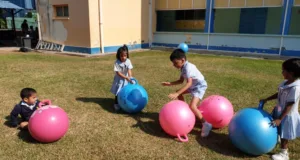
Kinesthetic learners are “doers.” They prefer hands-on experiences and interactive learning rather than sitting through long lectures.
- Characteristics: Restless when sitting still, likes to touch objects, and excels in sports or drama.
- Best Strategies: Use tangible props, building blocks, or role-playing exercises.
- Local Context: Many Singaporean primary schools now incorporate “Active Learning” breaks to help physical learners reset their focus.
3. Auditory (Musical-Rhythmic) Learning
Auditory learners grasp concepts best by hearing them. They are sensitive to tone, pitch, and rhythm.
- Characteristics: Follows spoken instructions well, enjoys music, and often hums or talks to themselves while working.
- Best Strategies: Audiobooks, podcasts, and repeating information out loud.
- Support: Engage them in debates or verbal Q&A sessions to reinforce what they’ve learned.
4. Verbal (Linguistic) Learning
While similar to auditory learning, verbal learners focus specifically on the written and spoken word. They love the nuances of language.
- Characteristics: Large vocabulary, enjoys reading and writing, and likes word games.
- Best Strategies: Writing summaries, using mnemonics (acronyms), and reading aloud.
- In School: Teachers at Best private schools in Singapore emphasize linguistic development through creative writing and public speaking programs.
5. Logical (Mathematical) Learning
These children think in terms of cause and effect. They thrive on structure, logic, and reasoning.
- Characteristics: Enjoys patterns, sequences, and solving math problems.
- Best Strategies: Categorizing information, using statistics, and creating “if-then” scenarios.
- Support: Presenting a subject through a systematic framework helps these learners feel more secure.
6. Social (Interpersonal) Learning
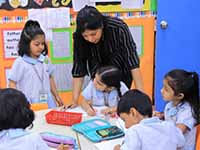
Social learners are energized by others. They process their thoughts best when collaborating with a group.
- Characteristics: High empathy, strong communication skills, and natural leadership qualities.
- Best Strategies: Group projects, study buddies, and peer-to-peer teaching.
- Insight: These children often develop high Emotional Intelligence (EQ), which is a critical life skill.
7. Solitary (Intrapersonal) Learning
Unlike social learners, solitary learners need quiet reflection to internalize new information.
- Characteristics: Independent, introspective, and highly self-motivated.
- Best Strategies: Private study spaces, journaling, and self-paced online modules.
- Balance: While they work best alone, it is helpful to check in periodically to ensure they aren’t stuck on a specific challenge.
8. Naturalist Learning
This style involves understanding the world through the lens of nature and the environment.
- Characteristics: Interested in biology, weather, and animals; loves being outdoors.
- Best Strategies: Outdoor lessons, gardening, and field trips to places like the Singapore Botanic Gardens or River Wonders.
- Integration: Relate scientific concepts to real-world environmental issues to keep them engaged.
9. Musical Learning
Musical learners find rhythm in everything. They may use beats or melodies to memorize facts.
- Characteristics: Sensitive to background noise, good at identifying instruments, and often multi-talented.
- Best Strategies: Setting facts to a rhythm or allowing soft background music (Alpha waves) during study sessions.
10. Linguistic-Auditory Hybrid
Some children fall into a hybrid category where they must both hear and read a word to truly “own” it. This is common in bilingual environments like Singapore, where children are navigating multiple languages.
Challenges and Considerations
While identifying different learning styles for children is helpful, it is important not to “box” a child into just one category. Most children are multimodal, meaning they use a combination of these styles depending on the subject.
| Learning Style | Main Benefit | Primary Challenge |
| Visual | Quick comprehension of data | Can be distracted by clutter |
| Kinesthetic | Excellent physical memory | Struggles with traditional lectures |
| Auditory | Great at following directions | Easily distracted by noise |
| Solitary | High self-discipline | May struggle with teamwork |
Frequently Asked Questions (FAQs)
What are the 4 main learning styles for kids?
The four most recognized styles are Visual, Auditory, Read/Write (Verbal), and Kinesthetic (VARK). However, many modern educators now recognize the broader 10 types mentioned above to better reflect a child’s psychology.
How do I know my child’s learning style?
Observe how they play. Do they like building (Kinesthetic), drawing (Visual), or making up stories (Verbal)? You can also notice how they ask for help – do they want you to show them, tell them, or let them try it themselves?
Can a child have more than one learning style?
Yes! Most children use a “multimodal” approach. For example, a child might be a visual learner for Math but a social learner for History.
Conclusion: Supporting Your Child’s Journey
Understanding the types of learning that resonate with your child is the first step toward a more joyful educational journey. By tailoring your support, whether through hands-on activities or quiet reading time, you provide them with the tools to succeed not just in school, but in life.
If you are looking for an environment that caters to different learning styles through a holistic and modern curriculum, exploring a school that offers diverse extracurriculars and personalized attention is a great next step.

Team GIIS
Team GIIS is a group of enthusiastic writers who bring the vibrant world of GIIS in Singapore to life through engaging blog posts. Dedicated to highlighting the school’s teaching methodology, innovative learning environment, and diverse curriculum options like IB, Cambridge and CBSE, they aim to connect with parents, educators and students, sharing insights and stories that inspire and inform the school community.