Global
All Cities
Where would you like to study? Select cities to refine your search.
Any Curriculum
Find a campus based on the curriculum offered.
Global
Global
All Cities
Where would you like to study? Select cities to refine your search.
Any Curriculum
Find a campus based on the curriculum offered.
Search

The benefits of collaborative learning in PYP for primary school students

Primary School

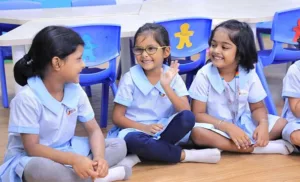
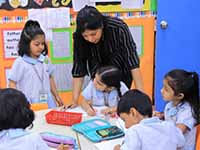
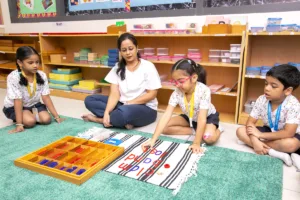
Collaborative learning in the classrooms happens when students actively engage with their peers to learn and solve problems together. It involves students working in groups or teams to exchange ideas, discuss concepts, and complete tasks collectively.

As such, collaborative learning fosters effective communication, inspires creativity, promotes cooperation and critical thinking skills, as students team up to achieve a common goal. Collaborative learning can take various forms, such as group discussions, projects, peer review or group problem-solving activities. It enables a deeper understanding of the subject matter while cultivating interpersonal skills.

How does collaborative learning benefit students

Collaborative learning offers numerous benefits to students across various aspects of their education and personal development:

● Increased knowledge retention: When students work together with their peers in a group, they get to actively discuss and learn from each other. This process of questioning, explaining and listening helps reinforce their understanding of the subject matter – leading to improved knowledge retention.

● Sense of responsibility: Collaborative learning often involves group projects or tasks where each member has to contribute to the final outcome. This shared responsibility encourages them to be accountable for their part, ensuring that they not just participate but complete their assigned tasks.

● Building diverse perspectives: Students from different backgrounds, with varied experiences and viewpoints, bring a rich diversity to perspectives when collaborating in a group. Such interactions unveil a range of ideas to students, nurturing a broader understanding of the subject matter and promoting inclusivity.

● Higher-order thinking: Collaborative learning promotes key 21st competencies such as critical and creative thinking, and problem-solving skills. When students work together to solve complex problems or analyse information, they are driven to think critically and develop higher-order thinking skills. They learn to assess, synthesise, and evaluate information.

● Leadership skills: Within collaborative groups, students take on different responsibilities, which help them to develop leadership skills. As they share responsibilities, delegate tasks, guide discussions, they learn the importance of becoming facilitators in a team. Such leadership experiences prove invaluable in their academic and non-academic pursuits.

● Real-life experiences: Collaborative learning mirrors real-world experiences  where teamwork and effective communication are essential. It also offers students a taste of real-world challenges, preparing them for future professional settings where they will need to work together with colleagues to achieve common goals.

Furthermore, for collaborations to work seamlessly, it is also important for students to understand the objectives, wherein the essential guidelines for collaborative projects are stated clearly, and the level of engagement of the students are regularly assessed to ensure a positive and productive learning atmosphere.

Also read: How we plan the teaching and learning for IB PYP students at GIIS

Collaborative learning in IB PYP at GIIS

Collaborative learning is an integral part of the International Baccalaureate (IB) Primary Years Programme (PYP). It encourages students to work together on multiple projects, fostering a sense of shared responsibility.

From group projects to collaborative enquiries, PYP allows students to reap the benefits of collective learning. Whether it’s research work or presentation on a particular topic, each student is encouraged to take a specific role within the group.

The PYP is a comprehensive educational framework that fosters lifelong learning for students with diverse abilities. The transdisciplinary curriculum and inquiry-based teaching methods empower students to delve deep into concepts, while honing their skills. The students are encouraged to ask questions as they engage in real-world problems. This preparation helps them to grow and learn beyond their primary school years, providing a strong foundation for success in secondary years, and beyond.

If you are keen to know more about IB PYP at GIIS, please feel free to contact our friendly admissions counsellors.

Shubhdarshani Mitra

Shubhdarshani has over 10 years of experience in content creation, curation and editing. She has worked for Indian newspapers, school magazines and international news websites where she worked closely with the leadership on the execution and communication of the content strategy. Aside from work, she’s a passionate B&W photographer and storyteller.
Featured Blogs

GIIS

Choosing Subjects for IGCSE: A Parent’s Guide to Streams, Options & Future Careers

By age 14, most children have never had to make a decision that shapes their next ten years. Choosing IGCSE subjects is exactly that decision and for parents, it often arrives with more questions than answers. Which subjects matter for university? Does dropping a science close doors? Is a 'safe' combination actually the right one?

GIIS

Your Child’s Journey to IBDP Success Starts Before Grade 11: A Parent’s Guide

While evaluating the IB Diploma programme in Singapore for their children, parents center the conversation around Grade 11 and 12. It is during these final two high school years that students write their Extended Essays, dive deep into Theory of Knowledge (TOK) and prepare for final examinations.

CBSE Results

IBDP Results 2026: What Parents Should Consider Before Choosing an IB School in Singapore

Choosing the right international school for your child is one of the most critical academic decisions a parent can make. With the release of the May 2026 International Baccalaureate Diploma Programme (IBDP) results, parents across Singapore are evaluating school performance metrics to determine where their child will thrive best.

GIIS

How GIIS Students Achieved Outstanding IBDP Results in 2026: A Look at the Learning Approach

Choosing the right senior secondary curriculum requires more than academic rigour. Students also need an environment that nurtures critical thinking, global perspectives, personal growth, and university readiness. For families evaluating the IB diploma programme in Singapore, the May 2026 International Baccalaureate Diploma Programme (IBDP) examination results offer clear evidence of how structured academic mentoring and personalised pedagogy lead to top-tier university readiness.

Top Scholarships

Dr APJ Abdul Kalam Global Skills Scholarship

Eligibility:

Talent Based - Technology

More from same author
Trending Blogs

GIIS

Choosing Subjects for IGCSE: A Parent’s Guide to Streams, Options & Future Careers

By age 14, most children have never had to make a decision that shapes their next ten years. Choosing IGCSE subjects is exactly that decision and for parents, it often arrives with more questions than answers. Which subjects matter for university? Does dropping a science close doors? Is a 'safe' combination actually the right one?

GIIS

Your Child’s Journey to IBDP Success Starts Before Grade 11: A Parent’s Guide

While evaluating the IB Diploma programme in Singapore for their children, parents center the conversation around Grade 11 and 12. It is during these final two high school years that students write their Extended Essays, dive deep into Theory of Knowledge (TOK) and prepare for final examinations.

CBSE Results

IBDP Results 2026: What Parents Should Consider Before Choosing an IB School in Singapore

Choosing the right international school for your child is one of the most critical academic decisions a parent can make. With the release of the May 2026 International Baccalaureate Diploma Programme (IBDP) results, parents across Singapore are evaluating school performance metrics to determine where their child will thrive best.

GIIS

How GIIS Students Achieved Outstanding IBDP Results in 2026: A Look at the Learning Approach

Choosing the right senior secondary curriculum requires more than academic rigour. Students also need an environment that nurtures critical thinking, global perspectives, personal growth, and university readiness. For families evaluating the IB diploma programme in Singapore, the May 2026 International Baccalaureate Diploma Programme (IBDP) examination results offer clear evidence of how structured academic mentoring and personalised pedagogy lead to top-tier university readiness.

GIIS

Moving to Singapore with Children: A Complete School Guide for Expat Families (2026)

Relocating to Singapore is an exciting milestone for any family. Alongside finding a new home, settling into a different culture, and adapting to a new lifestyle, one of the biggest decisions parents face is choosing the right school for their children.

GIIS

Why GIIS SMART Campus Singapore Stands Out as a Future-Ready School

As technology and global careers continue to evolve, parents are looking for future-ready schools that offer more than academics. GIIS SMART Campus Singapore combines academic excellence, global curricula, innovative learning, and holistic development to prepare students for lifelong success.

GIIS

GIIS SMART Campus Singapore: Programmes & Admissions Guide for Punggol Families (2026)

As more families move into Punggol, Sengkang, and the North-East region of Singapore, the demand for high-quality international education continues to grow. Parents today are looking for schools that combine academic excellence, future-ready learning, global curricula, and holistic development.

GIIS

How to Choose the Best Primary School in Singapore: A Parent’s Complete Guide (2026)

The primary school years lay the foundation for a child's future success, shaping not only academic achievement but also confidence, character, curiosity, and a lifelong love of learning. Choosing a school that combines strong academics with holistic development helps children build the knowledge, skills, and values they need to thrive in an ever-changing world.

Search
History Menu Icon

Our vision is to become a global role model for teaching and learning.

History Menu Icon Secondary

Since its inception in 2002, GIIS has spread quality education through 17 campuses across the globe.

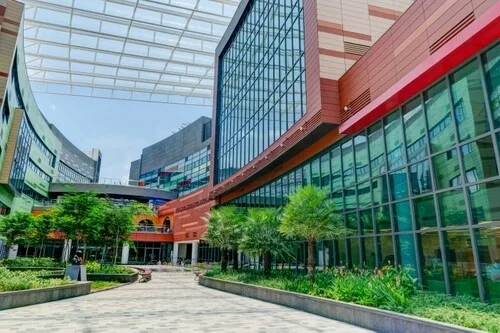
Global Indian International School Singapore smart campus learning environment

SMART Campus

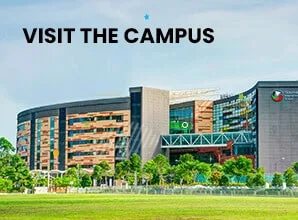
A green, tech-enabled campus with extensive sports facilities that enables a holistic education

  • Kindergarten program at GIIS Singapore smart campus

    Montessori education with a modern touch.

  • Primary school curriculum at GIIS Singapore

    International primary programmes with best holistic learning.

  • Secondary school students learning at GIIS Singapore

    International middle school programmes with best foundation for high school.

  • High school education and curriculum at GIIS Singapore

    International high school programmes with beat launchpads for university.

21st century learning campus at GIIS Singapore

Facilities which are collaborative, creative and adaptable to individual needs.

Holistic education approach with 9 Gems at GIIS Singapore

Award-winning framework for all-round student development

Co-curricular activities at GIIS Singapore

Extra-curricular activities are those activities, often sports-based, that take place outside of the GIIS classroom

Extra curricular activities at GIIS Singapore

Talent shows, performances, competitions, clubs and additional classroom work.

Admission Process Icon

Get an overview of the admissions process

Campus Tour Icon

Register for a tour of the campus to learn more about the school first hand

Book Meeting Icon

You can talk to our Admissions Counsellor online or in-person, as per your convenience.

Admissions Form Icon

Find all forms related to admissions procedure here

Fees Icon

Get information on our fee structure for different grades

Scholarship Icon

Thank you for considering GIIS as a prospective school for your child. Our goal is to make the admissions.