When you’re choosing a secondary education path for your child, it’s easy to feel a little unsure. There are plenty of good options available, but not all of them fit every learner. What we’ve seen time and again is that the Cambridge IGCSE stands out for its flexibility, structure and global relevance. It gives students a solid academic base, yes, but more importantly, it shapes how they think and respond to the world around them.
Here’s how this IGCSE curriculum supports long-term success for school, university and for life.
What is The Cambridge IGCSE Framework?
The Cambridge IGCSE is an international qualification designed for students aged 14 to 16. It was developed by Cambridge Assessment International Education and is offered in schools across more than 150 countries. But what makes it so widely adopted?
At its core, the IGCSE curriculum offers both depth and breadth of learning. Students typically take between 5 to 10 subjects, depending on their goals. The curriculum covers a wide range of subjects including English, Maths, Sciences, Humanities, Languages, and subjects like Art or Business Studies. The IGCSE syllabus is designed to be flexible yet comprehensive, ensuring students gain both knowledge and practical skills.
A Holistic Approach to Education
At GIIS, we don’t look at education as a checklist of subjects, just like the IGCSE.
This programme encourages students to grow as thinkers, communicators and active learners. In subjects like Environmental Management, for example, they aren’t just studying pollution from a textbook. They’re asked to examine real-world data, draw conclusions and propose solutions. It becomes less about examinations and more about seeing connections.
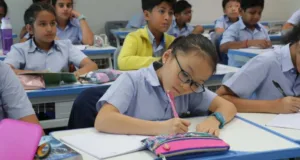
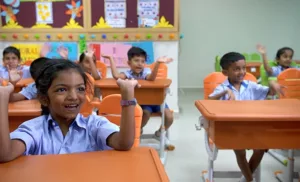
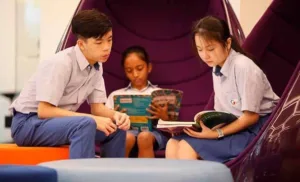
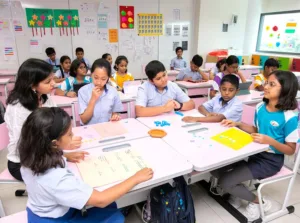
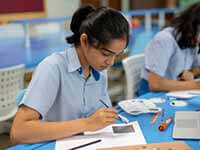
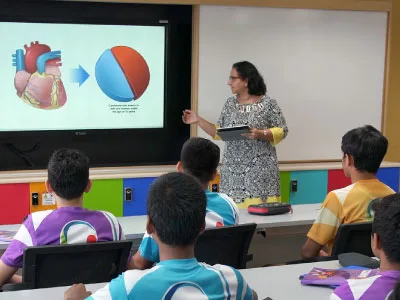
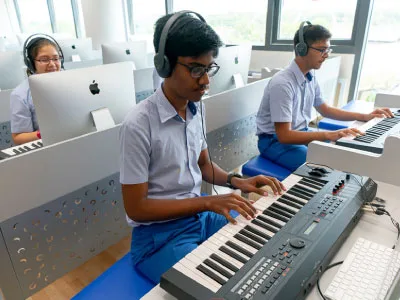
Inside an IGCSE school in Singapore, you’ll also see this same philosophy in how subjects are delivered. Classes often use discussions, lab work, research, and project-based learning. Students are not just sitting quietly in rows, they’re working in small groups, questioning, sharing ideas, and presenting their work in ways that make them think harder and explain better.
Moreover, at GIIS, we also look beyond academics and emphasise on the 9GEMS Framework. This framework includes 9 areas that give a holistic education for students expecting to become global citizens. It ranges from sports, entrepreneurship, leadership, creativity, universal values and community connect.
Preparing Students for Global Success
The world your child will enter after school is changing fast. Employers and universities are looking for more than high scores. They want confident individuals who can solve problems, adapt to new situations, and express their thoughts clearly. That’s where the IGCSE has a strong advantage.
Because students learn how to study independently and analyse content critically, they develop habits that last far beyond school. If your child moves to a new country, joins a new school system, or even switches to a different subject area, they’ll be better prepared to make that transition smoothly.
Cambridge IGCSE also allows for language choice, which is a huge advantage for multicultural families. A student might study Mandarin as their second language while continuing English as their first. This multilingual ability is not just impressive on a CV, it’s practical in a global work environment.
Recognised by Top Universities Worldwide
University admissions teams know the IGCSE well. For them, it’s a trusted qualification. The grading system is clear, and the subjects show depth. This makes the transition to higher education smoother, especially for students who want to study abroad.
Whether it’s the UK, Australia, the US, or Canada, most universities recognise Cambridge IGCSE results during admissions review. And in many cases, strong IGCSE grades help students place into advanced courses or qualify for merit-based scholarships.
Beyond just admissions, IGCSE students often find that they’re better prepared for the workload and expectations at university. That’s because the programme already trains them to handle complex topics, conduct independent research, and write academically sound reports.
In schools that offer the IGCSE alongside pre-university tracks like the IB Diploma or A-Levels, this foundation becomes even more useful. Students know how to balance multiple assignments, manage deadlines, and present their learning in structured formats: all skills that make the first year of university far less overwhelming.
Flexible and Customisable Curriculum
One of the biggest strengths of the IGCSE is its flexibility. The IGCSE curriculum isn’t locked into a single path. Students get to choose subjects based on interest, strength, or future plans. This makes it highly adaptable to individual learners.
In most IGCSE schools, students start with a core, English, Mathematics, and a Science subject, and then select optional subjects like Economics, Art, Business Studies, or Design & Technology. This variety lets them explore their strengths while still meeting academic expectations.
For example, if your child enjoys the creative side of learning, they could take Art, Literature, or Drama alongside the core subjects. If they’re inclined towards problem-solving or business, subjects like Additional Maths or Accounting might suit them better.
Key Life Skills Developed through Cambridge IGCSE
While the academic content is strong, it’s the life skills that really stand out. These are not always measured in grades, but they show up in everyday behaviour, in how students approach challenges, work with others, or bounce back from setbacks.
Through the IGCSE, students build the following critical skills –
- Critical thinking: They are not told what to think. Instead, they learn to ask the right questions, evaluate evidence, and form their own conclusions.
- Communication skills: Writing essays, giving presentations, or discussing texts, these tasks build clarity and confidence in how students express ideas.
- Time management: With multiple subjects and varied assignments, students get used to juggling deadlines, prioritising tasks, and staying organised.
- Resilience: Not every project goes well. But the curriculum encourages trying again, reflecting, and improving, a skill that supports growth in all areas of life.
- Collaboration: Group work, peer feedback, and classroom debates teach students how to work with others respectfully, even when opinions differ.
These aren’t skills you learn overnight. They’re developed over time, through steady practice. And they stay with students long after the exams are done.
Conclusion
In today’s world, a strong academic record is only part of the story. The Cambridge IGCSE goes beyond textbooks, giving students the tools to think, adapt, and thrive, wherever they go.
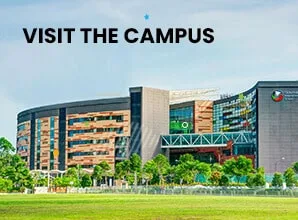
We at Global Indian International School (GIIS) believe that a curriculum should not only prepare students for exams but equip them for life, be at jobs or other aspects. Through our Cambridge curriculum, we support young learners in becoming future-ready, independent thinkers who are confident in any setting, local or global.
Start Your Child’s Learning in Singapore
GIIS helps your child explore, learn, and grow from early years to IB Diploma.

Team GIIS
Team GIIS is a group of enthusiastic writers who bring the vibrant world of GIIS in Singapore to life through engaging blog posts. Dedicated to highlighting the school’s teaching methodology, innovative learning environment, and diverse curriculum options like IB, Cambridge and CBSE, they aim to connect with parents, educators and students, sharing insights and stories that inspire and inform the school community.