Article Summary
- Academic excellence and overall development go hand in hand.
- The right school will offer not only a strong academic foundation, but help children to be creative, confident, emotionally intelligent and resilient and develop essential life skills.
- Don’t just look at the school’s exam results. Parents should consider the quality of the curriculum, the teaching methods, extra-curricular activities, wellbeing of the students, personalisation of the learning and opportunities for leadership.
- Choose a school that readies children for life and not just for exams. At Global Indian International School Kuala Lumpur, we are committed to providing our students with academic excellence and holistic development through our CBSE and Cambridge curriculum, 9GEMS™ framework and co-curricular activities.
Choosing the right school is one of the most important decisions parents make for their children. The focus of school choice is often on good exam results and university placements, but academic results alone don’t tell the whole story of a child’s education experience.
Students need more than knowledge of subjects to be successful. They must learn critical thinking, creativity, emotional intelligence, communication skills and the confidence to navigate a world that is becoming increasingly interconnected.
Hence, parents who are looking at international schools in Brickfields and other parts of Kuala Lumpur should look for schools that focus on academic excellence along with holistic development.
At GIIS KL, we believe that education should prepare children for life beyond the examinations and higher education for the opportunities and challenges that life throws up. We offer a combination of globally recognised academic pathways with opportunities for personal development, leadership and extra-curricular involvement.
Academic Excellence and Education: Whole Child Development
Academic excellence is when a student learns, understands concepts, applies learning in a meaningful way, and shows consistent academic progress. It’s not only about getting top grades, but it’s also about thinking analytically, solving problems, learning independently and being intellectually curious.
In contrast, holistic development means the development of all sides of a child’s personality.
The dimensions are:
- Intellectual Development: Improving ability to reason, problem solve and think critically.
- Emotional Development: Developing self-awareness, confidence, empathy and resilience.
- Social Development: Better communication, collaboration and people skills.
- Physical Development: Promote fitness, co-ordination and healthy lifestyle habits.
- Creative Development: Development of imagination, inventiveness and artistic expression
At GIIS KL, we cater to these dimensions through our 9GEMS™ framework of holistic education, which supplements classroom learning with avenues for sports, arts, leadership, innovation and personal development. We help students become academically able, socially responsible and confident people.
Why Academic Results Should Not Be the Only Basis for School Choice
Exam results are important barometers of the academic standard of a school. But they don’t necessarily tell us how well the institution supports students with diverse abilities, interests and learning needs.
A school may have good exam results but little opportunity for creative expression, sport or student leadership.
Parents should therefore take into account a number of other factors such as quality of teaching, student engagement, support in learning, class participation and opportunities to apply knowledge practically.
At GIIS KL, we believe in the power of individuality and understand that every student comes with his or her own strengths. We believe in education through academics and participation in extracurricular and co-curricular activities that help students discover their interests and gain important skills.
The balance is designed to make sure academic achievement isn’t at the expense of personal growth.
Assess the School’s Curriculum and Teaching
A school’s curriculum shapes the way children learn, think and get ready for future educational opportunities.
It is important that parents consider whether the curriculum encourages conceptual understanding, independent inquiry, collaboration and practical application and not just rote memorisation.
GIIS KL offers families a choice of CBSE and Cambridge streams to suit their child’s learning style and future aspirations. Our Cambridge pathway promotes inquiry, analytical thinking and learning through application, while CBSE provides a structured academic foundation across core subjects.
Here are some criteria parents can use when comparing schools:
| School selection factor | What parents should evaluate | What to look for at GIIS KL |
| Academic performance | Examination results, subject knowledge and learning progress | CBSE and Cambridge academic pathways |
| Teaching methods | Interactive lessons, enquiry and problem-solving | Conceptual learning and student participation |
| Curriculum flexibility | Available pathways and progression opportunities | Choice between CBSE and Cambridge pathways |
| Student wellbeing | Emotional support, inclusion and physical safety | A holistic approach to student development |
| Extracurricular activities | Sports, arts, clubs and competitions | Opportunities aligned with the 9GEMS™ framework |
| Individual learning support | Feedback, academic guidance and differentiated learning | Teacher guidance and progress monitoring |
Parents should ask how teachers connect academic concepts to real-world experiences in classroom instruction.
Seek learning opportunities outside the classroom.
Extracurricular activities are a must for all-round development and help students to find their passion and identify skills that are not always reflected in classroom tests.
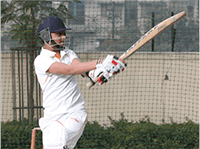
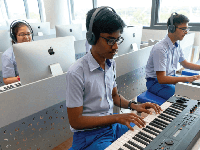
Sports can be beneficial for discipline and teamwork. Music, drama and visual arts can encourage creativity and self-expression. Clubs, contests and community service projects can help build leadership, communication and social responsibility.
At GIIS KL, we believe in our larger philosophy of education through co-curricular and extracurricular activities in which our students participate.
The 9GEMS™ framework recognises the value of excellence in sports, visual and performing arts, personality development, innovation and community engagement.
Parents looking at schools should ask about the frequency of activities, opportunities for student participation and whether the extracurricular programme is integrated into the school calendar.
Learn how the school promotes student wellbeing.
A child’s emotional and physical wellbeing can have a huge impact on motivation, participation in class and learning overall. Schools must create an environment in which students feel safe, respected, included and comfortable asking for help. Ask about the school’s approach to peer relationships, bullying prevention, emotional issues, physical health and student safety.
GIIS KL follows a holistic education philosophy where wellbeing is an integral part. We build a positive learning environment with an emphasis on character development, strong relationships and student engagement.
The Five Pillars of a Well-Rounded Education
- Academic
Knowledge & thinking
- Emotional
Wellbeing & resilience
- Physical
Fitness & health
- Creative
Imagination & expression
- Social
Empathy & teamwork
They should also ask about access to counselling, student safeguarding procedures and the process for identifying children who need additional emotional or learning support.
Evaluate Individual Support and Personalised Learning
Each child learns in a different way. Some students need additional academic support, while others flourish with advanced challenges or the opportunity to pursue specialised interests.
An effective school should recognise these differences and provide constructive criticism, appropriate support and opportunities for independent learning.
At GIIS KL, we emphasise the growth of each student and nurture learners to develop their strengths through academics and co-curricular activities.
Parents should ask teachers how they determine learning gaps, how they communicate progress and how they provide extra attention to students who need it.
They should also check whether the school has financial assistance programmes and academic enrichment opportunities.
Families looking at the GFRM scholarship, the Global Future Ready Merit Scholarship, in Malaysia will find information on eligibility, application requirements, and the scholarship support offered at GIIS KL. Please check with the admissions team about the availability and terms of scholarships.
Learn Leadership and Life-Skill Development
Leadership is not always an official position. This means taking the initiative, making responsible decisions, communicating effectively and working with others.
Schools can help build these skills by giving students opportunities to work on student councils, team projects, presentations, competitions, community projects and with other students.
At GIIS KL, we believe that an important part of our 9GEMS™ framework is the development of leadership and personality.
We take a holistic strategy to build confidence, adaptability, resilience and social responsibility in our students. These traits can help set the stage for success in higher education, in the workplace, and in everyday life.
Consider teacher quality and parent-school communication.
Teachers play an important role in shaping both academic achievement and students’ attitudes toward learning.
Parents should check teacher qualifications, professional development, classroom management and ability to support students with different learning needs.
Equally important is the communication between parents and the school. At GIIS KL, we believe that parent-school partnership is essential to support the academic and personal development of children. We encourage families to discuss their child’s progress, learning needs and educational aspirations with our academic teams.
Parents might use this checklist when visiting schools, in admissions consultations and discussions with teachers.
Learn how the school measures student progress.
A holistic assessment system should measure more than just exam performance. Classroom assessments, projects, presentations, portfolios, teacher observations and student reflections can be used by schools to assess learning.
These methods help to identify academic strengths, gaps in knowledge, and opportunities for improvement.
At GIIS KL, we believe in developing the wider skill set that our learners gain through our educational programmes, in addition to academic excellence.
Parents should ask how often their child will be assessed, if they will receive progress reports, what feedback the teacher will give and what happens if their child has learning difficulties. When a school measures student progress regularly, it can provide support more quickly and with more detail.
Review School Culture and Learning Environment
School culture has a strong impact on children’s confidence, motivation and sense of belonging. When parents go to campuses, they should notice how students relate to teachers, whether classrooms are set up for participation and how the school promotes respect for different opinions.
A positive learning environment should promote curiosity, inclusion, collaboration and responsible behaviour. GIIS KL’s multicultural school community provides students with an opportunity to learn alongside peers with different cultural backgrounds. We believe such exposure can help to develop cultural awareness, respect for others and the interpersonal skills needed in a global society.
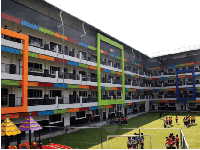
Families should try to arrange campus tours to experience the learning environment firsthand.
Questions Parents Should Ask When Choosing a School
Before confirming admission, parents should ask questions that reveal how a school balances academic expectations with the broader development of students.
Helpful questions to ask are
- How does the school ensure academic excellence and at the same time ensure that students have time for sports, arts and other activities?
- What type of support is there for students who have academic or emotional issues?
- How are leadership, communication and problem-solving skills embedded into everyday learning?
- How frequently do teachers send academic and personal development updates?
- What opportunities exist for academic enhancement, competitions, community service & scholarships?
We at GIIS KL encourage prospective families to come and discuss these with our admissions team and find out how our academic pathways and 9GEMS™ framework can support their child’s education aspirations.
What Research Says About Holistic Development and Academic Outcomes
Educational research increasingly highlights the importance of combining academic instruction with social, emotional and personal development.
- Social-emotional learning
+3 months Average additional academic progress associated with social-emotional learning interventions.
(Education Endowment Foundation, 2025) EEF
- School belonging
74% of students across OECD countries reported feeling that they belonged at school.
(OECD PISA 2022 Results, published 2023 OECD)
The 2025 evidence review by the Education Endowment Foundation also found social-emotional learning interventions can improve students’ attitudes to learning and relationships with peers. This study points out that teaching emotional skills can be an adjunct to academic instruction.
OECD research, meanwhile, points to the importance of looking at student wellbeing, as well as academic performance. It also points out that good exam results do not necessarily lead to a greater sense of belonging.
These findings further strengthen our belief at GIIS KL that schools need to provide opportunities for intellectual, emotional, social and physical development rather than just judging success on examination scores.
Final Words: Choose a School That Prepares Your Child for Life
The best learning environment is one where children can do well in school and develop the confidence, resilience, creativity and independence they will need for the future.
Before choosing, parents should consider curriculum quality, teaching methods, student well-being, extracurricular opportunities, leadership development and school culture.
At GIIS KL, we aim to provide this balance through our CBSE and Cambridge curricula, 9GEMS™ holistic education framework and opportunities for students to explore their individual talents.
We believe that all children have a right to an education that nurtures achievement and growth, and this is reflected in our commitment to academic excellence and holistic development.
Let your child learn, grow and flourish at GIIS Kuala Lumpur. Browse our curricula, find out about scholarships, including the GFRM scholarship in Malaysia, or book a tour at our Brickfields campus.
FAQs
- How can we judge the quality of a school other than exam results?
Parents need to consider the quality of teaching, the structure of the curriculum, the well-being of students, the extracurricular activities, the opportunities for leadership, and the support for individual learning. We invite families to discover our CBSE and Cambridge pathways and the 9GEMS™ framework at GIIS KL to know more about our approach to well-rounded education.
- How do you know if a school is truly dedicated to whole-child development?
A school that focuses on holistic development should showcase regular extracurricular involvement, opportunities for student leadership, mental health initiatives and systems for tracking individual progress. At GIIS KL, we have a structured approach to support different dimensions of student development through our 9GEMS™ framework.
- How do the parents know that the school timetable is paying due attention to the extracurricular activities?
Parents should ask for the school calendar, check the extracurricular schedules and enquire about involvement opportunities for different age groups. We invite families to ask about sports, arts, clubs and other co-curricular activities during their campus visits at GIIS KL.
- How important is emotional intelligence to a child’s educational development in the long term?
Emotional intelligence helps children to identify emotions, deal with stress, develop empathy, communicate effectively and build positive relationships. Such skills can help increase participation in the classroom, as well as teamwork and resilience. At GIIS KL, we understand that emotional and social development is an integral part of our holistic education philosophy.
- How often should parents check if a school is still providing a good learning environment for their child?
Parents should keep a watchful eye on their child’s academic, emotional and social development at least once each school term and have further discussions whenever issues arise. We encourage parents to stay connected with the teachers and watch for changes in their child’s interests, learning needs and education goals at GIIS KL.