Global
All Cities
Where would you like to study? Select cities to refine your search.
Any Curriculum
Find a campus based on the curriculum offered.
Global
Global
All Cities
Where would you like to study? Select cities to refine your search.
Any Curriculum
Find a campus based on the curriculum offered.
Search

Primary to secondary school: 3 significant changes your child will face

Secondary School

The shift from primary school to secondary school is marked by a host of changes, such as increased academic rigour, independence and social dynamics. Children in this age group grapple with issues like identity, friendship and future aspirations. Moreover, during this period alongside these challenges, they’ll experience significant physical transformations. Adding to this complexity is the pivotal change that comes with transitioning schools.

This is when children leave their primary school teachers and familiar routines, making the big move to secondary school. Everything from the subjects to the school schedule is more extensive and can feel daunting. It can be stressful having to adapt to multiple changes at once.

As the parent of a secondary-school-age child, you’re likely aware of potential challenges your child may experience as they progress from grade to grade. Here we are going to focus on the three big changes that your child will face:

1. Academic expectations

2. Social interactions

3. Personal growth

1. Academic expectations

Classes become harder, work becomes more involved, and it takes more effort to earn good grades in secondary school. More is expected of an older student than a primary-school-age one. And often, children simply aren’t prepared.

More subjects are being taught in a day, and the subjects are more complex. Sometimes, the school day itself is longer. This is especially true for children who also engage in extracurricular and co-curricular activities.

2. Social interactions

More time spent on academic pursuits often means less time spent with friends. However, children in this age group usually feel a powerful need for inclusion. Also, wanting to be part of a group and be accepted can feel quite overwhelming.

Children may experience moments of vulnerability, embarrassment, shyness and isolation. Therefore, they need more support, guidance and acceptance at this stage.

3. Personal growth

Hormonal changes and changes in body structure, emotions and mood are all normal occurrences for secondary school students. Still most young teens go through awkward phases or phases where they’re especially clumsy or self-conscious. As adults, we can look back, shake our heads and knowingly smile because we’ve all gone through it.
What GIIS is doing to help

As an inclusive educational institution, GIIS is paving a smoother path for primary school students as they enter the hallowed halls leading to adulthood. The safeguards we put into place are intended to make every student’s life easier from day one.

Positive teacher-student relationships

A positive relationship between teachers and students is one of the most effective methods of easing the transition from primary to secondary schoolA friendly and welcoming classroom environment, one-on-one assistance when a student is struggling and positive feedback are some of the practices at GIIS, which help in smoother transition. Students are rewarded and celebrated for their ideas and encouraged to share and take the lead in their education.

9GEMS framework

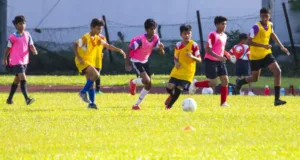
The primary objective of the 9GEMS framework is to develop student character through a holistic approach to learning. Through the 9GEMS, students have the opportunity to participate in arts, sports, leadership, personality development, creativity and innovation, skills development, community and universal ethics. As a result, students are exposed to activities that go beyond the academic classroom.
RISE

RISE is an acronym for Respect, Integrity, Skills and Empathy. These are all highly valued attributes at GIIS. RISE inspires our student happiness index as well. GIIS actively tracks student satisfaction rates through feedback, parent input, attendance, academic performance and level of participation in school academics and activities.

GIIS Healthline

The GIIS Healthline is a number that students can call when in crisis. They are entirely confidential and counselling is provided to students who reach out for help. (For GIIS Singapore, the healthline number is +65 9723 4938.)

Also read: How does GIIS foster a positive teacher-student relationship?

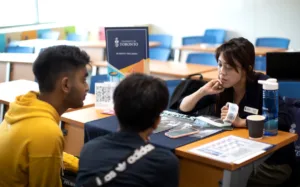
If you’d like to learn more about how GIIS works to help ease the transition from primary school to secondary school, please feel free to contact our admissions team.

Shubhdarshani Mitra

Shubhdarshani has over 10 years of experience in content creation, curation and editing. She has worked for Indian newspapers, school magazines and international news websites where she worked closely with the leadership on the execution and communication of the content strategy. Aside from work, she’s a passionate B&W photographer and storyteller.
Featured Blogs

GIIS

Choosing Subjects for IGCSE: A Parent’s Guide to Streams, Options & Future Careers

By age 14, most children have never had to make a decision that shapes their next ten years. Choosing IGCSE subjects is exactly that decision and for parents, it often arrives with more questions than answers. Which subjects matter for university? Does dropping a science close doors? Is a 'safe' combination actually the right one?

GIIS

Your Child’s Journey to IBDP Success Starts Before Grade 11: A Parent’s Guide

While evaluating the IB Diploma programme in Singapore for their children, parents center the conversation around Grade 11 and 12. It is during these final two high school years that students write their Extended Essays, dive deep into Theory of Knowledge (TOK) and prepare for final examinations.

CBSE Results

IBDP Results 2026: What Parents Should Consider Before Choosing an IB School in Singapore

Choosing the right international school for your child is one of the most critical academic decisions a parent can make. With the release of the May 2026 International Baccalaureate Diploma Programme (IBDP) results, parents across Singapore are evaluating school performance metrics to determine where their child will thrive best.

GIIS

How GIIS Students Achieved Outstanding IBDP Results in 2026: A Look at the Learning Approach

Choosing the right senior secondary curriculum requires more than academic rigour. Students also need an environment that nurtures critical thinking, global perspectives, personal growth, and university readiness. For families evaluating the IB diploma programme in Singapore, the May 2026 International Baccalaureate Diploma Programme (IBDP) examination results offer clear evidence of how structured academic mentoring and personalised pedagogy lead to top-tier university readiness.

Top Scholarships

Dr APJ Abdul Kalam Global Skills Scholarship

Eligibility:

Talent Based - Technology

More from same author
Trending Blogs

GIIS

Choosing Subjects for IGCSE: A Parent’s Guide to Streams, Options & Future Careers

By age 14, most children have never had to make a decision that shapes their next ten years. Choosing IGCSE subjects is exactly that decision and for parents, it often arrives with more questions than answers. Which subjects matter for university? Does dropping a science close doors? Is a 'safe' combination actually the right one?

GIIS

Your Child’s Journey to IBDP Success Starts Before Grade 11: A Parent’s Guide

While evaluating the IB Diploma programme in Singapore for their children, parents center the conversation around Grade 11 and 12. It is during these final two high school years that students write their Extended Essays, dive deep into Theory of Knowledge (TOK) and prepare for final examinations.

CBSE Results

IBDP Results 2026: What Parents Should Consider Before Choosing an IB School in Singapore

Choosing the right international school for your child is one of the most critical academic decisions a parent can make. With the release of the May 2026 International Baccalaureate Diploma Programme (IBDP) results, parents across Singapore are evaluating school performance metrics to determine where their child will thrive best.

GIIS

How GIIS Students Achieved Outstanding IBDP Results in 2026: A Look at the Learning Approach

Choosing the right senior secondary curriculum requires more than academic rigour. Students also need an environment that nurtures critical thinking, global perspectives, personal growth, and university readiness. For families evaluating the IB diploma programme in Singapore, the May 2026 International Baccalaureate Diploma Programme (IBDP) examination results offer clear evidence of how structured academic mentoring and personalised pedagogy lead to top-tier university readiness.

GIIS

Moving to Singapore with Children: A Complete School Guide for Expat Families (2026)

Relocating to Singapore is an exciting milestone for any family. Alongside finding a new home, settling into a different culture, and adapting to a new lifestyle, one of the biggest decisions parents face is choosing the right school for their children.

GIIS

Why GIIS SMART Campus Singapore Stands Out as a Future-Ready School

As technology and global careers continue to evolve, parents are looking for future-ready schools that offer more than academics. GIIS SMART Campus Singapore combines academic excellence, global curricula, innovative learning, and holistic development to prepare students for lifelong success.

GIIS

GIIS SMART Campus Singapore: Programmes & Admissions Guide for Punggol Families (2026)

As more families move into Punggol, Sengkang, and the North-East region of Singapore, the demand for high-quality international education continues to grow. Parents today are looking for schools that combine academic excellence, future-ready learning, global curricula, and holistic development.

Search
History Menu Icon

Our vision is to become a global role model for teaching and learning.

History Menu Icon Secondary

Since its inception in 2002, GIIS has spread quality education through 17 campuses across the globe.

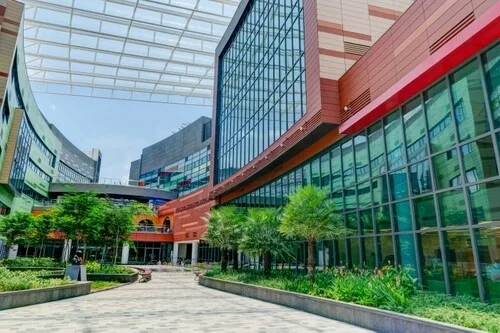
Global Indian International School Singapore smart campus learning environment

SMART Campus

A green, tech-enabled campus with extensive sports facilities that enables a holistic education

  • Kindergarten program at GIIS Singapore smart campus

    Montessori education with a modern touch.

  • Primary school curriculum at GIIS Singapore

    International primary programmes with best holistic learning.

  • Secondary school students learning at GIIS Singapore

    International middle school programmes with best foundation for high school.

  • High school education and curriculum at GIIS Singapore

    International high school programmes with beat launchpads for university.

21st century learning campus at GIIS Singapore

Facilities which are collaborative, creative and adaptable to individual needs.

Holistic education approach with 9 Gems at GIIS Singapore

Award-winning framework for all-round student development

Co-curricular activities at GIIS Singapore

Extra-curricular activities are those activities, often sports-based, that take place outside of the GIIS classroom

Extra curricular activities at GIIS Singapore

Talent shows, performances, competitions, clubs and additional classroom work.

Admission Process Icon

Get an overview of the admissions process

Campus Tour Icon

Register for a tour of the campus to learn more about the school first hand

Book Meeting Icon

You can talk to our Admissions Counsellor online or in-person, as per your convenience.

Admissions Form Icon

Find all forms related to admissions procedure here

Fees Icon

Get information on our fee structure for different grades

Scholarship Icon

Thank you for considering GIIS as a prospective school for your child. Our goal is to make the admissions.