Global
All Cities
Where would you like to study? Select cities to refine your search.
Any Curriculum
Find a campus based on the curriculum offered.
Global
Global
All Cities
Where would you like to study? Select cities to refine your search.
Any Curriculum
Find a campus based on the curriculum offered.
How IGCSE Provides a Strong Foundation for the IB Diploma Programme

How IGCSE Provides a Strong Foundation for the IB Diploma Programme

IGCSE

At Global Indian International School, we strive to provide our students with the foundation that they need to succeed in a global economy. With this in mind, we offer a curriculum that is uniquely designed to set students up for success in both the short and long term. The Cambridge IGCSE programme offered to our students in Grades 9 and 10, is a natural complement to the IBDP — which is available for students in high school.

Some parents are curious about why we offer these two programmes for our secondary school students. These are a few reasons why we believe the IGCSE provides a strong foundation for the IBDP:

The IGCSE is an Internationally-Recognised Curriculum, Similar to the IBDP

Both the IB DP and the IGCSE are internationally-recognised curricula, and are both renowned for their excellence. The IGCSE prepares students to look at all concepts and ideas with a global outlook. In fact, one of the courses in the IGCSE is “Global Perspectives”, which helps students understand the importance of viewing their world through a multicultural, interconnected lens. The IGCSE is also known for encouraging students to look beyond what they know, ask questions, and test their own theories. These skills help students greatly throughout the IBDP, which is known for requiring students to think critically and analytically throughout their coursework.

‍

The Choice of Subjects Available in the IGCSE Sets the Stage of the IBDP Courses

The IGCSE courses are categorised into five subject groups, and students are typically required to take seven subjects. Those subject groups include:

‍

● Languages

● Humanities and Social Sciences

● Natural Sciences

● Mathematics

● Creative and Professional

Within those groups, students can select courses that align with their personal interests and their prospective career goals. These subjects also set the foundation for the courses in the IBDP. The IB Diploma Programme is made up of six subject groups, and students are required to take one course from each group. Students generally take three Standard Level courses and three High Level courses, and the ones that they select will vary based on their personal goals.

The IBDP subject groups are:

● Studies in language and literature.

● Language acquisition.

● Individuals and societies.

● Sciences.

● Mathematics.

● The arts

‍

The IGCSE Focuses on In-Depth Study

The IGCSE is a two-year programme, and students will find that rather than covering a variety of topics at the surface level, they will study specific topics in-depth during their courses. This in-depth study allows them to fully understand the concepts covered and apply it within their own lives. They make lasting connections to the concepts covered and this prepares them for their future studies and careers.

The IBDP requires students to understand how to complete in-depth studies on specific topics successfully and conduct their own research. Students in the IB DP are expected to show initiative and work beyond the confines of the curriculum to expand their knowledge and deepen their understanding of the topic.
‍

Both, IGCSE and IBDP Curriculum, Rely on External Assessments

IGCSE students are required to complete external assessments in Grade 10, which are good practice for the external assessments that conclude the IB Diploma Programme in Grade 12. In the IGCSE, the assessment is designed to evaluate the knowledge and skills that the student has developed throughout the programme. It also helps students learn how to manage their time during an exam and understand the guidelines required to complete a formal written exam. Students in the IGCSE become more comfortable with the idea of external assessments, and they often approach the IB DP exams with more confidence than those who have less experience with external assessments.

The administrators and teachers at GIIS believe that the IGCSE and IB DP provide our students with the rigorous academic curriculum they need while also emphasising the importance of skill development and critical thinking.

IGCSE programme is offered at both the GIIS campuses – SMART Campus and East Coast. For more information on how IGCSE is the best foundation for the IBDP, book a tour today and meet our counsellors.

Deepika
Deepika Sodhi

Ms. Deepika Sodhi, Principal, GIIS East Coast Campus is a seasoned education leader with over 25 years of teaching experience, including 15+ years in Cambridge and IB programmes, and 10 years in CBSE.

She holds a Master's degree in Physics with a specialisation in Electronics, a Bachelor’s in Education, and an Honours Diploma in Software Management. Her teaching career spans India and Singapore.

Ms. Sodhi's achievements include being GATE (Graduate Aptitude Test in Engineering) qualified and a Gold Medalist in Physics, Lead ISO Auditor, a member of both the International Schools Network and the International Baccalaureate Educator’s Network.

In her past roles at GIIS, she served as Head of Science and Physics, Cambridge IGCSE Coordinator, Cambridge Exam Officer, and IB Examiner.

Ms. Sodhi is passionate about innovation, inclusivity, and student success. In her free time, she enjoys reading and volunteering with the Singapore Red Cross.
Featured Blogs

GIIS

How Much Homework Should International School Students Have at Each Grade Level?

As a general guideline, many educators reference roughly one hour of homework for average 13 year olds, per night, though this varies significantly with curriculum stage and the intensity increases once students move into pre-university programmes like the IB Diploma. What matters more than the exact hours is whether homework fits inside a school's broader approach to balance.

GIIS

How Are Students Evaluated in Singapore International Schools Beyond Board Exams?

Many International schools in Singapore evaluate students through a mix of ongoing formative checks, term-based summative assessments and periodic external benchmark tests. A student's report card reflects data gathered across the whole year, rather than one high-stakes sitting. This is the core difference between international school assessment in Singapore and systems built around exams like the PSLE or O-Levels.

Cambridge IGCSE

What Is the Cambridge IGCSE? A Guide for Parents and Students

A secondary school curriculum plays an important role in shaping a child's academic journey. It influences how a teenager learns, thinks and is assessed, while also affecting the pathways available for senior high school and university. For parents in Singapore exploring different curriculum options, the Cambridge IGCSE is often part of the conversation. As one of the world's most widely recognised secondary qualifications, it offers an internationally oriented approach to education.

Cambridge IGCSE

Cambridge IGCSE Results 2026: Everything Students and Parents Need to Know

If your child is preparing to enter Grade 9 or Grade 10, you have likely already encountered the term ‘IGCSE results’ in parent meetings, school communications, and open days. For those currently comparing IGCSE schools in Singapore, one practical question often stands out: how can a school's results be verified as genuinely reliable, rather than simply a marketing claim

Top Scholarships

Dr APJ Abdul Kalam Global Skills Scholarship

Eligibility:

Talent Based - Technology

More from same author
Trending Blogs

GIIS

How Much Homework Should International School Students Have at Each Grade Level?

As a general guideline, many educators reference roughly one hour of homework for average 13 year olds, per night, though this varies significantly with curriculum stage and the intensity increases once students move into pre-university programmes like the IB Diploma. What matters more than the exact hours is whether homework fits inside a school's broader approach to balance.

GIIS

How Are Students Evaluated in Singapore International Schools Beyond Board Exams?

Many International schools in Singapore evaluate students through a mix of ongoing formative checks, term-based summative assessments and periodic external benchmark tests. A student's report card reflects data gathered across the whole year, rather than one high-stakes sitting. This is the core difference between international school assessment in Singapore and systems built around exams like the PSLE or O-Levels.

Cambridge IGCSE

What Is the Cambridge IGCSE? A Guide for Parents and Students

A secondary school curriculum plays an important role in shaping a child's academic journey. It influences how a teenager learns, thinks and is assessed, while also affecting the pathways available for senior high school and university. For parents in Singapore exploring different curriculum options, the Cambridge IGCSE is often part of the conversation. As one of the world's most widely recognised secondary qualifications, it offers an internationally oriented approach to education.

Cambridge IGCSE

Cambridge IGCSE Results 2026: Everything Students and Parents Need to Know

If your child is preparing to enter Grade 9 or Grade 10, you have likely already encountered the term ‘IGCSE results’ in parent meetings, school communications, and open days. For those currently comparing IGCSE schools in Singapore, one practical question often stands out: how can a school's results be verified as genuinely reliable, rather than simply a marketing claim

Search
History Menu Icon

Our vision is to become a global role model for teaching and learning.

History Menu Icon Secondary

Since its inception in 2002, GIIS has spread quality education through 17 campuses across the globe.

Global Indian International School Singapore smart campus learning environment

SMART Campus

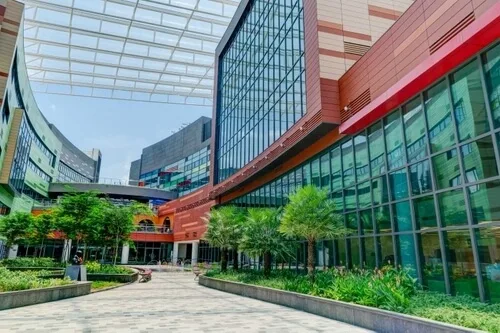
A green, tech-enabled campus with extensive sports facilities that enables a holistic education

  • Kindergarten program at GIIS Singapore smart campus

    Montessori education with a modern touch.

  • Primary school curriculum at GIIS Singapore

    International primary programmes with best holistic learning.

  • Secondary school students learning at GIIS Singapore

    International middle school programmes with best foundation for high school.

  • High school education and curriculum at GIIS Singapore

    International high school programmes with beat launchpads for university.

21st century learning campus at GIIS Singapore

Facilities which are collaborative, creative and adaptable to individual needs.

Holistic education approach with 9 Gems at GIIS Singapore

Award-winning framework for all-round student development

Co-curricular activities at GIIS Singapore

Extra-curricular activities are those activities, often sports-based, that take place outside of the GIIS classroom

Extra curricular activities at GIIS Singapore

Talent shows, performances, competitions, clubs and additional classroom work.

Admission Process Icon

Get an overview of the admissions process

Campus Tour Icon

Register for a tour of the campus to learn more about the school first hand

Book Meeting Icon

You can talk to our Admissions Counsellor online or in-person, as per your convenience.

Admissions Form Icon

Find all forms related to admissions procedure here

Fees Icon

Get information on our fee structure for different grades

Scholarship Icon

Thank you for considering GIIS as a prospective school for your child. Our goal is to make the admissions.