Global
All Cities
Where would you like to study? Select cities to refine your search.
Any Curriculum
Find a campus based on the curriculum offered.
Global
Global
All Cities
Where would you like to study? Select cities to refine your search.
Any Curriculum
Find a campus based on the curriculum offered.
Search

The importance of asking questions in the classroom

Learning

The master key to knowledge is persistent questioning. Albert Einstein said, “If I had an hour to solve a problem and my life depended on the solution, I would spend the first 55 minutes determining the proper question to ask.For once I know the proper question, I could solve the problem in less than five minutes.”

In the field of education, the significance of asking questions in the classroom cannot be overemphasised. As a fundamental block to effective learning, it helps students as well as teachers – it helps students to foster critical thinking and helps teachers to assess students’ understanding of concepts in different subject areas.

Here, we delve into the crucial role that questioning plays in the learning process and  why it should be encouraged and nurtured among students.

Nurtures curiosity

At its core, asking questions is an expression of curiosity. According to cognitive scientists, curiosity is said to be intrinsic to us humans, just like hunger and thirst. Educators have for long asserted that inquiry-based learning that kindles curiosity among students helps them to get engaged with their subject areas. Nurturing this curiosity is important for the learning process to be meaningful.

Encourages critical thinking

When students are encouraged to ask questions, they tend to analyse, evaluate and synthesise information. This process aids in better comprehension of the subject matter and develops problem solving skills – a complex skill that involves critical thinking, creativity, decision-making skills, and is invaluable in real-life scenarios.

Enhances student engagement

Disengaged students defeat the very purpose of education. One of the constant challenges in education is keeping students engaged and the reasons for that can be many – topics of discussion, length of classes, lack of real-world application of knowledge, and so on.

As such, a learning environment where questions are welcomed is quite likely to captivate students’ interest. Such an educational setting has the power to transform learning from a passive activity to an interactive and fun experience.When students know that their questions are not only welcomed but encouraged, they become more actively engaged in the learning process. They become partners in their learning rather than passive recipients of information.

Promotes effective communication

Effective communication is a skill that surpasses the classroom and is vital in all aspects of life. Encouraging questions in the classroom nurtures this skill. When students ask questions, they are also learning how to articulate their thoughts clearly. It is a transferable skill and can significantly benefit them in future endeavours, including their future careers.

Cultivates a growth mindset

A growth mindset is the belief that hard work, perseverance and continuous learning can add on to a person’s abilities. If students have a growth mindset, they will be keen to try out new challenges and learn. Asking questions helps in reinforcing this mindset.

Moreover, when students are encouraged to ask questions and seek answers, they become more willing to embrace challenges. They understand that not knowing something is not a weakness, rather it’s an opportunity to learn and grow.

A classroom that welcomes questions is inclusive by nature. It creates an environment where every student feels valued and heard. Furthermore, often these questions bring forth diverse perspectives – enriching the learning experience by exposing students to different viewpoints.

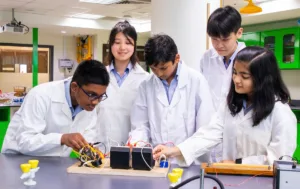
At Global Indian International School (GIIS), our students are provided with various curriculum choices, including the research-based pre university programme, the IB Diploma Programme (IBDP) and IB Primary Years Programme (IB PYP) that adopts an inquiry-based approach to education. The IB PYP and its inquiry-based approach engages students through critical thinking as they learn to ask questions and seek answers. Thereby, making them active participants in the learning process, and helping them to take ownership of their learning.

Also read: Inquiry-based learning: Long-term benefits for IB PYP students

In conclusion, the process of asking questions in the classroom acts as a catalyst for curiosity, critical thinking, engagement, effective communication, a growth mindset, and inclusivity. Encouraging questions is a commitment to nurturing well-rounded, empowered, and knowledgeable individuals who are prepared to face the challenges of the future.

If you are keen to know more about IB PYP at GIIS, please don’t hesitate to contact our admissions counsellors.

Shubhdarshani Mitra

Shubhdarshani has over 10 years of experience in content creation, curation and editing. She has worked for Indian newspapers, school magazines and international news websites where she worked closely with the leadership on the execution and communication of the content strategy. Aside from work, she’s a passionate B&W photographer and storyteller.
Featured Blogs

GIIS

Mid-Year & Transfer Admissions: Moving Your Child to a Singapore International School (2026)

Relocating to Singapore rarely happens on a school's neat academic calendar. A posting can start in June, a lease can begin in September, a visa can clear in November—and somewhere in between, a child still needs a classroom, a timetable and a group of friends. This is the reality behind expat school admissions mid year in Singapore and it's a far more common situation than most parents expect.

GIIS

Choosing Subjects for IGCSE: A Parent’s Guide to Streams, Options & Future Careers

By age 14, most children have never had to make a decision that shapes their next ten years. Choosing IGCSE subjects is exactly that decision and for parents, it often arrives with more questions than answers. Which subjects matter for university? Does dropping a science close doors? Is a 'safe' combination actually the right one?

GIIS

Your Child’s Journey to IBDP Success Starts Before Grade 11: A Parent’s Guide

While evaluating the IB Diploma programme in Singapore for their children, parents center the conversation around Grade 11 and 12. It is during these final two high school years that students write their Extended Essays, dive deep into Theory of Knowledge (TOK) and prepare for final examinations.

CBSE Results

IBDP Results 2026: What Parents Should Consider Before Choosing an IB School in Singapore

Choosing the right international school for your child is one of the most critical academic decisions a parent can make. With the release of the May 2026 International Baccalaureate Diploma Programme (IBDP) results, parents across Singapore are evaluating school performance metrics to determine where their child will thrive best.

Top Scholarships

Dr APJ Abdul Kalam Global Skills Scholarship

Eligibility:

Talent Based - Technology

More from same author
Trending Blogs

GIIS

Mid-Year & Transfer Admissions: Moving Your Child to a Singapore International School (2026)

Relocating to Singapore rarely happens on a school's neat academic calendar. A posting can start in June, a lease can begin in September, a visa can clear in November—and somewhere in between, a child still needs a classroom, a timetable and a group of friends. This is the reality behind expat school admissions mid year in Singapore and it's a far more common situation than most parents expect.

GIIS

Choosing Subjects for IGCSE: A Parent’s Guide to Streams, Options & Future Careers

By age 14, most children have never had to make a decision that shapes their next ten years. Choosing IGCSE subjects is exactly that decision and for parents, it often arrives with more questions than answers. Which subjects matter for university? Does dropping a science close doors? Is a 'safe' combination actually the right one?

GIIS

Your Child’s Journey to IBDP Success Starts Before Grade 11: A Parent’s Guide

While evaluating the IB Diploma programme in Singapore for their children, parents center the conversation around Grade 11 and 12. It is during these final two high school years that students write their Extended Essays, dive deep into Theory of Knowledge (TOK) and prepare for final examinations.

CBSE Results

IBDP Results 2026: What Parents Should Consider Before Choosing an IB School in Singapore

Choosing the right international school for your child is one of the most critical academic decisions a parent can make. With the release of the May 2026 International Baccalaureate Diploma Programme (IBDP) results, parents across Singapore are evaluating school performance metrics to determine where their child will thrive best.

GIIS

How GIIS Students Achieved Outstanding IBDP Results in 2026: A Look at the Learning Approach

Choosing the right senior secondary curriculum requires more than academic rigour. Students also need an environment that nurtures critical thinking, global perspectives, personal growth, and university readiness. For families evaluating the IB diploma programme in Singapore, the May 2026 International Baccalaureate Diploma Programme (IBDP) examination results offer clear evidence of how structured academic mentoring and personalised pedagogy lead to top-tier university readiness.

GIIS

Moving to Singapore with Children: A Complete School Guide for Expat Families (2026)

Relocating to Singapore is an exciting milestone for any family. Alongside finding a new home, settling into a different culture, and adapting to a new lifestyle, one of the biggest decisions parents face is choosing the right school for their children.

GIIS

Why GIIS SMART Campus Singapore Stands Out as a Future-Ready School

As technology and global careers continue to evolve, parents are looking for future-ready schools that offer more than academics. GIIS SMART Campus Singapore combines academic excellence, global curricula, innovative learning, and holistic development to prepare students for lifelong success.

GIIS

GIIS SMART Campus Singapore: Programmes & Admissions Guide for Punggol Families (2026)

As more families move into Punggol, Sengkang, and the North-East region of Singapore, the demand for high-quality international education continues to grow. Parents today are looking for schools that combine academic excellence, future-ready learning, global curricula, and holistic development.

GIIS

How to Choose the Best Primary School in Singapore: A Parent’s Complete Guide (2026)

The primary school years lay the foundation for a child's future success, shaping not only academic achievement but also confidence, character, curiosity, and a lifelong love of learning. Choosing a school that combines strong academics with holistic development helps children build the knowledge, skills, and values they need to thrive in an ever-changing world.

Search
History Menu Icon

Our vision is to become a global role model for teaching and learning.

History Menu Icon Secondary

Since its inception in 2002, GIIS has spread quality education through 17 campuses across the globe.

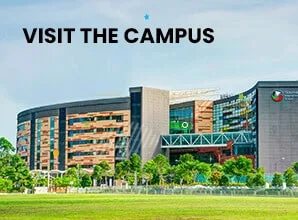
Global Indian International School Singapore smart campus learning environment

SMART Campus

A green, tech-enabled campus with extensive sports facilities that enables a holistic education

  • Kindergarten program at GIIS Singapore smart campus

    Montessori education with a modern touch.

  • Primary school curriculum at GIIS Singapore

    International primary programmes with best holistic learning.

  • Secondary school students learning at GIIS Singapore

    International middle school programmes with best foundation for high school.

  • High school education and curriculum at GIIS Singapore

    International high school programmes with beat launchpads for university.

21st century learning campus at GIIS Singapore

Facilities which are collaborative, creative and adaptable to individual needs.

Holistic education approach with 9 Gems at GIIS Singapore

Award-winning framework for all-round student development

Co-curricular activities at GIIS Singapore

Extra-curricular activities are those activities, often sports-based, that take place outside of the GIIS classroom

Extra curricular activities at GIIS Singapore

Talent shows, performances, competitions, clubs and additional classroom work.

Admission Process Icon

Get an overview of the admissions process

Campus Tour Icon

Register for a tour of the campus to learn more about the school first hand

Book Meeting Icon

You can talk to our Admissions Counsellor online or in-person, as per your convenience.

Admissions Form Icon

Find all forms related to admissions procedure here

Fees Icon

Get information on our fee structure for different grades

Scholarship Icon

Thank you for considering GIIS as a prospective school for your child. Our goal is to make the admissions.