When researching international schools in Singapore, parents often encounter the terms IB and IBDP. Although closely connected, they refer to different things.
IB stands for International Baccalaureate, the organisation that offers four educational programmes. IBDP stands for International Baccalaureate Diploma Programme, its two-year pre-university programme.
For parents, understanding this distinction makes it easier to compare schools, identify suitable programmes and plan their child’s educational journey.
What Is IB?
The International Baccalaureate offers programmes that encourage students to question, investigate and connect their learning across subjects. Its educational approach combines academic development with personal growth and an understanding of different cultures and perspectives.
The IB offers four programmes for different stages of education:
| IB programme | General age range | Main focus |
| Primary Years Programme (PYP) | 3–12 | Inquiry-based learning during early childhood and primary education |
| Middle Years Programme (MYP) | 11–16 | Connecting subject knowledge with broader ideas and real-world contexts |
| Diploma Programme (DP or IBDP) | 16–19 | Academic breadth, subject depth and preparation for further study |
| Career-related Programme (CP) | 16–19 | Combining academic study with career-related learning |
These are the IB’s general age ranges. Individual schools determine their grade structure and admission requirements.
A school must be authorised to offer an IB programme. An IB World School may offer one or more programmes; the designation does not mean it offers all four.
What Is IBDP?
The IBDP is a specific programme within the IB’s educational offering. Students study six subjects alongside three compulsory core components: Theory of Knowledge, the Extended Essay and Creativity, Activity, Service.
This structure combines subject learning with opportunities to investigate questions independently, evaluate ideas and participate in experiences beyond academic lessons.
At Global Indian International School (GIIS) Singapore, the Diploma Programme runs across Grades 11 and 12.
IB vs IBDP: A Simple Comparison
| Feature | IB | IBDP |
| Full name | International Baccalaureate | International Baccalaureate Diploma Programme |
| Meaning | The organisation and its educational programmes | One specific programme offered by the IB |
| Age coverage | Programmes collectively cover ages 3–19 | Designed for ages 16–19 |
| Educational stage | Early childhood through pre-university | Pre-university |
| Study structure | Depends on the programme | Six subjects and the DP core |
| What parents should check | Which IB programmes the school offers | Subject options, admission requirements and student support |
When someone says their teenager is “studying IB”, they may mean the Diploma Programme. Asking for the exact programme name helps parents understand what the school offers.
What Do Students Study in the IBDP?
The Diploma Programme’s six subject groups are:
- Studies in language and literature
- Language acquisition
- Individuals and societies
- Sciences
- Mathematics
- The arts
Students may replace an arts subject with an additional subject from sciences, individuals and societies, or languages.
The IB permits three or four Higher Level subjects, with the remaining subjects at Standard Level. Higher Level subjects involve greater depth and scope. Available combinations depend on the school’s subject offerings and timetable.
GIIS in Singapore describes its IBDP structure as three Higher Level and three Standard Level subjects. Parents should discuss the current subject options with the school before choosing a combination.
Understanding the IBDP Core
Theory of Knowledge
Theory of Knowledge, commonly called TOK, encourages students to examine how knowledge is developed and justified.
Students explore questions about evidence, interpretation and perspective. For example, they might consider how the methods used to establish knowledge differ between science and history.
TOK is assessed through an exhibition and a 1,600-word essay.
Extended Essay
The Extended Essay is an independent research project resulting in a paper of up to 4,000 words.
Students investigate a focused question and develop an evidence-based discussion. The process gives them practice in research, academic writing and managing a substantial piece of work.
Creativity, Activity, Service
Creativity, Activity, Service, or CAS, encourages students to learn through experiences alongside their academic studies.
Its three strands cover creative thinking and expression, physical activity, and voluntary service. Students also undertake a CAS project and reflect on their experiences and learning.
CAS is compulsory for the Diploma Programme, although it does not receive a numerical grade like an academic subject.
How Is the IBDP Assessed?
The Diploma Programme uses both external and internal assessment.
Examinations are a major component in most subjects. Depending on the course, students may also complete oral assessments, laboratory work, mathematical investigations, fieldwork or artistic performances.
Students therefore need to manage ongoing assignments alongside examination preparation. Their work is assessed against established standards rather than their position within a class ranking.
When comparing schools, parents can ask how teachers coordinate deadlines and help students organise their workload.
IB Programmes at GIIS in Singapore
GIIS in Singapore offers the IB Primary Years Programme and the IB Diploma Programme.The IBDP provides a two-year pathway for students in Grades 11 and 12. GIIS also offers university counselling, which families can use to discuss subject choices and future study plans.
Parents should consider the full educational journey: the programme their child will enter, the next stage available and the preparation needed to make that transition successfully.
What Should Parents Ask Before Choosing the IBDP?
A school visit is an opportunity to understand how the programme works in practice. Useful questions include:
- Which subjects are available at Higher and Standard Level?
- What academic preparation is expected before entry?
- Which subject combinations suit my child’s possible university courses?
- How are students supported with research and academic writing?
- How does the school coordinate coursework deadlines?
- What guidance is available for CAS and university applications?
Choosing the programme involves more than recognising the IB name. The subject combination, teaching support and day-to-day learning expectations should suit the individual student.
Explore the Diploma Programme at GIIS in Singapore
For families considering the IBDP, discussing their child’s interests and future goals with the school is a practical next step.
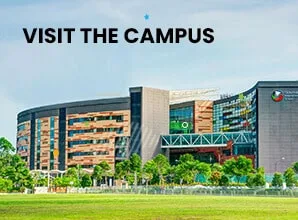
Book a campus tour at GIIS in Singapore to explore the Diploma Programme, discuss current subject options and learn about support available throughout Grades 11 and 12.
Team GIIS
Team GIIS is a group of enthusiastic writers who bring the vibrant world of GIIS in Singapore to life through engaging blog posts. Dedicated to highlighting the school’s teaching methodology, innovative learning environment, and diverse curriculum options like IB, Cambridge and CBSE, they aim to connect with parents, educators and students, sharing insights and stories that inspire and inform the school community.