Global
All Cities
Where would you like to study? Select cities to refine your search.
Any Curriculum
Find a campus based on the curriculum offered.
Global
Global
All Cities
Where would you like to study? Select cities to refine your search.
Any Curriculum
Find a campus based on the curriculum offered.
Search

How to Improve Reading Skills of Children in Primary School?

Parenting Tips

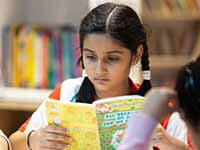
Reading is an essential skill, one that your child needs. Better reading comprehension, for instance, sets a child up for success later in life. It is also linked to improved emotional and intellectual development in children.

It also helps with the child’s communication skills. There’s also the fact that reading for fun brings kids many benefits, one of which includes much-needed escape.

Also, reading boosts creativity and imagination in kids, which will help them to succeed in a top Singapore school. Given all these reasons and more, you want to make sure your child’s reading skills improve.

At What Age Should a Child Read Fluently?

Most kids read fluently around ages 8 and 9. By third grade, most kids can read fluently, but some may need extra help if they struggle with reading comprehension or if English is their second language.

What is the Most Important Reading Skill?

The most important reading skill is decoding. Decoding is the ability to translate a series of letters into their appropriate sounds and blend them together to produce words that can be understood.

The ability to decode words is very important, it allows readers to read as many different words as possible. It enables readers to comprehend text at a basic level.

Without decoding skills, readers cannot move through the text quickly or efficiently and they will not be able to process what they read as easily.

7 Tips to Improve Reading Skills

1. Set Up a Routine

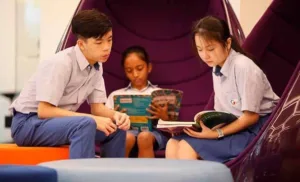
Is your schedule filled to the brim every day? You’ll need to set aside time to develop a daily reading routine for your kid. You could block off a certain hour of the day so you and your child can read a story together.

Reading a story together isn’t just a fantastic way to bond with your child—though that is indisputably one of the best handy side-bennies of the arrangement.

It also helps increase your child’s reading abilities by learning new words, adding to the kid’s vocabulary, improving reading comprehension, and getting more familiar with words.

2. Correct Your Child

Reading together through your child’s lessons or books will help your child improve their academic scores at primary school.

If your child is having a little trouble developing those reading skills, continuing to work with the kid can make a world of difference.

When you correct how your child reads or pronounces a difficult word, you help your little one prepare for school. But make sure that when you correct your child, you also know how to build up his or her self-confidence.

Providing your child with feedback is important but do it in a way that won’t crush the child’s self-esteem and confidence. If you do, that will have long-term consequences and emotional trauma for the child.

Those problems don’t only affect your kid’s emotional well-being but also your little one’s mental health.

3. Encourage Reading

Kids who grow up readers, often have one thing in common: they found stories they loved. Make that happen for your child, too.

Help your little one find books that they love. That will instil a love of reading. You might also want to give your child the freedom to choose the reading material.

For instance, it could be a fantasy or horror story. It could be a sci-fi tale or a love story. It could be a fairytale. With so many options out there, you’re sure to find books that your child will fall in love with.

4. Act the Stories Out

There’s always a possibility that your child is an auditory listener. If that’s the case, then consider having your child act out scenes from the story.

That will not only help your kid remember those lessons better but acting the stories out boosts your child’s creativity as it forces the child to think about the scenario and figure out the most appropriate response to the situation.

Also, acting out stories is fun. That level of enjoyment and fun means that the child is more likely to come out of their shell.

If your child isn’t sociable or has trouble being comfortable in social settings, then acting out stories—modulating your voices, playing characters, and much more—can help your child improve his or her self-confidence. That develops your child’s communication skills, too.

Also Read: What are the facilities that children get in a playschool in Singapore?

5. Introduce Interactive Stories

Make it easy for your child to read. Provide access to a ton of reading materials. Ask your child what they like.

This is also an excellent time to allow your child to read interactive stories online or using apps. There’s a ton of fun to be had in these stories. They don’t just improve your child’s reading skills; they also contribute to your child’s cognitive development.

Interactive games are fun as well. Allowing your child to associate reading with fun can help eliminate any anxiety or insecurity that your child might have over reading. Those anxieties could be why your kid has such a hard time remembering or pronouncing some simple words in his or her vocabulary.

6. Ask Questions

Toss open-ended questions at your child. Many choose questions that kids can answer with a simple yes or no. But that doesn’t help the child’s language development.

By asking open-ended questions, though, you help your child use more words. That familiarity can help your child improve his or her reading skills, too. It’s easier to use full sentences when you train your child to express their thoughts with open-ended questions.

7. Let Your Child Tell the Story

If your child loves a particular story, then do a bit of acting and purposely read the words or sentences the wrong way.

If your child is paying attention, they will react and ask you to reread those sections. If you’re feeling particularly playful, then ask your child to read it aloud for you because you’ve already forgotten.

You might think your child is too smart to fall for this trick. But most kids end up reading the words out loud, which helps them improve their reading skills. If your child’s main problem is motivation, if they struggle to stay motivated in reading, then this will do the trick.
Additional Tips to Improve Reading Skills

8. Go Beyond Books

What better way to let your child learn about the world at large than to encourage your little one to read about nature and the universe?

There’s chock full of data online beyond your child’s textbooks. You might want to start with the school-approved titles. But that doesn’t mean you should limit your child to those options. Allow your child to choose some of those reading materials, too.

9. Know That Every Child is Different

That means not all kids perform and develop at the same pace. They don’t even absorb and retain information in the same way. That means your child might be having a tough time improving his or her reading skills now.

But with continued practice or by exploring a range of different learning approaches, you might find the learning style that works for your little one.

The key is not to make your child feel bad or make them feel less intelligent or academically capable than their peers. Remind your child, too, that each one develops at his or her own pace.

10. Encourage Your Child

Your support continues to be a huge factor. Parental support has a positive impact on a child’s reading skills. By showing your child that you care, that you’re there, and that you can provide the help and guidance they need, your child won’t have to fear being left behind.

11. Talk to a Specialist

Delays in reading, communication, and speech, though, could be indicative of a mental condition or learning disability.

It’s a good idea to consult with a specialist to find out if there’s something wrong. Getting to the bottom of the problem will mean finding the right way to help your child if it does turn out to be a learning disability.

The tips can prepare your child much better for the level of reading attention and skills needed for primary school.


Featured Blogs

GIIS

Mid-Year & Transfer Admissions: Moving Your Child to a Singapore International School (2026)

Relocating to Singapore rarely happens on a school's neat academic calendar. A posting can start in June, a lease can begin in September, a visa can clear in November—and somewhere in between, a child still needs a classroom, a timetable and a group of friends. This is the reality behind expat school admissions mid year in Singapore and it's a far more common situation than most parents expect.

GIIS

Choosing Subjects for IGCSE: A Parent’s Guide to Streams, Options & Future Careers

By age 14, most children have never had to make a decision that shapes their next ten years. Choosing IGCSE subjects is exactly that decision and for parents, it often arrives with more questions than answers. Which subjects matter for university? Does dropping a science close doors? Is a 'safe' combination actually the right one?

GIIS

Your Child’s Journey to IBDP Success Starts Before Grade 11: A Parent’s Guide

While evaluating the IB Diploma programme in Singapore for their children, parents center the conversation around Grade 11 and 12. It is during these final two high school years that students write their Extended Essays, dive deep into Theory of Knowledge (TOK) and prepare for final examinations.

CBSE Results

IBDP Results 2026: What Parents Should Consider Before Choosing an IB School in Singapore

Choosing the right international school for your child is one of the most critical academic decisions a parent can make. With the release of the May 2026 International Baccalaureate Diploma Programme (IBDP) results, parents across Singapore are evaluating school performance metrics to determine where their child will thrive best.

Top Scholarships

Dr APJ Abdul Kalam Global Skills Scholarship

Eligibility:

Talent Based - Technology

More from same author
Trending Blogs

GIIS

Mid-Year & Transfer Admissions: Moving Your Child to a Singapore International School (2026)

Relocating to Singapore rarely happens on a school's neat academic calendar. A posting can start in June, a lease can begin in September, a visa can clear in November—and somewhere in between, a child still needs a classroom, a timetable and a group of friends. This is the reality behind expat school admissions mid year in Singapore and it's a far more common situation than most parents expect.

GIIS

Choosing Subjects for IGCSE: A Parent’s Guide to Streams, Options & Future Careers

By age 14, most children have never had to make a decision that shapes their next ten years. Choosing IGCSE subjects is exactly that decision and for parents, it often arrives with more questions than answers. Which subjects matter for university? Does dropping a science close doors? Is a 'safe' combination actually the right one?

GIIS

Your Child’s Journey to IBDP Success Starts Before Grade 11: A Parent’s Guide

While evaluating the IB Diploma programme in Singapore for their children, parents center the conversation around Grade 11 and 12. It is during these final two high school years that students write their Extended Essays, dive deep into Theory of Knowledge (TOK) and prepare for final examinations.

CBSE Results

IBDP Results 2026: What Parents Should Consider Before Choosing an IB School in Singapore

Choosing the right international school for your child is one of the most critical academic decisions a parent can make. With the release of the May 2026 International Baccalaureate Diploma Programme (IBDP) results, parents across Singapore are evaluating school performance metrics to determine where their child will thrive best.

GIIS

How GIIS Students Achieved Outstanding IBDP Results in 2026: A Look at the Learning Approach

Choosing the right senior secondary curriculum requires more than academic rigour. Students also need an environment that nurtures critical thinking, global perspectives, personal growth, and university readiness. For families evaluating the IB diploma programme in Singapore, the May 2026 International Baccalaureate Diploma Programme (IBDP) examination results offer clear evidence of how structured academic mentoring and personalised pedagogy lead to top-tier university readiness.

GIIS

Moving to Singapore with Children: A Complete School Guide for Expat Families (2026)

Relocating to Singapore is an exciting milestone for any family. Alongside finding a new home, settling into a different culture, and adapting to a new lifestyle, one of the biggest decisions parents face is choosing the right school for their children.

GIIS

Why GIIS SMART Campus Singapore Stands Out as a Future-Ready School

As technology and global careers continue to evolve, parents are looking for future-ready schools that offer more than academics. GIIS SMART Campus Singapore combines academic excellence, global curricula, innovative learning, and holistic development to prepare students for lifelong success.

GIIS

GIIS SMART Campus Singapore: Programmes & Admissions Guide for Punggol Families (2026)

As more families move into Punggol, Sengkang, and the North-East region of Singapore, the demand for high-quality international education continues to grow. Parents today are looking for schools that combine academic excellence, future-ready learning, global curricula, and holistic development.

GIIS

How to Choose the Best Primary School in Singapore: A Parent’s Complete Guide (2026)

The primary school years lay the foundation for a child's future success, shaping not only academic achievement but also confidence, character, curiosity, and a lifelong love of learning. Choosing a school that combines strong academics with holistic development helps children build the knowledge, skills, and values they need to thrive in an ever-changing world.

Search
History Menu Icon

Our vision is to become a global role model for teaching and learning.

History Menu Icon Secondary

Since its inception in 2002, GIIS has spread quality education through 17 campuses across the globe.

Global Indian International School Singapore smart campus learning environment

SMART Campus

A green, tech-enabled campus with extensive sports facilities that enables a holistic education

  • Kindergarten program at GIIS Singapore smart campus

    Montessori education with a modern touch.

  • Primary school curriculum at GIIS Singapore

    International primary programmes with best holistic learning.

  • Secondary school students learning at GIIS Singapore

    International middle school programmes with best foundation for high school.

  • High school education and curriculum at GIIS Singapore

    International high school programmes with beat launchpads for university.

21st century learning campus at GIIS Singapore

Facilities which are collaborative, creative and adaptable to individual needs.

Holistic education approach with 9 Gems at GIIS Singapore

Award-winning framework for all-round student development

Co-curricular activities at GIIS Singapore

Extra-curricular activities are those activities, often sports-based, that take place outside of the GIIS classroom

Extra curricular activities at GIIS Singapore

Talent shows, performances, competitions, clubs and additional classroom work.

Admission Process Icon

Get an overview of the admissions process

Campus Tour Icon

Register for a tour of the campus to learn more about the school first hand

Book Meeting Icon

You can talk to our Admissions Counsellor online or in-person, as per your convenience.

Admissions Form Icon

Find all forms related to admissions procedure here

Fees Icon

Get information on our fee structure for different grades

Scholarship Icon

Thank you for considering GIIS as a prospective school for your child. Our goal is to make the admissions.