Global
All Cities
Where would you like to study? Select cities to refine your search.
Any Curriculum
Find a campus based on the curriculum offered.
Global
Global
All Cities
Where would you like to study? Select cities to refine your search.
Any Curriculum
Find a campus based on the curriculum offered.
Search

5 ways GIIS helps students fall in love with a second language

Languages

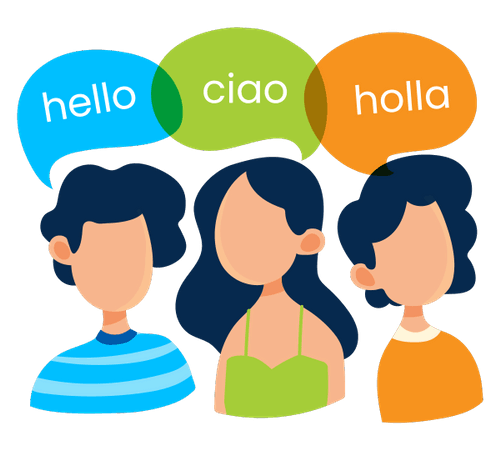
Proficiency in another language in today’s world means better opportunities to connect and thrive in a globalised community. While acquiring knowledge in another language involves the technical aspects of learning the language, it also includes appreciation of other cultures embracing new nuances of the language and evolving mediums of communication.

Learning a new language is not as simple as asking students to read more, use a dictionary or absorb new vocabulary. As educators, we need to constantly reflect on our teaching methodology to achieve the desired learning outcomes. Depending on how we deliver our lessons, whether it is face-to-face or online, we need to adapt quickly and effectively to simulate the minds of our students. One way to do this is to get the students to answer a quick survey about their language choice that can give a great insight into their personal motivation and interests.

Placing motivation above achievement derives a better outcome. At GIIS, we believe helping students find purpose and passion is key to making students love what they are learning. Here are five simple ways that we use to help our students find a new  language interesting, fun and meaningful:

1. We make the environment inviting

Space plays a crucial role when we teach our students. The environment has a great influence on how the students learn as we aim to provide the best possible immersive experience. Harnessing the right learning environment enables best outcomes for GIIS students.

It is important to understand that this space should not be limited to the physical boundaries of the classroom. It stretches beyond these confines, also present in a virtual setting, including an online school setup. For our students getting exposure to a new language, it’s a stage where we choose the role we want to play and get them to communicate, share and participate actively in their learning.

2. Structure plays a key role in learning

Structure plays a vital role as students can thrive in an organised setting where they have a clear idea of what’s happening and what is expected out of them. Guidelines for work completion submissions in and outside of classrooms enables them to focus and improve their skills. For example, a simple ‘Exit Card’ activity at the end of every week where each student shares one new concept can validate their learning. Students eagerly look forward to this activity and start reflecting on their learning at the end of every session.

3. Establishing relevance is pivotal

Why are they learning a concept? How can they use it in a real world scenario? These are questions we should be asking when we teach our students. They must not only understand what they are learning but also the purpose of learning those concepts so that they can put their knowledge to use in real-life situations.

For example, letting students write about what they love or simply going for a walk to find inspiration for creative pieces helps them embrace the language. Also, finding links with English and other subjects is an essential part as it builds their critical thinking skills. Activities like navigating through a city, even if it is virtually, comparing food and lifestyle habits of people from different countries, and talking about technological developments help. We hear our students frequently say, “Food pyramid? Family tree in French? I did that in my other class today,” or “We are doing math in French!” Students need to draw from their experiences in other areas to build their language skills and understanding of the world around them.
4. Encouraging independent thinking

Developing thinkers is an evolving process. Our role as educators is to develop curiosity and creativity, enabling students to become more effective learners and eventually transcending into independent thinkers.

Providing strategies to set short and long term goals leads to autonomy and enables our students to extend themselves. Establishing different kinds of learners such as visual, auditory, or kinesthetic, in our class enables us to cater to their individual needs. Providing various ways of grasping concepts and accommodating diverse learners by allowing students to explore various topics through project-based learning enhances the quality of learning.

5. ‘Voice’ makes our students better learners

‘Voice’ makes our students more confident as they want to be heard. This is true for both highly social and solitary learners. This dichotomy in the classroom can sometimes pose a problem. It can be challenging to strike a balance where there are students who are eager to be the voice of the class and those who prefer to be quiet and let others do the talking.

This is where we help our students develop their interpersonal skills through role plays, reading, performing songs or poetry. This helps with their pronunciation and moulds their personality. Allowing students to explain concepts to other students, running a flipped classroom, giving peer feedback are some other ways through which we get the best out of all our students.

Language teachers are lifelong learners– we learn from others and we adapt. We are enablers who help our students understand, recall and utilise language to become confident communicators and tolerant citizens of this world. Our students can see and expand their understanding of this world even better through their second language learning experience.

Second language options are available to GIIS students, right from kindergarten (excluding Nursery) through Grade 12. French, Mandarin, Tamil and Hindi are taught as part of GIIS’ language programme across different grades. Under the guidance of our experienced language teachers, students get the exposure and opportunity to learn a new language which can open new doors of success for them later in life.

If you are looking for a valuable learning experience for your child, please feel free to get in touch with our friendly admissions counsellors.

Ranjana Siva Ram

Ms Ranjana, a highly accomplished French teacher, joined the GIIS East Coast Campus after moving from Australia. She has been teaching French, English and EAL for more than 20 years and graduated from Monash University, Australia. As a polyglot, she shares her passion for languages with her students. She helps them understand how our experiences influence our communication.
Featured Blogs

GIIS

Extra-Curricular Activities (ECA) at GIIS Singapore: Sports, Arts & Clubs Guide

A child’s growth extends far beyond academics. At Global Indian International School (GIIS) Singapore, Extra-Curricular Activities (ECAs) and Co-Curricular Activities (CCAs) are thoughtfully designed to nurture leadership, creativity, teamwork, confidence, and physical wellbeing alongside academic excellence.

IB Curriculum

IB Schools in Singapore: Top Schools, Fees & How to Choose (2026)

Choosing the right IB school in Singapore is one of the most important decisions for families seeking an internationally recognised education. With Singapore being home to some of Asia’s leading International Baccalaureate (IB) schools, parents today have access to a wide range of institutions offering strong academics, global exposure, and holistic learning environments.

Singapore Education System

PSLE vs International School Singapore: Which Path is Right for Your Child?

Every parent wants to choose the educational pathway that will best support their child’s confidence, happiness, academic growth, and future opportunities.

CBSE

Secondary School Fees in Singapore: CBSE, IGCSE & IB Compared (2026-27)

Choosing the right secondary school in Singapore involves balancing academic quality, curriculum options, future opportunities, and affordability. With multiple international curricula available, including CBSE, IGCSE, and IB, parents often compare tuition fees alongside campus facilities, learning approaches, and long-term value.

Top Scholarships

Dr APJ Abdul Kalam Global Skills Scholarship

Eligibility:

Talent Based - Technology

More from same author
Trending Blogs

GIIS

Extra-Curricular Activities (ECA) at GIIS Singapore: Sports, Arts & Clubs Guide

A child’s growth extends far beyond academics. At Global Indian International School (GIIS) Singapore, Extra-Curricular Activities (ECAs) and Co-Curricular Activities (CCAs) are thoughtfully designed to nurture leadership, creativity, teamwork, confidence, and physical wellbeing alongside academic excellence.

IB Curriculum

IB Schools in Singapore: Top Schools, Fees & How to Choose (2026)

Choosing the right IB school in Singapore is one of the most important decisions for families seeking an internationally recognised education. With Singapore being home to some of Asia’s leading International Baccalaureate (IB) schools, parents today have access to a wide range of institutions offering strong academics, global exposure, and holistic learning environments.
Singapore Education System

PSLE vs International School Singapore: Which Path is Right for Your Child?

Every parent wants to choose the educational pathway that will best support their child’s confidence, happiness, academic growth, and future opportunities.

CBSE

Secondary School Fees in Singapore: CBSE, IGCSE & IB Compared (2026-27)

Choosing the right secondary school in Singapore involves balancing academic quality, curriculum options, future opportunities, and affordability. With multiple international curricula available, including CBSE, IGCSE, and IB, parents often compare tuition fees alongside campus facilities, learning approaches, and long-term value.

IB Curriculum

What is the IB Curriculum? A Parent’s Simple Guide to PYP, MYP & Diploma (2026)

Choosing the right curriculum is one of the biggest decisions parents make for their child’s future. With more families in Singapore exploring international education pathways, the International Baccalaureate (IB) curriculum has become one of the most respected and future-focused learning frameworks globally.

CBSE

What is CBSE? A Complete Guide for Parents in Singapore

For Indian families relocating to Singapore, choosing the right curriculum is one of the most important educational decisions. Many parents prefer the CBSE curriculum because it offers academic continuity, strong conceptual learning, and preparation for competitive examinations such as JEE and NEET.

Admission Tips

How to Apply to an International School in Singapore: Step-by-Step Guide (2026)

Navigating the landscape of international education in the Lion City requires careful planning. Whether you are looking for how to apply for international school in Singapore or managing your budget around international school fees in Singapore, this guide provides a clear, validated roadmap for your family’s transition.

CBSE

CBSE vs IGCSE vs IB: Which Curriculum is Right for Your Child in Singapore?

Choosing the best curriculum in Singapore is not about finding the “single best” board; it is about finding the right fit for your child’s learning style and your family’s long-term plans. Whether you are considering CBSE vs IGCSE in Singapore schools or looking ahead to the IB Diploma, each pathway offers distinct advantages for different types of learners.

IB Program

IB Diploma in Singapore: Schools, Fees, Subjects & University Results (2026-27)

Singapore remains the global powerhouse for the International Baccalaureate (IB) Diploma Programme (DP). As we move into the 2026-2027 academic year, the landscape is evolving with new curriculum updates in the sciences and history, alongside a shift toward digital assessments.

Search
History Menu Icon

Our vision is to become a global role model for teaching and learning.

History Menu Icon Secondary

Since its inception in 2002, GIIS has spread quality education through 17 campuses across the globe.

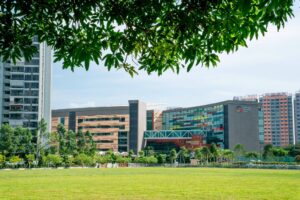
Global Indian International School Singapore smart campus learning environment

SMART Campus

A green, tech-enabled campus with extensive sports facilities that enables a holistic education

  • Kindergarten Menu Image

    Montessori education with a modern touch.

  • Primary School Menu Image

    International primary programmes with best holistic learning.

  • Secondary School Menu Image

    International middle school programmes with best foundation for high school.

  • High School Menu Image

    International high school programmes with beat launchpads for university.

21st Century Learning Campus

Facilities which are collaborative, creative and adaptable to individual needs.

Holistic Education Menu

Award-winning framework for all-round student development

CCA Menu Image

Extra-curricular activities are those activities, often sports-based, that take place outside of the GIIS classroom

ECA Menu Image

Talent shows, performances, competitions, clubs and additional classroom work.

Admission Process Icon

Get an overview of the admissions process

Campus Tour Icon

Register for a tour of the campus to learn more about the school first hand

Book Meeting Icon

You can talk to our Admissions Counsellor online or in-person, as per your convenience.

Admissions Form Icon

Find all forms related to admissions procedure here

Fees Icon

Get information on our fee structure for different grades

Scholarship Icon

Thank you for considering GIIS as a prospective school for your child. Our goal is to make the admissions.