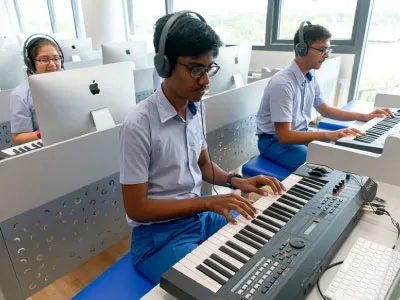
In his song ‘Imagine’, John Lennon envisioned a seemingly utopian dream, “Imagine all the people living life in peace…”. At a surface level, this statement may sound rather simplistic and easier said than done. However, as we delve deeper, we often realise that world peace begins with baby-steps, such as accepting every individual and helping each one overcome their challenges.
As a leading international school in Singapore, we realise that raising differently-abled children requires the parent/ caretaker and mentors to be sensitive to their physical requirements and mental and emotional needs. In case of any disability or special need, the key is to establish a healthy communication pattern with the children, boosting their confidence and helping them fulfil their dreams.
Here are some ways in which parents, teachers and other caregivers of differently-abled children can communicate with them:
1. Breaking the Ice: Be Forthcoming to the Child
Many parents are often apprehensive about speaking to children about the exact nature of their disabilities. However, children typically understand much more than we give them credit for. An open and honest approach to disabilities or limitations can help children confront their issues without feeling bogged by them. Tell your child the bare bones of their special-needs — the biological reasons behind their disability; the diagnosis and treatment process; any side-effects they might face due to specific medications, etc. Such revelations help them to become involved in their treatment process and understand themselves better.
2. Defining the Disability: Obtain a Specific Diagnosis
A clear and specific diagnosis of the disability can help children and their caregivers to seek the right assistance. A diagnosis can also reassure a child about the exact nature of their disability, thus helping to shed their overwhelming apprehensions. To obtain a diagnosis, the parents would need to take their children to a diagnostic centre or hospital and allow them to be assessed by a certified medical professional.
The diagnostician then evaluates the child based on various criteria and provides a diagnosis for the condition. Next, brief your child about the condition’s specificities and the way ahead in terms of the treatment. Many secondary schools in Singapore and other prominent cities worldwide often require parents to submit disability certificates (if applicable) at the time of admission.
3. “Differently Abled”: Remind Them of Their Potential
While the world is slowly becoming more sensitised towards differently-abled individuals, it can still be a topsy-turvy place. However, having a positive support system can help such children navigate with ease and develop high self-esteem. When the primary and secondary caregivers consistently remind children of their incredible abilities, they feel motivated to focus on their strengths. They can find their niches and work towards honing their skills in these areas, not allowing their disability to act as an obstacle.
4. An Open Space – For Words and Actions
Encouraging differently-abled children to express themselves whenever they feel like gives them a sense of security and comfort. However, due to their inhibitions, children may sometimes shy away from directly confronting their caregivers. In some cases, speech impairment may pose difficulties in verbal communication. In these situations, an observant and empathetic adult can detect changes in behaviour and study non-verbal cues. The language will not be a barrier to communication if one knows to study actions and subtle gestures.
5. Saying No to Bullying – And Being Bullied
Children typically resort to bullying to assert their sense of power and authority. One of the sure-shot ways to end this malpractice is by providing every child with equal love, care and affection. Simultaneously, differently-abled children should be taught to defend themselves against bullying or ragging and report such acts to the grown-ups.
Secondary schools in Singapore and other such cities often conduct workshops and seminars to sensitise students against bullying. It helps if school campuses have CCTV cameras installed in all possible places so that such behaviour may be easily discovered and rectified.

6. Delving Deeper: Research With Your Child About Disabilities
As a caregiver, you need not know everything about disabilities and special needs, and there is nothing wrong in being vulnerable about it to your child. Letting your hair down, in fact, would make the child more comfortable to share experiences without any inhibitions. Actively involve your child in the research process, discovering new interventions together and brainstorming on possibilities. Such extensive research enables children to play a significant role in overcoming their challenges.
7. From ‘Peer Pressure’ to ‘Peer Leisure’: Fostering Friendships
A childhood peer group plays a vital role in developing a healthy sense of self and others. It helps children to feel accepted and fosters a sense of belongingness. However, for differently-abled children, this assimilation process also depends on how sensitive their peers are to their condition.
Educational institutions must sensitise students about disabilities in general and the specific ones that differently-abled students in their class are faced with. Teachers must be open with students about the child’s needs, strengths and challenges. A conducive classroom environment allows all students to independently interact with one another while monitoring them closely all the while.
8. Choosing Interdependence Over Codependency
There is a very bleak line that distinguishes interdependence from codependent. While human beings are social animals who need one another for mental and emotional support, we are also fiercely self-reliant beings. Being excessively dependent on another for our requirements and well-being can bog us down and make us feel constricted.
While caring for differently-abled children, it is crucial to boost their self-confidence by allowing them to carry out their activities as independently as possible. At the same time, adults must act as constant mentors, guides and confidants who stand by them through thick and thin. Communicate with them about the particular challenges in performing their day-to-day chores and work with them to overcome these steadily.
9. Learning While Playing: Devise Disability-Friendly Games and Activities
Children with disabilities also require to be physically and mentally active through play. Moreover, playtime enables one to learn various skills and life-lessons, from healthy competition to teamwork.
Schools must devise specific play strategies and games in which differently-abled students can easily participate. Sometimes, the caregivers would need to vary the activity depending on each child’s condition. The key is to closely observe the students and ask them to share their opinions on the activities introduced.
10. “You Matter”: Instilling Confidence Through Mainstream Inclusion
Today, schools worldwide are taking essential steps to include differently-abled students into the mainstream education system. Most of them provide special facilities catering to their needs and sensitise other students towards their conditions.
The more parents and teachers realise the significance of such inclusive education; the more differently-abled individuals can feel accepted and comfortable. It all begins with setting an example by modelling compassion, sensitivity and empathy to the little ones.
Conclusion
Maslow’s hierarchy of needs suggests that as our basic needs are fulfilled, we as humans also require the fulfilment of our other significant needs, including a sense of belongingness and positive self-esteem. With proper communication and sufficient love and care, nothing can restrain differently-abled individuals from embarking on an enriching and liberating journey!

Team GIIS
Team GIIS is a group of enthusiastic writers who bring the vibrant world of GIIS in Singapore to life through engaging blog posts. Dedicated to highlighting the school’s teaching methodology, innovative learning environment, and diverse curriculum options like IB, Cambridge and CBSE, they aim to connect with parents, educators and students, sharing insights and stories that inspire and inform the school community.