India’s National Education Policy 2020 (NEP 2020) is a groundbreaking initiative aimed at equipping schools that follow the Central Board of Secondary Education (CBSE) curriculum to cater to the 21st-Century world. The National Curriculum Framework for School Education (NCF-SE) is pivotal to NEP 2020, driving the transformation based on its goals, principles and approach.
NEP 2020 introduces several noteworthy components to the school education system, fostering students to be well-rounded, ethical, creative, compassionate, rational 21st century learners. The desire is to achieve the highest standards of holistic education for students.
Emphasis on 21st Century holistic learning
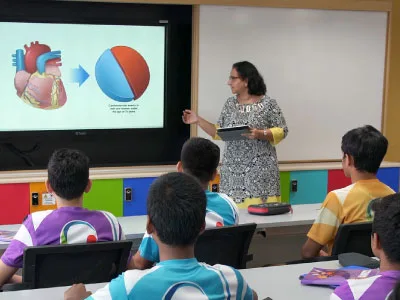
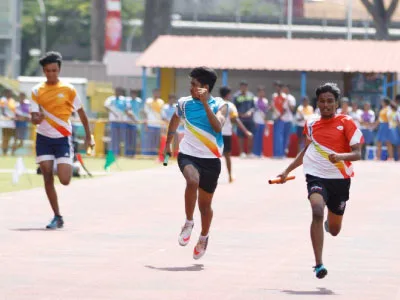
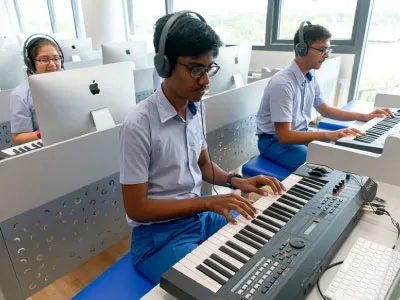
Within the diverse array of curricula choices available at GIIS Singapore, the CBSE Board holds a position of prominence. Moreover, GIIS’ 9GEMS holistic educational framework that encourages students to excel not only in academics but in nine different areas – such as entrepreneurship and leadership, universal values and ethics, innovation and creativity, visual and performing arts, sports – aligns with NCF due to its emphasis on well-rounded education. These skills and qualities enable students to become lifelong learners, ready to adapt to the changing times.
In this blog, we will look at key highlights of the NEP and NCF for preschool, primary and middle school students – ages 3-8, the Foundational Stage and 8-11, the Preparatory Stage.
Key highlights of NEP
● Schooling divided into 4 stages – 5+3+3+4:
Foundational stage (ages 3-8), Preparatory stage (ages 8-11), Middle stage (ages 11-14), and Secondary stage (ages 14-18) based on learning styles.
● Early Childhood Care and Education (ECCE):
Significant emphasis on ECCE recognising its role for positive future outcomes, and holistic learning for early childhood development.
● Foundational literacy and numeracy:
Top priority given to universal foundational literacy and numeracy.
Essential for future schooling and lifelong learning.
● Curricular goals:
Strong emphasis on conceptual understanding over rote learning.
Development of critical thinking, decision making, creativity, and ethical values.
● Multidisciplinary, holistic, and integrated education:
Focus across Sciences, Social Sciences, Art, Humanities and Sports.
● Reduced curriculum content:
Advice to reduce subject content for critical thinking and holistic learning.
Also read: Why CBSE curriculum is popular in Indian International Schools
● Flexibility and choice in Secondary Stage:
Increased flexibility in subject choice, including Physical Education, Art, Crafts, and Vocational Skills to help students chart out their own study courses and future path.
● Integrating vocational education:
Requires integration of vocational education into mainstream education.
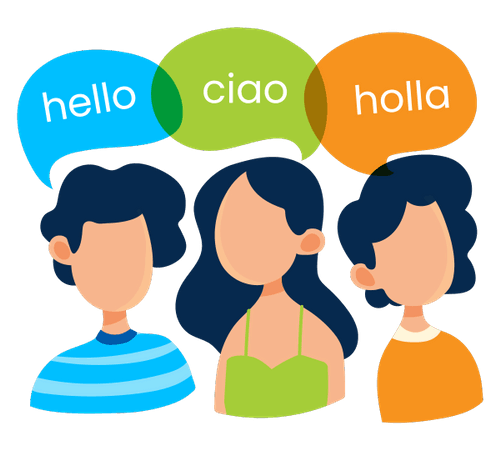
● Multilingualism:
Emphasis on cognitive benefits of learning multiple languages, including native Indian languages.
● Rootedness in India:
Vision to instill pride in being Indian, aiming for the development of knowledge, skills, values, and dispositions supporting global citizenship.
Primary aspects of the Foundational stage
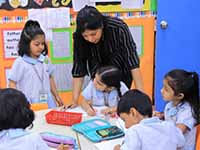
● This stage is for students aged 3 to 8.
● Learning standards based on development domains: physical, socio-emotional, cognitive, aesthetic and cultural, language and literacy.
● Emphasis on positive learning habits as a foundation for future learning.
● Priority on foundational literacy and numeracy.
● Concrete play materials used initially, and textbooks/playbooks/workbooks recommended from Grade 1 onwards.
● Pedagogy is play-based, nurturing relationships; balance between individual and group activities.
● Qualitative observations by teachers as primary assessment rather than explicit tests and exams.
Main features of the Preparatory Stage
● This stage is for students aged 8 to 11.
● Learning standards set for Language Education, Maths, Arts, Physical Education, Science and Social Studies. Pre-vocational skills included.
● Textbooks used but concrete materials and experiences remain central to all subjects.
● Activity-and discovery-based teaching continues but there’s a gradual shift towards more formal classroom settings.
● Short formal written assessments but teachers’ observations continue. Periodic summative assessments supplement regular formative assessments.

CBSE at GIIS: Solid foundation for future success
As a pioneer CBSE school, GIIS Singapore equips students with crucial 21st-century competencies and establishes a strong pathway to future success. GIIS stands out in developing key 21st-century skills such as critical thinking, creative thinking, effective communication, and collaboration, ensuring students are well-prepared for diverse challenges in academics and beyond.
The school has played a pivotal role in nurturing exemplary students for over 20 years. Over the years, our outstanding results reflect the dedication of our teachers and students, supported by unwavering parental involvement.
The learner-centered approach ensures that students acquire knowledge and skills essential for success in higher education and beyond. Aligned with the latest curriculum updates, GIIS is well-equipped to stride confidently on the path leading to student success.
If you are keen to know more about the CBSE curriculum at GIIS, offered to students from Grades 1-12, please feel free to contact the admissions team.
NEP and NCF information sourced from the National Curriculum Framework for School Education 2023

Rekha Varghese
Ms. Rekha Varghese is the Vice-Principal of GIIS SMART Campus, Singapore. She has over 25 years of experience as an educator and expertise in Early Childhood education. She is a member of the Academic and Examination Board of GIIS and has been deeply involved with the development of academic processes and practices of the school. She believes that milestones achieved in social and emotional growth at this key stage pave a way for confident individuals of the future. As a pedagogical leader, she has been mentoring educators who are keen to work with this age group. Her understanding of educational philosophies, including the CBSE, IB PYP and other child-centred pedagogies, have helped her in this endeavour.