Many international schools in Singapore teach life skills by embedding practical competencies such as problem-solving, emotional regulation and teamwork directly into personalised academic frameworks. Rather than using one-size-fits-all instruction, most top institutions adapt life skill development to match visual, discussion-based and hands-on learning activities.
Schools like Global Indian International School (GIIS) in Singapore leverage holistic frameworks, such as the 9GEMS™ model, to ensure students acquire essential soft skills alongside academic excellence regardless of how they process information.
Key takeaways for parents:
- Visual Learners develop leadership and critical thinking through mapping tools, digital portfolios and visual media production.
- Auditory Learners build communication and conflict resolution skills via structured debates, peer mentoring and collaborative podcasts.
- Kinesthetic Learners master resilience, adaptability and time management through hands-on robotics, sports and outdoor expeditions.
- Holistic Frameworks like the IB curriculum and GIIS’s 9GEMS™ integrate character building seamlessly into daily subject lessons.
How GIIS Singapore Develops Life Skills Through 9GEMS
| # | GEM | What Does it Include | Skills Students Gain |
| 1 | Academic Excellence | Multiple curricula (K-12), LMS, Google Classroom, Toddle, educational apps | Lifelong learning, digital collaboration, subject knowledge, portfolio building for further education |
| 2 | Sports Excellence | Team sports, data analytics on progress, Gold Squad programme | Physical and mental toughness, teamwork, self-assessment of strengths and weaknesses |
| 3 | Artistic Skills | Fine and performing arts through CCAs | Creativity, creative problem-solving, self-expression, portfolio development |
| 4 | Personality Development | Critical thinking, sports, service, self-expression, meditation | Confidence, critical thinking, contributing to class discussion and group work |
| 5 | Creativity & Innovation | Mapping student interests and competencies, then facilitating growth | Innovation, self-awareness of interests, career readiness |
| 6 | Entrepreneurship & Leadership | Expert speakers, boot camps, leadership conversations | Leadership, idea development, confidence, public speaking* |
| 7 | Universal Values | Gandhi-inspired lessons, Kindness Movement, meditation, yoga | Compassion, tolerance, empathy, patience, emotional intelligence |
| 8 | Community Development | Charity drives, community events, green initiatives | Civic responsibility, service, environmental stewardship, caring for others |
| 9 | Skills Development | Skills-based studios, soft-skills activities | Communication, planning, research, technical skills |
What is Life Skills Development in Singapore International Schools?
Life skills education helps students develop communication, teamwork, problem-solving and emotional awareness through everyday lessons and practical activities. In top-tier Singapore international schools, life skills instruction is explicitly defined and integrated into daily learning. Instead of treating character education as an isolated homeroom lecture, schools align soft skills with national framework standards such as the Singapore Ministry of Education’s 21st Century Competencies, ensuring every student practises real-world decision-making within their daily coursework.
How the Learning Style Mechanism Drives Life Skill Mastery
Children absorb, process and retain information through distinct sensory pathways. Singapore international schools pair specific life skill exercises with these individual pathways so that personal growth feels natural rather than forced.
1. Visual Learners: Developing Leadership and Planning
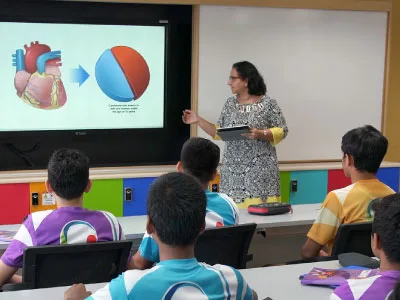
Visual learners process concepts best through visual imagery, spatial arrangements and graphical representations. When teaching organisational life skills and project management, educators use structured visual tools.
- Visual Mapping for Time Management: Students use boards and digital timelines to track long-term project deliverables.
- Reflective Visual Logs: Leadership training involves creating infographics or digital portfolios that map out personal development goals and self-assessment metrics.
2. Auditory Learners: Building Communication and Active Listening
Auditory learners thrive when discussing, listening and debating ideas aloud. Schools tailor interpersonal life skills to leverage verbal engagement.
- Socratic Seminars for Conflict Resolution: Students analyse complex ethical scenarios through guided verbal dialogue, learning to listen actively and articulate opposing views respectfully.
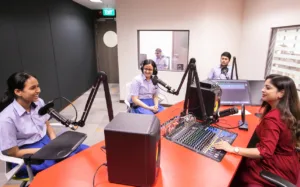
- Podcasting and Public Speaking: For developing communication skills in multicultural settings, schools engage auditory learners in student-led podcasts and Model United Nations (MUN) conferences to refine public negotiation skills.
3. Kinesthetic Learners: Fostering Resilience and Adaptability
Kinesthetic learners acquire concepts through movement, tactile manipulation and direct physical trial-and-error. For these students, theoretical character building is replaced with experiential learning.
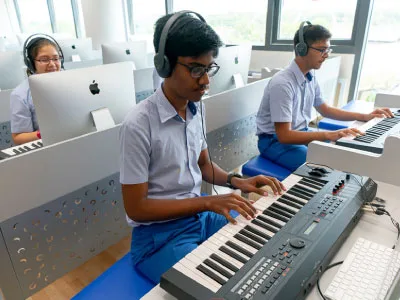
- Makerlabs and STEM Innovation: At institutions like GIIS in Singapore, kinesthetic students use dedicated innovation centres to build physical prototypes, learning problem-solving through iterative testing and failure.
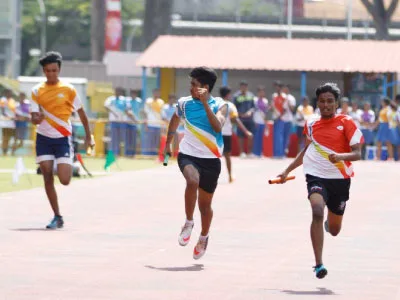
- Sports and Experiential Outdoor Learning: Physical education and outdoor adventure camps serve as direct training grounds for team-building, risk assessment and emotional resilience under pressure.
The Real-World Impact: How GIIS Integrates Learning Styles and Life Skills
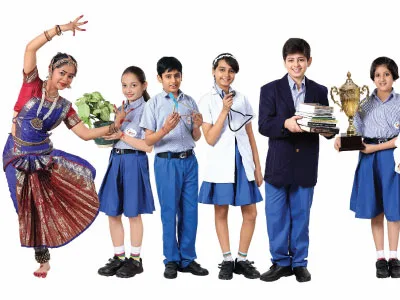
At Global Indian International School (GIIS) in Singapore, life skills education is operationalised through the proprietary 9GEMS™ framework. This multi-faceted model balances academic excellence with sports, visual arts, personality development, innovation and community service.
Consider how a middle school student works through a real-world unit on environmental sustainability. For example, a sustainability project could include:
- The Visual Learner creates dynamic data visualisations analysing local carbon footprints, taking charge of the project’s visual campaign and strategic roadmap.
- The Auditory Learner conducts interviews with community leaders, hosting a panel discussion to debate policy solutions and communicate findings.
- The Kinesthetic Learner designs and constructs a physical hydroponic farming unit in the campus lab, testing agricultural variables directly.
Through this differentiated approach, all three students master the exact same life skills, analytical reasoning, team coordination and project execution, while using the sensory modality that fits them best.
What This Means for Your School Selection Process
Understanding how international schools in Singapore match life skills training to learning styles simplifies your selection process. When evaluating campuses, especially for families reviewing Singapore MOE international student guidelines, parents can move beyond standardised test scores to inspect the actual teaching mechanisms in place.
Here is how to assess a school during your campus visit:
- Inspect the Learning Spaces: Look for varied environments, such as quiet reading pods for visual focus, open discussion circles for auditory exchange and hands-on robotics labs for kinesthetic discovery.
- Review Curriculum Integration: Ask how character development is assessed. High-performing schools track life skills systematically alongside academic progress reports.
- Observe Teacher Differentiation: Look for classrooms where lesson plans offer students multiple pathways to demonstrate mastery of a single concept.
Experience Differentiated Learning at GIIS Singapore
Selecting the right educational environment ensures your child develops essential life skills tailored to how they learn best. Global Indian International School (GIIS) combines rigorous academics with the holistic 9GEMS™ framework to foster confident, resilient and adaptable global citizens.
Book a campus tour with GIIS in Singapore today to see how our personalised learning pathways and modern facilities nurture your child’s full potential.
Frequently Asked Questions
How do the best international schools in Singapore for visual learners teach emotional regulation?
Visual learners are taught emotional regulation through tools like mood trackers, visual self-reflection journals and graphic charts that break down conflict-resolution steps into clear, visible stages.
How does the IB Diploma Programme support life skills development?
Yes, CAS is part of the IB Diploma Programme. The International Baccalaureate (IB) curriculum emphasises experiential learning through its Creativity, Activity, Service (CAS) component, allowing kinesthetic learners to build real-world life skills through physical projects, community action and hands-on activities.
How can I identify my child’s primary learning style before enrolling in an international school?
Observe how your child naturally explores new concepts at home: visual learners lean toward books, diagrams and drawing; auditory learners ask frequent questions and prefer verbal explanations; kinesthetic learners prefer taking things apart, building models and physical trial-and-error.
Do international schools in Singapore test for learning styles during admission?
Most international schools evaluate overall academic readiness and language proficiency during admissions rather than conducting formal learning style assessments. However, schools like GIIS use continuous observational assessments after enrolment to adapt instruction to each student’s profile.
Are specialised life skill programmes included in the tuition of Singapore international schools?
Parents should check which activities are included in tuition and which may carry additional charges. At leading institutions like GIIS in Singapore, core life skills programmes, including leadership training, innovation modules and personality development frameworks like 9GEMS™, are fully integrated into the standard school curriculum.

Team GIIS
Team GIIS is a group of enthusiastic writers who bring the vibrant world of GIIS in Singapore to life through engaging blog posts. Dedicated to highlighting the school’s teaching methodology, innovative learning environment, and diverse curriculum options like IB, Cambridge and CBSE, they aim to connect with parents, educators and students, sharing insights and stories that inspire and inform the school community.