Global
All Cities
Where would you like to study? Select cities to refine your search.
Any Curriculum
Find a campus based on the curriculum offered.
Global
Global
All Cities
Where would you like to study? Select cities to refine your search.
Any Curriculum
Find a campus based on the curriculum offered.
Search

Understanding the IB PYP Approach to Assessment at GIIS

Curriculum, Cambridge

Based on a conversation with Ms. Manju Nair, GIIS SMART Campus IB PYP Coordinator

For many young students, the idea of taking a test can be daunting. At GIIS, we remind our students that assessments are a tool to become self-regulated learners, reflect on progress and set future goals for learning. Assessment results in the IB Primary Years Programme (IB PYP) are never used as a punishment or a reward. It is constructive feedback on the overall learning experience of the student who plays a vital role in this process.

The assessment strategies evaluate the conceptual understandings, knowledge acquired and the skills developed throughout the learning process. Both the formative and summative assessments are an opportunity for self-reflection, for students and teachers. While the formative assessment is integrated into the daily learning process, summative assessments are held upon the completion of each unit of inquiry or unit of study.

There are four domains of assessments within the PYP curriculum in an IB school:

● Monitoring Learning — This aims to keep a check on progress in learning against personal learning goals and success criteria. Tools are used by the teachers to monitor student participation, engagement in classroom activities, etc. Teachers provide students with positive and actionable feedback to help them grow individually. Feedback is presented in a way that allows students to reflect on their progress.

● Documenting Learning — As part of this domain, teachers document each student’s progress and student portfolios are maintained which showcase a child’s learning journey, success and reflection. Monitoring learning and documenting learning are critical in providing students with the actionable feedback they need to grow.

● Measuring Learning — Here the aim is to measure conceptual understanding, knowledge acquired and skills developed.

● Reporting Learning: In GIIS we generate formal progress reports two times a year, hold two Parent Teacher Conferences and one Student Led Conference in a year. There is documentation of assessments and evidence of learning is made visible throughout the year through assemblies, celebrations of learning and meetings with parents whenever they request for one.

What Does GIIS Assess?

At GIIS, we look at a variety of factors when evaluating. Here is what is assessed after a unit of inquiry culminates:

● Facts and Skills

● Knowledge and Content

● Understandings and Concepts

● Action Taken after Understanding

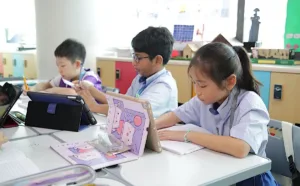
At GIIS, students play an active role in their learning

Assessment Tools and Strategies at GIIS

At GIIS, we consider the assessment tools to be the “whats” of the assessments, while the strategies are the “hows” of the assessments.

Our assessment tools include:

● Assigning students open-ended tasks to complete to evaluate how they achieve those tasks.

● Offering Exemplars to determine a student’s understanding of a concept.

● Creating rubrics for students to follow during the assessment.

● Teachers maintain anecdotal records of their findings and observations.

Our assessment strategies include:

● Observing students as they work and making notes on their learning styles.

● Asking students factual, debatable and conceptual questions and engaging in discussions to gauge their real-world understanding of a concept.

● Requiring students to present the material that they have learned using digital media and other resources.

● Requiring students to complete a portfolio that includes a summary of their conceptual understanding, knowledge and skills acquired throughout the unit of inquiry.
How Does GIIS Make PYP Assessments Effective?

We believe that an effective assessment is a community effort. We strive to provide assessments in which all members of the learning community — including the teachers, students, parents and school administrators — are informed of progress along the way and provided with opportunities to get involved in each individual’s learning journey.

Here’s what that means:

● Students play an active role in their learning experience. They are given plenty of opportunities for self-reflection on their progress. In addition, they perform peer evaluations in order to assess their classmates.

● Teachers constructively offer timely feedback to all students. They reflect on their teaching practices and methods and calibrate their teaching strategies based on the data they collect.

● Parents stay informed throughout the entire learning journey, as teachers provide feedback and information on progress on apps such as Toddle.

● School administrators review assessment results to evaluate the depth of the school curriculum and the effectiveness of teaching methods being used in the school.

Understanding the Core of GIIS Assessment Strategies

At the core of our assessment strategies are two fundamental concepts — authentic assessments and positive feedback. Here’s what you, as parents, need to know about that:

● Authentic Assessments — Authentic assessments allow students to address large ideas and concepts while simultaneously measuring their progress over a specific period of time. A scoring framework is used to evaluate the tasks completed. The tasks assigned as part of the assessment are designed to evaluate a student’s effort and learning, not their talent. Students receive feedback from these assessments that allow them to partake in self-reflection.

● Positive Feedback — Positive feedback is used to provide students with the support they need to keep learning and growing. Timely, specific and well-considered feedback is given to each student as part of the assessment process.

We feel that our assessment process at GIIS allows students to receive the feedback they need to continue to grow. It also helps them become accustomed to the idea of assessments, which will be part of their regular lives throughout adulthood. Ultimately, these assessments set them up for success both within the classroom and out in the real world, which uniquely prepares them for life in the 21st century.

For more information on IB PYP at GIIS, please don’t hesitate to contact our friendly admissions counsellors.

Shubhdarshani Mitra

Shubhdarshani has over 10 years of experience in content creation, curation and editing. She has worked for Indian newspapers, school magazines and international news websites where she worked closely with the leadership on the execution and communication of the content strategy. Aside from work, she’s a passionate B&W photographer and storyteller.
Featured Blogs

Admission Tips

How to Apply to an International School in Singapore: Step-by-Step Guide (2026)

Navigating the landscape of international education in the Lion City requires careful planning. Whether you are looking for how to apply for international school in Singapore or managing your budget around international school fees in Singapore, this guide provides a clear, validated roadmap for your family’s transition.

CBSE

CBSE vs IGCSE vs IB: Which Curriculum is Right for Your Child in Singapore?

Choosing the best curriculum in Singapore is not about finding the “single best” board; it is about finding the right fit for your child’s learning style and your family’s long-term plans. Whether you are considering CBSE vs IGCSE in Singapore schools or looking ahead to the IB Diploma, each pathway offers distinct advantages for different types of learners.

IB Program

IB Diploma in Singapore: Schools, Fees, Subjects & University Results (2026-27)

Singapore remains the global powerhouse for the International Baccalaureate (IB) Diploma Programme (DP). As we move into the 2026-2027 academic year, the landscape is evolving with new curriculum updates in the sciences and history, alongside a shift toward digital assessments.

Preschool

Preschool & Nursery School Singapore: Complete Guide for Parents (2026)

Navigating the landscape of preschool Singapore has to offer, looking for nourishing and wholesome preschool can feel like a full-time job. As a parent, you aren’t looking for a ‘babysitter’ but you are looking for a foundational partner.

Top Scholarships

Dr APJ Abdul Kalam Global Skills Scholarship

Eligibility:

Talent Based - Technology

More from same author
Trending Blogs

Admission Tips

How to Apply to an International School in Singapore: Step-by-Step Guide (2026)

Navigating the landscape of international education in the Lion City requires careful planning. Whether you are looking for how to apply for international school in Singapore or managing your budget around international school fees in Singapore, this guide provides a clear, validated roadmap for your family’s transition.

CBSE

CBSE vs IGCSE vs IB: Which Curriculum is Right for Your Child in Singapore?

Choosing the best curriculum in Singapore is not about finding the “single best” board; it is about finding the right fit for your child’s learning style and your family’s long-term plans. Whether you are considering CBSE vs IGCSE in Singapore schools or looking ahead to the IB Diploma, each pathway offers distinct advantages for different types of learners.

IB Program

IB Diploma in Singapore: Schools, Fees, Subjects & University Results (2026-27)

Singapore remains the global powerhouse for the International Baccalaureate (IB) Diploma Programme (DP). As we move into the 2026-2027 academic year, the landscape is evolving with new curriculum updates in the sciences and history, alongside a shift toward digital assessments.

Preschool

Preschool & Nursery School Singapore: Complete Guide for Parents (2026)

Navigating the landscape of preschool Singapore has to offer, looking for nourishing and wholesome preschool can feel like a full-time job. As a parent, you aren’t looking for a ‘babysitter’ but you are looking for a foundational partner.

Primary School

Primary School Fees in Singapore: Everything Parents Need to Know (2026-27)

For expatriate and local families, the primary school fees in Singapore for 2026 and 2027 academic year continues a shift toward “High-Tech, High-Value” education. While premium international schools often command fees, institutions like Global Indian International School (GIIS) have strengthened and continue to offer advanced facilities with emphasis on the wholesome growth of the student.

Admission Tips

Singapore International School Admission Process: Documents, Timelines & Tips

For expatriate and local families alike, securing a place in a best international school in Singapore is a major milestone. The Singapore international school admission landscape is competitive, but also more flexible than many assume, provided you understand the system. This expert guide breaks down timelines, documentation, fees, and proven strategies to strengthen your child’s application.

Admission Tips

Complete Guide to International School Fees in Singapore (2026-27)

Choosing the best international school in Singapore for the 2026-27 academic year is a significant milestone for any family. For modern parents, education is no longer just a monthly line item; it is a strategic investment in a child’s global future. With shifting cultural landscapes and expanding campus facilities, understanding the "complex puzzle" of  international school fees in Singapore is the first step toward a seamless transition.

Cambridge IGCSE

How the Cambridge IGCSE Prepares Students for Global Success

When you’re choosing a secondary education path for your child, it’s easy to feel a little unsure. There are plenty of good options available, but not all of them fit every learner.

Singapore Education System

Understanding Singapore’s Education System: From Primary to Tertiary

When you're raising children in Singapore or planning a move here, schooling becomes one of the most important decisions you’ll make.

Search
History Menu Icon

Our vision is to become a global role model for teaching and learning.

History Menu Icon Secondary

Since its inception in 2002, GIIS has spread quality education through 17 campuses across the globe.

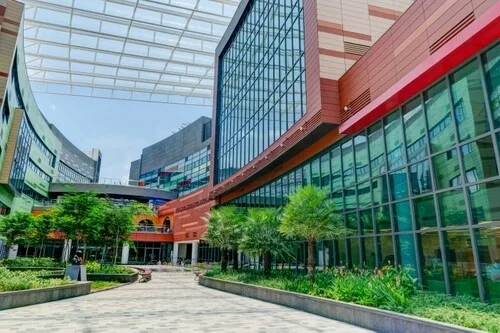
Global Indian International School Singapore smart campus learning environment

SMART Campus

A green, tech-enabled campus with extensive sports facilities that enables a holistic education

  • Kindergarten Menu Image

    Montessori education with a modern touch.

  • Primary School Menu Image

    International primary programmes with best holistic learning.

  • Secondary School Menu Image

    International middle school programmes with best foundation for high school.

  • High School Menu Image

    International high school programmes with beat launchpads for university.

21st Century Learning Campus

Facilities which are collaborative, creative and adaptable to individual needs.

Holistic Education Menu

Award-winning framework for all-round student development

CCA Menu Image

Extra-curricular activities are those activities, often sports-based, that take place outside of the GIIS classroom

ECA Menu Image

Talent shows, performances, competitions, clubs and additional classroom work.

Admission Process Icon

Get an overview of the admissions process

Campus Tour Icon

Register for a tour of the campus to learn more about the school first hand

Book Meeting Icon

You can talk to our Admissions Counsellor online or in-person, as per your convenience.

Admissions Form Icon

Find all forms related to admissions procedure here

Fees Icon

Get information on our fee structure for different grades

Scholarship Icon

Thank you for considering GIIS as a prospective school for your child. Our goal is to make the admissions.