Global
All Cities
Where would you like to study? Select cities to refine your search.
Any Curriculum
Find a campus based on the curriculum offered.
Global
Global
All Cities
Where would you like to study? Select cities to refine your search.
Any Curriculum
Find a campus based on the curriculum offered.
Search

7 study tips for secondary school students

GIIS

School life, undoubtedly, is the best time of our lives. Whether it is finding your first best friend, laughing with friends, having fun in the school cafeteria or the ultimate opportunity to find out what you love to learn most – the experience is incomparable.

There’s so much to learn and explore, and therefore we must also understand how to deal with the rigorous aspect of learning. Class assignments, extracurriculars, homework, cyclic tests and examinations – it can all become overwhelming, especially for secondary school students.

However, it is possible to steer your learning towards the right direction and enjoy your time in school by being better prepared for school life. By developing good study habits early on, you can make this journey exciting, meaningful and enjoyable.

Here are seven tips that should help you to get started.

1. Set up a realistic study schedule

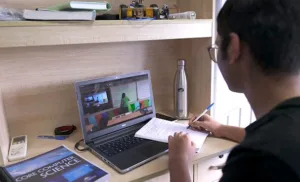
Research suggests that long and continuous hours of studying is not the best way towards getting the maximum result from your learning. For every 45 minutes of study time, it’s a good habit to take around 15 mins of break time. This break time can be utilised doing something you enjoy.‍

2. Revisit your weak areas

If you are struggling with a particular concept or topic, it’s a good idea to take a break and come back to the topic later instead of being disappointed and exasperated. Do assign the subject you need more effort a regular time in your study schedule so that you do not lag behind in your learning. Reach out for help as many times as you need.

3. Discover your learning style

There’s no ‘one-size-fits-all’ approach to learning. There are different kinds of learners such as visual, auditory, reading/writing, and kinesthetic learners. Visual learners learn most through pictorial representation of information like charts and diagrams, auditory learners like to hear out loud, reading/writing learners consume information best in this form and kinesthetic learners prefer to learn by doing things that are hands-on. Find out how you enjoy learning: which one is your way and adapt your study schedule accordingly.

4. Test your memory

One of the most common study techniques employed by students is to review textbooks and class notes. However, challenging your brain by testing your memory can be more effective. Parents can encourage children to write down as much as they can remember about a topic without referring to the course material. Secondary students can do this on their own by using flashcards or creating their own study guides and sample tests. These ‘memory tests’ can also be fun as a group activity.
5. Stay organised

Staying organised can go a long way towards helping you perform better in school and beyond. Having a disorderly study desk can make it difficult to keep track of assignments and school supplies. Keep your desk clean, follow weekly decluttering sessions to get rid of anything you don’t need. Use a planner to write down assignments and check them off as you complete them. The feeling of accomplishment, no matter how big or small the task is, is always motivating and exhilarating.

6. Form a study group

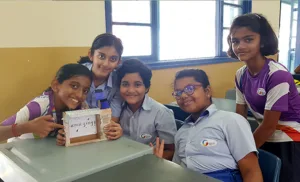
Getting a group of friends together to study can help students stay motivated, as peers can hold each other accountable to complete a task in hand. Additionally, groups can bring together students of varying ability. Those who struggle with a particular subject can benefit from having a fellow group member who understands the concept better.

Also read: How to foster student well-being? Here’s what we do at GIIS

7. Reward yourself

When used correctly, rewards can not only act as incentives but also as powerful motivators. As students, you must not shy away from patting yourself on your back when you achieve milestones – big or small doesn’t really matter. Whether it is taking an extra nap time or a day off from studies, go for it and feel rejuvenated.

At GIIS, students are encouraged to develop healthy learning habits with an aim to enable them to grow and flourish in school and beyond. If you would like to know more about GIIS, please feel free to contact our friendly admissionscounsellors.

K P Sheeja

Is the Academic Supervisor for CBSE at the GIIS SMART Campus. One of the pioneer generation of teachers with GIIS, she comes from a family of educators and has been teaching English to students for the past 25 years. She believes her job as a teacher also includes mentoring and being a friend to her students.
Featured Blogs

GIIS

Choosing Subjects for IGCSE: A Parent’s Guide to Streams, Options & Future Careers

By age 14, most children have never had to make a decision that shapes their next ten years. Choosing IGCSE subjects is exactly that decision and for parents, it often arrives with more questions than answers. Which subjects matter for university? Does dropping a science close doors? Is a 'safe' combination actually the right one?

GIIS

Your Child’s Journey to IBDP Success Starts Before Grade 11: A Parent’s Guide

While evaluating the IB Diploma programme in Singapore for their children, parents center the conversation around Grade 11 and 12. It is during these final two high school years that students write their Extended Essays, dive deep into Theory of Knowledge (TOK) and prepare for final examinations.

CBSE Results

IBDP Results 2026: What Parents Should Consider Before Choosing an IB School in Singapore

Choosing the right international school for your child is one of the most critical academic decisions a parent can make. With the release of the May 2026 International Baccalaureate Diploma Programme (IBDP) results, parents across Singapore are evaluating school performance metrics to determine where their child will thrive best.

GIIS

How GIIS Students Achieved Outstanding IBDP Results in 2026: A Look at the Learning Approach

Choosing the right senior secondary curriculum requires more than academic rigour. Students also need an environment that nurtures critical thinking, global perspectives, personal growth, and university readiness. For families evaluating the IB diploma programme in Singapore, the May 2026 International Baccalaureate Diploma Programme (IBDP) examination results offer clear evidence of how structured academic mentoring and personalised pedagogy lead to top-tier university readiness.

Top Scholarships

Dr APJ Abdul Kalam Global Skills Scholarship

Eligibility:

Talent Based - Technology

More from same author
Trending Blogs

GIIS

Choosing Subjects for IGCSE: A Parent’s Guide to Streams, Options & Future Careers

By age 14, most children have never had to make a decision that shapes their next ten years. Choosing IGCSE subjects is exactly that decision and for parents, it often arrives with more questions than answers. Which subjects matter for university? Does dropping a science close doors? Is a 'safe' combination actually the right one?

GIIS

Your Child’s Journey to IBDP Success Starts Before Grade 11: A Parent’s Guide

While evaluating the IB Diploma programme in Singapore for their children, parents center the conversation around Grade 11 and 12. It is during these final two high school years that students write their Extended Essays, dive deep into Theory of Knowledge (TOK) and prepare for final examinations.

CBSE Results

IBDP Results 2026: What Parents Should Consider Before Choosing an IB School in Singapore

Choosing the right international school for your child is one of the most critical academic decisions a parent can make. With the release of the May 2026 International Baccalaureate Diploma Programme (IBDP) results, parents across Singapore are evaluating school performance metrics to determine where their child will thrive best.

GIIS

How GIIS Students Achieved Outstanding IBDP Results in 2026: A Look at the Learning Approach

Choosing the right senior secondary curriculum requires more than academic rigour. Students also need an environment that nurtures critical thinking, global perspectives, personal growth, and university readiness. For families evaluating the IB diploma programme in Singapore, the May 2026 International Baccalaureate Diploma Programme (IBDP) examination results offer clear evidence of how structured academic mentoring and personalised pedagogy lead to top-tier university readiness.

GIIS

Moving to Singapore with Children: A Complete School Guide for Expat Families (2026)

Relocating to Singapore is an exciting milestone for any family. Alongside finding a new home, settling into a different culture, and adapting to a new lifestyle, one of the biggest decisions parents face is choosing the right school for their children.

GIIS

Why GIIS SMART Campus Singapore Stands Out as a Future-Ready School

As technology and global careers continue to evolve, parents are looking for future-ready schools that offer more than academics. GIIS SMART Campus Singapore combines academic excellence, global curricula, innovative learning, and holistic development to prepare students for lifelong success.

GIIS

GIIS SMART Campus Singapore: Programmes & Admissions Guide for Punggol Families (2026)

As more families move into Punggol, Sengkang, and the North-East region of Singapore, the demand for high-quality international education continues to grow. Parents today are looking for schools that combine academic excellence, future-ready learning, global curricula, and holistic development.

Search
History Menu Icon

Our vision is to become a global role model for teaching and learning.

History Menu Icon Secondary

Since its inception in 2002, GIIS has spread quality education through 17 campuses across the globe.

Global Indian International School Singapore smart campus learning environment

SMART Campus

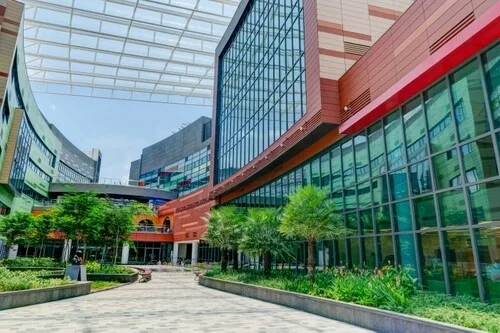
A green, tech-enabled campus with extensive sports facilities that enables a holistic education

  • Kindergarten program at GIIS Singapore smart campus

    Montessori education with a modern touch.

  • Primary school curriculum at GIIS Singapore

    International primary programmes with best holistic learning.

  • Secondary school students learning at GIIS Singapore

    International middle school programmes with best foundation for high school.

  • High school education and curriculum at GIIS Singapore

    International high school programmes with beat launchpads for university.

21st century learning campus at GIIS Singapore

Facilities which are collaborative, creative and adaptable to individual needs.

Holistic education approach with 9 Gems at GIIS Singapore

Award-winning framework for all-round student development

Co-curricular activities at GIIS Singapore

Extra-curricular activities are those activities, often sports-based, that take place outside of the GIIS classroom

Extra curricular activities at GIIS Singapore

Talent shows, performances, competitions, clubs and additional classroom work.

Admission Process Icon

Get an overview of the admissions process

Campus Tour Icon

Register for a tour of the campus to learn more about the school first hand

Book Meeting Icon

You can talk to our Admissions Counsellor online or in-person, as per your convenience.

Admissions Form Icon

Find all forms related to admissions procedure here

Fees Icon

Get information on our fee structure for different grades

Scholarship Icon

Thank you for considering GIIS as a prospective school for your child. Our goal is to make the admissions.