Global
All Cities
Where would you like to study? Select cities to refine your search.
Any Curriculum
Find a campus based on the curriculum offered.
Global
Global
All Cities
Where would you like to study? Select cities to refine your search.
Any Curriculum
Find a campus based on the curriculum offered.
Search
Six must-have skills for the Leaders of Tomorrow

Six must-have skills for the Leaders of Tomorrow

Next-gen Learning

If you are a parent of a school-aged child, you probably spend a lot of time thinking about their future. After all, today’s children are the leaders of tomorrow. So what kind of leader will yours become? How can you help them develop the skills they’ll need to excel?

‍

Characteristics of great leaders

Good leaders share essential characteristics: they are empathetic, kind, courageous and ethical. A good leader cares about the people who look up to them and at the same time, cares about the planet, too. At GIIS Singapore, we outline our learning and our school day around training influential future leaders.

We emphasise the skills your child will need to compete in a 21st-century world, including hard skills such as proficiency in technology, efficiency in communication and the ability to think in a critical manner. But we also understand the importance of what is referred to as ‘soft’ skills. Skills such as having the ability to embrace and adapt to change and the ability to collaborate with others.

‍

‍

We build this training into GIIS’ school life in various ways, focusing on what we see as the six most important:

1. The ability to problem-solve: Tomorrow’s problems are light-years away from those of today. Yet, in an ever-changing global community, the old issues still exist. This means that global warming, inequality and world hunger will likely still be concerns twenty years from now. However, new problems will surface as a result of our fast-changing world and advancing technology. Therefore, tomorrow’s leaders need to be prepared for the unexpected.

2. Innovation & creativity : Someone who can think creatively is capable of finding new and innovative solutions to existing problems. Tomorrow’s leaders will need the ability to bring new theories and new approaches to both existing and future issues. They must be able to “see” where new policies and ideologies are heading and foresee the consequences of adopting them.

3. The ability to collaborate: The leaders of tomorrow won’t be working in silos, they’ll congregate from different areas of the globe. People of different cultures, beliefs, customs and traditions will be required to work effectively together toward a common goal.

4. Empathy: Someone with empathy can demonstrate that they share the feelings of others and that they sympathise with them. It is a necessary skill for strong leaders because it’s closely connected to conscience and to separating what’s right from what is not.

5. Adaptability: The ability to quickly adapt to changes is one of the top qualities that future leaders will thrive on. An open mind towards the new, unseen and unexpected is sure to lead to future success.

6. Resilience: Resilience doesn’t simply mean ‘toughing it out’. It’s also the mental strength to work around the intangibles and adapt to the changing circumstances. Both these aspects will be crucial to our future leaders as we move forward.

‍

Also read: The future of work: Is your child prepared?

‍

‍

How GIIS nurtures leadership skills

While we model these leadership skills in our classrooms every day, we feel it’s also important to give our students the opportunity to practice them in real time. We do this through various events, including our flagship Real World Challenges Convention and Leadership Lecture Series.

‍

Real World Challenges Convention

A prime example is the annual Real World Challenges Convention (RWCC).  As part of this initiative, students from across several GIIS campuses come together to speak, problem-solve, debate and analyse real-world problems such as global warming, the pros and cons of the internet and whether knowledge outweighs natural talent.

Students have the opportunity to showcase their individual talents in public speaking, debate, critical thinking and problem-solving in front of live audiences. They learn more about integrity, respect, skill development and entrepreneurship.

The RWCC requires students to work together and challenge themselves and each other as they compete in various competitions throughout the event.
‍

‍

Leadership Lecture Series

The Leadership Lecture Series (LLS) at GIIS is intended to introduce students to real-world leaders in areas such as sports, innovation, politics, music and others. Through this series, our students have interacted with athletes, cinematographers, maestros and ambassadors, learning more about the qualities required to succeed in different leadership roles.

The LLS is designed to teach students more about the world and inspire student success, whether their passion is academics, music, art, sports or other vocations.

At GIIS, we prepare students to face life’s challenges in a global community with all its beautiful diversity. And we nurture those skills necessary to turn good leaders into great leaders.

Aside from the various opportunities through our curricula, international and Indian, an array of extracurricular and co-curricular activities that challenge GIIS students to reach higher, we also model Respect, Integrity, Skills and Empathy (RISE) for holistic well-being of each child.

If you’re interested in learning more about GIIS, our leadership events, or our Singapore campuses (GIIS SMART Campus and GIIS East Coast Campus), please do not hesitate to book a campus tour.

‍

Melissa Maria

GIIS Singapore SMART Campus principal, Ms Melissa Maria’s journey as an educator started when she was only 16 and continued in the field after she completed her Master’s degree in History and Bachelor’s degree in Education. For over 25 years now, she has been at the forefront of introducing new ideas and methodologies to education. She is also the City Coordinator for Singapore, selected by the CBSE Board for Grade 10 and 12 exams, 2021, managing two other international schools besides GIIS. With numerous achievements sprinkled across her distinguished career, Ms. Maria has been recognised for her efforts as a Mindef volunteer by the Singapore government.
Featured Blogs

Secondary School

How International Schools Develop Future-Ready Students Through Advanced Presentation Skills

Most international schools build presentation skills by making students speak, perform and defend ideas in front of real audiences, repeatedly and from an early age. At GIIS in Singapore, this happens through the international and Indian curricula, including IB, Cambridge and CBSE and 9GEMS framework. Students also practise these skills through performances, competitions and clubs.

School

How International Schools in Singapore Develop Life Skills Through Different Teaching Approaches

Many international schools in Singapore teach life skills by embedding practical competencies such as problem-solving, emotional regulation and teamwork directly into personalised academic frameworks. Rather than using one-size-fits-all instruction, most top institutions adapt life skill development to match visual, discussion-based and hands-on learning activities.

GIIS

How Do International Schools Prepare Students for University Applications from Grade 9 & 10?

Parents researching Singapore's international schools often ask the same question: when should university planning actually begin? The honest answer is earlier than most families expect. By the time a student reaches Grade 12, the subjects they took, the activities they pursued and the guidance they received years earlier have already shaped what doors are open to them.

GIIS

What Does “Holistic Education” Actually Mean in a Singapore International School?

In a Singapore international school like GIIS, holistic education means academics sit alongside eight other areas of development — sport, arts, leadership, innovation, community service, personality growth, skills, and values — inside one structured framework. It isn't a marketing phrase; it's how the timetable and activities are actually organised. It's natural to wonder what it actually means for your child. Ask ten different parents and you'll probably hear ten different answers — and that's okay. This guide breaks down the meaning of holistic education in plain language, explains what holistic learning looks like day to day and shows how it compares to a traditional, exam-first model.

Top Scholarships

Dr APJ Abdul Kalam Global Skills Scholarship

Eligibility:

Talent Based - Technology

More from same author
Trending Blogs

Secondary School

How International Schools Develop Future-Ready Students Through Advanced Presentation Skills

Most international schools build presentation skills by making students speak, perform and defend ideas in front of real audiences, repeatedly and from an early age. At GIIS in Singapore, this happens through the international and Indian curricula, including IB, Cambridge and CBSE and 9GEMS framework. Students also practise these skills through performances, competitions and clubs.

School

How International Schools in Singapore Develop Life Skills Through Different Teaching Approaches

Many international schools in Singapore teach life skills by embedding practical competencies such as problem-solving, emotional regulation and teamwork directly into personalised academic frameworks. Rather than using one-size-fits-all instruction, most top institutions adapt life skill development to match visual, discussion-based and hands-on learning activities.

GIIS

How Do International Schools Prepare Students for University Applications from Grade 9 & 10?

Parents researching Singapore's international schools often ask the same question: when should university planning actually begin? The honest answer is earlier than most families expect. By the time a student reaches Grade 12, the subjects they took, the activities they pursued and the guidance they received years earlier have already shaped what doors are open to them.

GIIS

What Does “Holistic Education” Actually Mean in a Singapore International School?

In a Singapore international school like GIIS, holistic education means academics sit alongside eight other areas of development — sport, arts, leadership, innovation, community service, personality growth, skills, and values — inside one structured framework. It isn't a marketing phrase; it's how the timetable and activities are actually organised. It's natural to wonder what it actually means for your child. Ask ten different parents and you'll probably hear ten different answers — and that's okay. This guide breaks down the meaning of holistic education in plain language, explains what holistic learning looks like day to day and shows how it compares to a traditional, exam-first model.

Search
History Menu Icon

Our vision is to become a global role model for teaching and learning.

History Menu Icon Secondary

Since its inception in 2002, GIIS has spread quality education through 17 campuses across the globe.

Global Indian International School Singapore smart campus learning environment

SMART Campus

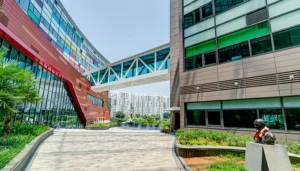
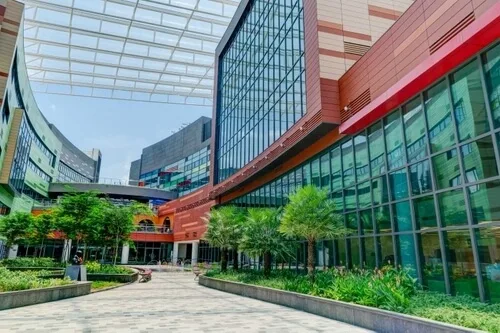
A green, tech-enabled campus with extensive sports facilities that enables a holistic education

  • Kindergarten program at GIIS Singapore smart campus

    Montessori education with a modern touch.

  • Primary school curriculum at GIIS Singapore

    International primary programmes with best holistic learning.

  • Secondary school students learning at GIIS Singapore

    International middle school programmes with best foundation for high school.

  • High school education and curriculum at GIIS Singapore

    International high school programmes with beat launchpads for university.

21st century learning campus at GIIS Singapore

Facilities which are collaborative, creative and adaptable to individual needs.

Holistic education approach with 9 Gems at GIIS Singapore

Award-winning framework for all-round student development

Co-curricular activities at GIIS Singapore

Extra-curricular activities are those activities, often sports-based, that take place outside of the GIIS classroom

Extra curricular activities at GIIS Singapore

Talent shows, performances, competitions, clubs and additional classroom work.

Admission Process Icon

Get an overview of the admissions process

Campus Tour Icon

Register for a tour of the campus to learn more about the school first hand

Book Meeting Icon

You can talk to our Admissions Counsellor online or in-person, as per your convenience.

Admissions Form Icon

Find all forms related to admissions procedure here

Fees Icon

Get information on our fee structure for different grades

Scholarship Icon

Thank you for considering GIIS as a prospective school for your child. Our goal is to make the admissions.