Global
All Cities
Where would you like to study? Select cities to refine your search.
Any Curriculum
Find a campus based on the curriculum offered.
Global
Global
All Cities
Where would you like to study? Select cities to refine your search.
Any Curriculum
Find a campus based on the curriculum offered.
Search
Top Concerns For Parents As Children Transition in the Middle of the Year

Top Concerns For Parents As Children Transition in the Middle of the Year

Mid-year School Transition

Transitioning to a new school in the middle of the year can be difficult for students of all ages. While primary schoolstudents may be a bit intimidated about the idea of going to a new school after the start of the school year, they are generally more resilient and adjust quickly. On the other hand, secondary school students often find this transition to be more challenging, mainly due to the social aspect. They may feel that peer groups have already been formed, and they may be worried about fitting in at their new school.

In addition to these social concerns, they may also be concerned about a new academic curriculum, different rules in the classroom and a schedule that is different from what they are used to. The feelings surrounding a mid-year transition may be heightened if your family is relocating to Singapore from another country. Not only will your child be concerned about all of the various challenges they may face at their new school, but they will also be working through the emotions of leaving behind their home, their school and their friends.

As a parent, it’s natural to be concerned. This guide will help you understand the challenges your child might face and learn more about what your child’s new school can do to aid them during this transition.

‍

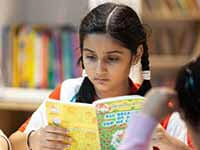
Will My Child Be Able to Settle in the New School?

This is often the primary concern among parents and children as they prepare to transition to a new school. While your child is likely most concerned about the social aspect of life in their new school — such as making new friends or fitting in with an already-established peer group — you likely have additional concerns as a parent. For example, you may be worried about how your child will handle cultural differences after moving to Singapore or how your child will adapt to new routines.

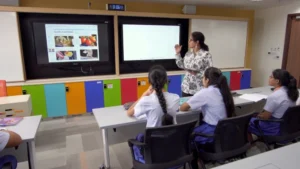
At GIIS, we address these concerns by creating a system in which every child’s social and emotional needs, as well as their academic requirements, are met. For example, we offer meet-and-greet sessions for incoming students, where they get to know their class teachers. We also have a buddy system that allows them to form new bonds with their classmates easily. In addition, our teachers are trained to provide support to students in both primary and secondary school to ensure that they transition easily into their new environment.

‍

‍‍

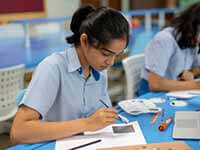
Will My Child be Able to Close the Curriculum Gap? 

The curriculum gap is more of a concern among parents who have secondary students who are transitioning in the middle of the year. While this is a valid concern, it’s important to keep in mind that your child will receive academic support after they arrive at their new campus.

At GIIS, our teachers are accustomed to working with primary and secondary school students during this type of transition. They provide students with study materials and other resources to get the support they need to close the curriculum gap. It may take some time to settle and catch up, which is natural and should be expected. However, they will catch up eventually and parents should support the child as much as they can, just as teachers will at GIIS.

‍

‍

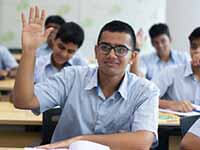
Will My Child be Given Support Where Needed?

Understandably, most parents are also concerned about more than academic support when their child is about to start a new school in a different country, in the middle of the academic year. You likely want to make sure that your child will be given social and emotional help during this critical moment in their lives.

It’s important to know that at GIIS, our teachers believe that making your child comfortable in their new school is the top priority. Teachers will be aware of student’s social and emotional well-being because they understand this can be a difficult and overwhelming transition. During the first week of school, you can expect a sunshine call from your child’s new teacher. These calls are designed to provide you with an update on how your child is doing in school and help you begin to form connections with your child’s teacher.

‍

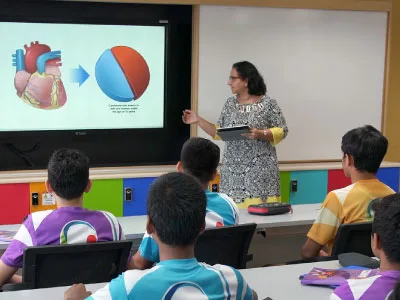
Will Language be a Barrier? Will There be English Language Support Provided by the School?

The transition to a new school can be made even more complicated when there is a language barrier. At GIIS, we have added layers of support for both our primary and secondary students. Non-native English speakers in primary school have access to the English Language Support Programme to help them during their transition, while secondary school students, as part of Cambridge international curriculum, have access to the English as a Second Language course to help them achieve fluency.

Our English teachers are very mindful of every student’s needs in the class and work towards making them comfortable with the language. If the child is comfortable, they are encouraged to participate actively. At times, students can be passive learners, observing and picking up significant aspects of the language sitting in the class. Children absorb a lot when they watch others!
‍

‍

It’s understandable to be concerned about your child’s transition to a new school — most parents are! However, it’s essential to keep in mind that resources are available to you at your child’s new school that can help ease their discomfort and anxiety during this transitional period. The school you choose and the learning environment it offers can make a huge difference in your child’s experience.

At Global Indian International School, not only do we offer state-of-the-art facilities that will enhance your child’s educational experience, but we also offer a positive learning environment that is anchored by our strong pedagogy. This learning environment will allow your child to enjoy a smooth transition into their new school while also giving them a strong foundation for their future studies and success.

To find out more about GIIS, please do not hesitate to contact our friendly admissions counsellors.

‍

K P Sheeja

Is the Academic Supervisor for CBSE at the GIIS SMART Campus. One of the pioneer generation of teachers with GIIS, she comes from a family of educators and has been teaching English to students for the past 25 years. She believes her job as a teacher also includes mentoring and being a friend to her students.
Featured Blogs

Secondary School

How International Schools Develop Future-Ready Students Through Advanced Presentation Skills

Most international schools build presentation skills by making students speak, perform and defend ideas in front of real audiences, repeatedly and from an early age. At GIIS in Singapore, this happens through the international and Indian curricula, including IB, Cambridge and CBSE and 9GEMS framework. Students also practise these skills through performances, competitions and clubs.

School

How International Schools in Singapore Develop Life Skills Through Different Teaching Approaches

Many international schools in Singapore teach life skills by embedding practical competencies such as problem-solving, emotional regulation and teamwork directly into personalised academic frameworks. Rather than using one-size-fits-all instruction, most top institutions adapt life skill development to match visual, discussion-based and hands-on learning activities.

GIIS

How Do International Schools Prepare Students for University Applications from Grade 9 & 10?

Parents researching Singapore's international schools often ask the same question: when should university planning actually begin? The honest answer is earlier than most families expect. By the time a student reaches Grade 12, the subjects they took, the activities they pursued and the guidance they received years earlier have already shaped what doors are open to them.

GIIS

What Does “Holistic Education” Actually Mean in a Singapore International School?

In a Singapore international school like GIIS, holistic education means academics sit alongside eight other areas of development — sport, arts, leadership, innovation, community service, personality growth, skills, and values — inside one structured framework. It isn't a marketing phrase; it's how the timetable and activities are actually organised. It's natural to wonder what it actually means for your child. Ask ten different parents and you'll probably hear ten different answers — and that's okay. This guide breaks down the meaning of holistic education in plain language, explains what holistic learning looks like day to day and shows how it compares to a traditional, exam-first model.

Top Scholarships

Dr APJ Abdul Kalam Global Skills Scholarship

Eligibility:

Talent Based - Technology

More from same author
Trending Blogs

Secondary School

How International Schools Develop Future-Ready Students Through Advanced Presentation Skills

Most international schools build presentation skills by making students speak, perform and defend ideas in front of real audiences, repeatedly and from an early age. At GIIS in Singapore, this happens through the international and Indian curricula, including IB, Cambridge and CBSE and 9GEMS framework. Students also practise these skills through performances, competitions and clubs.

School

How International Schools in Singapore Develop Life Skills Through Different Teaching Approaches

Many international schools in Singapore teach life skills by embedding practical competencies such as problem-solving, emotional regulation and teamwork directly into personalised academic frameworks. Rather than using one-size-fits-all instruction, most top institutions adapt life skill development to match visual, discussion-based and hands-on learning activities.

GIIS

How Do International Schools Prepare Students for University Applications from Grade 9 & 10?

Parents researching Singapore's international schools often ask the same question: when should university planning actually begin? The honest answer is earlier than most families expect. By the time a student reaches Grade 12, the subjects they took, the activities they pursued and the guidance they received years earlier have already shaped what doors are open to them.

GIIS

What Does “Holistic Education” Actually Mean in a Singapore International School?

In a Singapore international school like GIIS, holistic education means academics sit alongside eight other areas of development — sport, arts, leadership, innovation, community service, personality growth, skills, and values — inside one structured framework. It isn't a marketing phrase; it's how the timetable and activities are actually organised. It's natural to wonder what it actually means for your child. Ask ten different parents and you'll probably hear ten different answers — and that's okay. This guide breaks down the meaning of holistic education in plain language, explains what holistic learning looks like day to day and shows how it compares to a traditional, exam-first model.

Search
History Menu Icon

Our vision is to become a global role model for teaching and learning.

History Menu Icon Secondary

Since its inception in 2002, GIIS has spread quality education through 17 campuses across the globe.

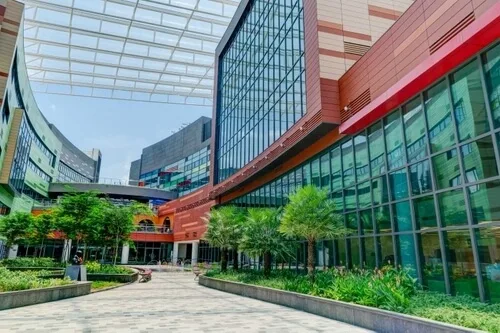
Global Indian International School Singapore smart campus learning environment

SMART Campus

A green, tech-enabled campus with extensive sports facilities that enables a holistic education

  • Kindergarten program at GIIS Singapore smart campus

    Montessori education with a modern touch.

  • Primary school curriculum at GIIS Singapore

    International primary programmes with best holistic learning.

  • Secondary school students learning at GIIS Singapore

    International middle school programmes with best foundation for high school.

  • High school education and curriculum at GIIS Singapore

    International high school programmes with beat launchpads for university.

21st century learning campus at GIIS Singapore

Facilities which are collaborative, creative and adaptable to individual needs.

Holistic education approach with 9 Gems at GIIS Singapore

Award-winning framework for all-round student development

Co-curricular activities at GIIS Singapore

Extra-curricular activities are those activities, often sports-based, that take place outside of the GIIS classroom

Extra curricular activities at GIIS Singapore

Talent shows, performances, competitions, clubs and additional classroom work.

Admission Process Icon

Get an overview of the admissions process

Campus Tour Icon

Register for a tour of the campus to learn more about the school first hand

Book Meeting Icon

You can talk to our Admissions Counsellor online or in-person, as per your convenience.

Admissions Form Icon

Find all forms related to admissions procedure here

Fees Icon

Get information on our fee structure for different grades

Scholarship Icon

Thank you for considering GIIS as a prospective school for your child. Our goal is to make the admissions.