Global
All Cities
Where would you like to study? Select cities to refine your search.
Any Curriculum
Find a campus based on the curriculum offered.
Global
Global
All Cities
Where would you like to study? Select cities to refine your search.
Any Curriculum
Find a campus based on the curriculum offered.
Search

Developing Handwriting Skills Among Pre-Schoolers

GMP

In this digital age, when written communication is increasingly done through laptops and mobile phones, penmanship is on a decline. Nowadays children get exposed to keyboards, touchpads and swipe buttons even before they are introduced to paper and pencil.

But because the new technologies have given us the options of keyboard, stylus and touchpads, should we ignore the importance of teaching effective handwriting skills to our pre-schoolers?

As an early years expert, my answer would be no!

We make the mistake of associating good handwriting to better scores in exams, but in reality, there are many more benefits that pre-schooler gains while practising better handwriting – good vision, eye-hand coordination, muscle memory, pencil grasp and letter formation. All of these together contribute to the overall better academic performance of students, not only in reading and writing but also in mathematics.

The areas that we need to focus on while helping the pre-schoolers improve their handwriting are – pencil grasp, letter formation, sizing of letters, copying words, spacing of words, sense of direction, proper pencil pressure, consistency in upper and lower case writing, etc.

At GIIS preschool, we use multiple approaches to build good handwriting techniques among students. However, if parents want to see quick and desired improvements in the penmanship of their children, then a certain degree of re-enforcement at home can work wonders.

Tips to improve the handwriting of pre-schoolers

Work on hand-eye coordination – visual-motor skills which are vital for good handwriting, grows out of eye-hand coordination. The eyes and hand should work in close coordination to ensure that the letters are correctly formed and stay within the line. Preschool and parents of toddlers can rely on a number of activities to help kids gain better visual-motor skills. Some of these are playing outdoor games like catch and throw with the ball, badminton, basketball, doing art and craft activities with beads, stacking tower games with lego blocks and solving maze puzzles.

Encouraging environment – You should not rush into expecting that since your child has started preschool, he or she should have developed handwriting skills by now. For most children, good handwriting skills only start emerging at 5 years of age. Before that, parents should work on improving the pencil grasp and steadiness while making letter formations. Most of the pre-schoolers will start with a five-fingered grasp and gradually proceed towards a mature grasp. As parents and teachers, we should help them cope up at each stage and encourage their efforts.

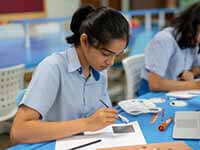
Proper posture and right stationery – we should not take an easy path when helping pre-schoolers improve their handwriting. Rather than making them practice handwriting by casually sitting on the bed or floor, they must sit on a proper table and chair while doing this exercise. Posture and angle play an important role in improving penmanship.

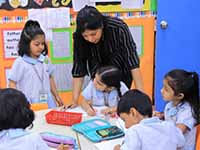
Under our Excelerate Pillar of the Global Montessori Plus programme, which has a dedicated approach towards honing the LSRW skills of preschoolers, we offer daily experiences to support the development of fine motor skills in the hands and fingers of our nursery and kindergarten students. We start with developing the strength and dexterity in their hands and fingers and then progress towards before they can be expected to master handwriting.
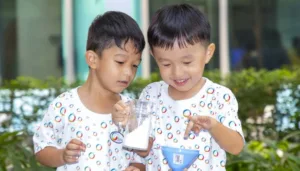
Building handwriting skills starts with a fun-writing exercise using sand, rice grains or simple scribbling at the nursery level. As students graduate to Kindergarten, the focus shifts more towards more formal writing done into four-lined notebooks and helping them gain perfection in the left to right pattern of writing and proper letter formation. Then comes the turn of practising 2-3 lettered words in legible handwriting.

By the end of K2, our students can progressively do creative writing, copy text from the board and take dictation in their notebooks.

The approach and resources provided by the preschool are hugely instrumental in building the handwriting skills of children and getting them ahead in their future learning journey. So when you are selecting a preschool for your child, you must explore the curriculum and check what all activities are done to improve the writing and language skills of children. After all, preschool education is the building block for primary school education and acquiring good handwriting skills is a crucial part of it.
To know more about our kindergarten programme called the Global Montessori Plus programme, do visit our campus and see our students, teachers and facilities for yourself. Click here to book a slot now.

Rema Rajiv

Ms Rajiv has been an Early Childhood educator and practitioner for the past 15 years at GIIS. She heads the Global Montessori Plus (GMP) Programme, supporting kindergarten students in their learning and holistic development to maximise the potential of every student. She has been instrumental in implementing developmentally age-appropriate curriculum that provides a strong foundation for lifelong learning. She is well-respected due to her rich experience in the field and passion for working with preschoolers, helping establish a good rapport with the parent community.​

Featured Blogs

Cambridge IGCSE

Cambridge IGCSE Results 2026: Everything Students and Parents Need to Know

If your child is preparing to enter Grade 9 or Grade 10, you have likely already encountered the term ‘IGCSE results’ in parent meetings, school communications, and open days. For those currently comparing IGCSE schools in Singapore, one practical question often stands out: how can a school's results be verified as genuinely reliable, rather than simply a marketing claim

IGCSE

Where Can You Study Cambridge IGCSE in Singapore? Best Schools, Fees & Admissions

Cambridge IGCSE is offered in Singapore mainly through private international schools, since local MOE schools follow the Singapore-Cambridge GCE syllabus instead. Among the IGCSE schools in Singapore, Global Indian International School (GIIS) Singapore is one of the most established options, offering the Cambridge IGCSE programme for Grades 9 and 10 (ages 14–16) at its SMART Campus in Punggol, with a consistent track record of A* and distinction results.

IGCSE Results

Understanding Your Cambridge IGCSE Results: A Complete Guide to Grades, Grading Scales and What Your Results Mean

Cambridge IGCSE results are graded on a scale from A* (highest) to G (lowest), based on a student's Uniform Mark achieved in each subject. An A* reflects a mark of 90–100%, while a G reflects 20–29%. Grades are issued per subject, not as an overall aggregate and are recognised by universities and employers in more than 160 countries.

GIIS

Mid-Year & Transfer Admissions: Moving Your Child to a Singapore International School (2026)

Relocating to Singapore rarely happens on a school's neat academic calendar. A posting can start in June, a lease can begin in September, a visa can clear in November—and somewhere in between, a child still needs a classroom, a timetable and a group of friends. This is the reality behind expat school admissions mid year in Singapore and it's a far more common situation than most parents expect.

Top Scholarships

Dr APJ Abdul Kalam Global Skills Scholarship

Eligibility:

Talent Based - Technology

More from same author
Trending Blogs

Cambridge IGCSE

Cambridge IGCSE Results 2026: Everything Students and Parents Need to Know

If your child is preparing to enter Grade 9 or Grade 10, you have likely already encountered the term ‘IGCSE results’ in parent meetings, school communications, and open days. For those currently comparing IGCSE schools in Singapore, one practical question often stands out: how can a school's results be verified as genuinely reliable, rather than simply a marketing claim

IGCSE

Where Can You Study Cambridge IGCSE in Singapore? Best Schools, Fees & Admissions

Cambridge IGCSE is offered in Singapore mainly through private international schools, since local MOE schools follow the Singapore-Cambridge GCE syllabus instead. Among the IGCSE schools in Singapore, Global Indian International School (GIIS) Singapore is one of the most established options, offering the Cambridge IGCSE programme for Grades 9 and 10 (ages 14–16) at its SMART Campus in Punggol, with a consistent track record of A* and distinction results.

IGCSE Results

Understanding Your Cambridge IGCSE Results: A Complete Guide to Grades, Grading Scales and What Your Results Mean

Cambridge IGCSE results are graded on a scale from A* (highest) to G (lowest), based on a student's Uniform Mark achieved in each subject. An A* reflects a mark of 90–100%, while a G reflects 20–29%. Grades are issued per subject, not as an overall aggregate and are recognised by universities and employers in more than 160 countries.

GIIS

Mid-Year & Transfer Admissions: Moving Your Child to a Singapore International School (2026)

Relocating to Singapore rarely happens on a school's neat academic calendar. A posting can start in June, a lease can begin in September, a visa can clear in November—and somewhere in between, a child still needs a classroom, a timetable and a group of friends. This is the reality behind expat school admissions mid year in Singapore and it's a far more common situation than most parents expect.

GIIS

Choosing Subjects for IGCSE: A Parent’s Guide to Streams, Options & Future Careers

By age 14, most children have never had to make a decision that shapes their next ten years. Choosing IGCSE subjects is exactly that decision and for parents, it often arrives with more questions than answers. Which subjects matter for university? Does dropping a science close doors? Is a 'safe' combination actually the right one?

GIIS

Your Child’s Journey to IBDP Success Starts Before Grade 11: A Parent’s Guide

While evaluating the IB Diploma programme in Singapore for their children, parents center the conversation around Grade 11 and 12. It is during these final two high school years that students write their Extended Essays, dive deep into Theory of Knowledge (TOK) and prepare for final examinations.

CBSE Results

IBDP Results 2026: What Parents Should Consider Before Choosing an IB School in Singapore

Choosing the right international school for your child is one of the most critical academic decisions a parent can make. With the release of the May 2026 International Baccalaureate Diploma Programme (IBDP) results, parents across Singapore are evaluating school performance metrics to determine where their child will thrive best.

GIIS

How GIIS Students Achieved Outstanding IBDP Results in 2026: A Look at the Learning Approach

Choosing the right senior secondary curriculum requires more than academic rigour. Students also need an environment that nurtures critical thinking, global perspectives, personal growth, and university readiness. For families evaluating the IB diploma programme in Singapore, the May 2026 International Baccalaureate Diploma Programme (IBDP) examination results offer clear evidence of how structured academic mentoring and personalised pedagogy lead to top-tier university readiness.

Search
History Menu Icon

Our vision is to become a global role model for teaching and learning.

History Menu Icon Secondary

Since its inception in 2002, GIIS has spread quality education through 17 campuses across the globe.

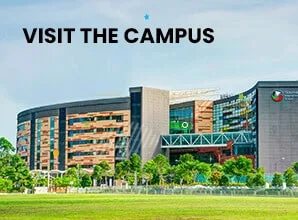
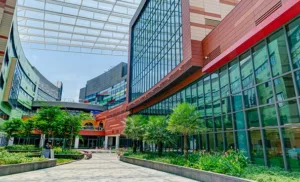
Global Indian International School Singapore smart campus learning environment

SMART Campus

A green, tech-enabled campus with extensive sports facilities that enables a holistic education

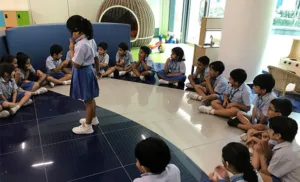
  • Kindergarten program at GIIS Singapore smart campus

    Montessori education with a modern touch.

  • Primary school curriculum at GIIS Singapore

    International primary programmes with best holistic learning.

  • Secondary school students learning at GIIS Singapore

    International middle school programmes with best foundation for high school.

  • High school education and curriculum at GIIS Singapore

    International high school programmes with beat launchpads for university.

21st century learning campus at GIIS Singapore

Facilities which are collaborative, creative and adaptable to individual needs.

Holistic education approach with 9 Gems at GIIS Singapore

Award-winning framework for all-round student development

Co-curricular activities at GIIS Singapore

Extra-curricular activities are those activities, often sports-based, that take place outside of the GIIS classroom

Extra curricular activities at GIIS Singapore

Talent shows, performances, competitions, clubs and additional classroom work.

Admission Process Icon

Get an overview of the admissions process

Campus Tour Icon

Register for a tour of the campus to learn more about the school first hand

Book Meeting Icon

You can talk to our Admissions Counsellor online or in-person, as per your convenience.

Admissions Form Icon

Find all forms related to admissions procedure here

Fees Icon

Get information on our fee structure for different grades

Scholarship Icon

Thank you for considering GIIS as a prospective school for your child. Our goal is to make the admissions.