Global
All Cities
Where would you like to study? Select cities to refine your search.
Any Curriculum
Find a campus based on the curriculum offered.
Global
Global
All Cities
Where would you like to study? Select cities to refine your search.
Any Curriculum
Find a campus based on the curriculum offered.
Search

11 strategies to reduce screen time for children

Holistic Development

Living in today’s digital world, it is undeniable that screens have become an integral part of our daily lives, and they often serve as a means to engage with the world around us.

However, deciding how much screen time is appropriate for your child can be a challenge.

Considering that screens are likely to be a prominent aspect of your child’s future, it is important to guide them in using technology efficiently and safely. By acknowledging the role screens play in our modern lives and providing guidance on responsible screen use, we can equip children with the necessary tools to navigate the digital landscape effectively while maintaining a balanced lifestyle.

For younger children – toddlers and preschoolers – screen time should be limited to ensure their healthy development. Excessive screen time at this age can hinder important cognitive, social and physical development.

As children enter elementary school, screen time can play a more prominent role in their education. With the increasing integration of technology in schools, students may need to spend more time on screens for educational purposes. Nevertheless, it is important to regulate the content they are exposed to, ensuring that it is age-appropriate and aligns with their educational goals.

Here are 11 strategies to reduce screen time for children:

  1. Set clear boundaries: Establish clear rules about when, where, and which screens are acceptable. Create a schedule that works for your family’s needs and preferences. Discuss the appropriate duration and specific times when screen time is allowed. Try to engage your children in the process of setting boundaries to make them feel involved and heard.

  1. Discuss the rules: Determine the reasons behind reducing screen time, such as promoting outdoor play, encouraging imaginative games, or improving mood and behaviour. Discuss the reasons behind the rules, such as the importance of physical activity, face-to-face interaction, and the need for quality sleep.

  1. Befriend technology to maximise benefits: Use technology to your advantage by setting timers or scheduling device usage. Allow devices to turn off automatically after a designated time.

  1. Reduce your own screen time: Be a role model for your children by minimising your own screen time when they are present. Encourage reading and engaging activities instead.

  1. Spend time with your children: Spend quality time playing with your children, as this can divert their attention away from screens while strengthening your bond with them.

  1. Encourage physical activities: Provide alternative activities that are more appealing, such as sports, board games, art projects, or other hobbies your children enjoy.

  1. Foster independence: Teach your children to engage in autonomous play, allowing them to entertain themselves. In fact, it’s okay to let your child be bored for a period of time – it may just spur their creativity and get them to do some interesting activity that they would not normally explore otherwise.

  1. No devices before bedtime: Establish a consistent routine that avoids screen time before bedtime, and remove devices from children’s bedrooms to promote better sleep.

  1. Consistency is key: Stick to the predetermined screen time limits for each age group. Avoid using screens as rewards or punishments.

  1. Screen time should neither be a reward or punishment: Avoid assigning too much importance to screen time by linking it to rewards or punishments. Teach moderation and other coping mechanisms.

  1. Invite their friends over more often: Encourage social interaction and physical play by inviting friends over. This can reduce the reliance on screens and promote healthier relationships.

Also read: Digital safety and well-being: 5 ways to navigate through the online world

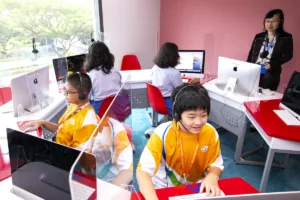
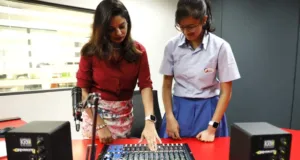
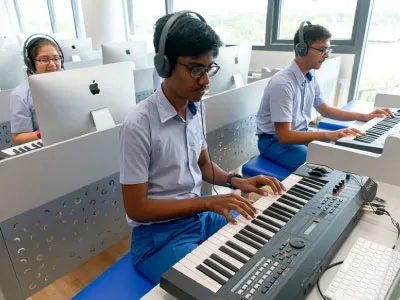
As a top international school in Singapore, GIIS’ tech-enhanced campuses with digitised classrooms and skill-based studios provide engaging and interactive learning experiences to our students. Use of devices is focussed towards enhancing the educational goals through age-appropriate exposure to technology with guidance from teachers on digital well-being. By engaging in extracurricular and co-curricular activities, like sports, arts and more, students at GIIS are nurtured to become well-rounded individuals.

If you are keen to know more about GIIS, please don’t hesitate to contact our admissions counsellors.

Selina D Souza

Selina D'souza is a Senior Communications specialist with 10+ years of marketing communications experience in the B2B and B2C IT and Education sector. She is a passionate curator of good content, believes that schools can be a place of creativity and innovation if the right mindset and practices are adopted, and is always looking for more sustainable lifestyle choices.
Featured Blogs

GIIS

Your Child’s Journey to IBDP Success Starts Before Grade 11: A Parent’s Guide

While evaluating the IB Diploma programme in Singapore for their children, parents center the conversation around Grade 11 and 12. It is during these final two high school years that students write their Extended Essays, dive deep into Theory of Knowledge (TOK) and prepare for final examinations.

CBSE Results

IBDP Results 2026: What Parents Should Consider Before Choosing an IB School in Singapore

Choosing the right international school for your child is one of the most critical academic decisions a parent can make. With the release of the May 2026 International Baccalaureate Diploma Programme (IBDP) results, parents across Singapore are evaluating school performance metrics to determine where their child will thrive best.

GIIS

How GIIS Students Achieved Outstanding IBDP Results in 2026: A Look at the Learning Approach

Choosing the right senior secondary curriculum requires more than academic rigour. Students also need an environment that nurtures critical thinking, global perspectives, personal growth, and university readiness. For families evaluating the IB diploma programme in Singapore, the May 2026 International Baccalaureate Diploma Programme (IBDP) examination results offer clear evidence of how structured academic mentoring and personalised pedagogy lead to top-tier university readiness.

GIIS

Moving to Singapore with Children: A Complete School Guide for Expat Families (2026)

Relocating to Singapore is an exciting milestone for any family. Alongside finding a new home, settling into a different culture, and adapting to a new lifestyle, one of the biggest decisions parents face is choosing the right school for their children.

Top Scholarships

Dr APJ Abdul Kalam Global Skills Scholarship

Eligibility:

Talent Based - Technology

More from same author
Trending Blogs

GIIS

Your Child’s Journey to IBDP Success Starts Before Grade 11: A Parent’s Guide

While evaluating the IB Diploma programme in Singapore for their children, parents center the conversation around Grade 11 and 12. It is during these final two high school years that students write their Extended Essays, dive deep into Theory of Knowledge (TOK) and prepare for final examinations.

CBSE Results

IBDP Results 2026: What Parents Should Consider Before Choosing an IB School in Singapore

Choosing the right international school for your child is one of the most critical academic decisions a parent can make. With the release of the May 2026 International Baccalaureate Diploma Programme (IBDP) results, parents across Singapore are evaluating school performance metrics to determine where their child will thrive best.

GIIS

How GIIS Students Achieved Outstanding IBDP Results in 2026: A Look at the Learning Approach

Choosing the right senior secondary curriculum requires more than academic rigour. Students also need an environment that nurtures critical thinking, global perspectives, personal growth, and university readiness. For families evaluating the IB diploma programme in Singapore, the May 2026 International Baccalaureate Diploma Programme (IBDP) examination results offer clear evidence of how structured academic mentoring and personalised pedagogy lead to top-tier university readiness.

GIIS

Moving to Singapore with Children: A Complete School Guide for Expat Families (2026)

Relocating to Singapore is an exciting milestone for any family. Alongside finding a new home, settling into a different culture, and adapting to a new lifestyle, one of the biggest decisions parents face is choosing the right school for their children.

Search
History Menu Icon

Our vision is to become a global role model for teaching and learning.

History Menu Icon Secondary

Since its inception in 2002, GIIS has spread quality education through 17 campuses across the globe.

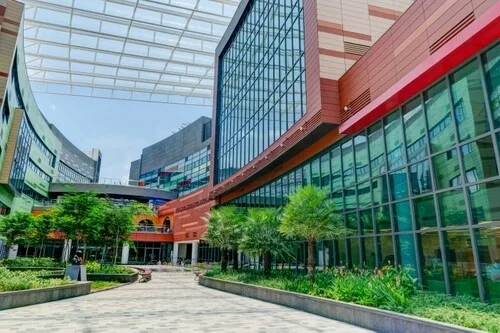
Global Indian International School Singapore smart campus learning environment

SMART Campus

A green, tech-enabled campus with extensive sports facilities that enables a holistic education

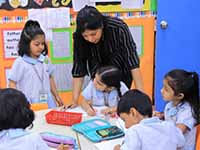
  • Kindergarten program at GIIS Singapore smart campus

    Montessori education with a modern touch.

  • Primary school curriculum at GIIS Singapore

    International primary programmes with best holistic learning.

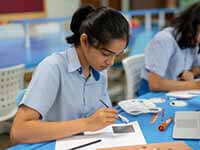
  • Secondary school students learning at GIIS Singapore

    International middle school programmes with best foundation for high school.

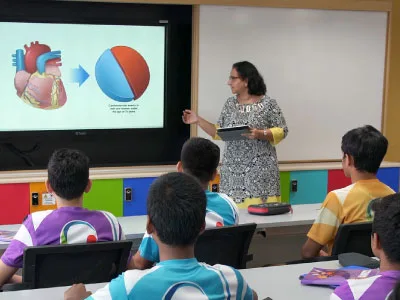
  • High school education and curriculum at GIIS Singapore

    International high school programmes with beat launchpads for university.

21st century learning campus at GIIS Singapore

Facilities which are collaborative, creative and adaptable to individual needs.

Holistic education approach with 9 Gems at GIIS Singapore

Award-winning framework for all-round student development

Co-curricular activities at GIIS Singapore

Extra-curricular activities are those activities, often sports-based, that take place outside of the GIIS classroom

Extra curricular activities at GIIS Singapore

Talent shows, performances, competitions, clubs and additional classroom work.

Admission Process Icon

Get an overview of the admissions process

Campus Tour Icon

Register for a tour of the campus to learn more about the school first hand

Book Meeting Icon

You can talk to our Admissions Counsellor online or in-person, as per your convenience.

Admissions Form Icon

Find all forms related to admissions procedure here

Fees Icon

Get information on our fee structure for different grades

Scholarship Icon

Thank you for considering GIIS as a prospective school for your child. Our goal is to make the admissions.