At first glance, it may appear that early childhood education primarily serves as an introduction to the classroom environment and an opportunity for children to socialise with their peers. However, the choice of the Early Childhood programme has a significant impact on your child.
Education experts emphasise that the initial five years of a child’s life are among the most pivotal for development with potential long-lasting effects on a child’s journey into adulthood and learning. Within the realm of preschool education, there are different teaching methods to cater to the diverse learning styles of individual students.
This article will take you through some of the popular teaching methods. Every parent wants the best for their children but if you asked them what that would be, they’d probably struggle to find one answer. By understanding these top preschool teaching methods, you can choose a preschool programme that suits your child best.
Common preschool teaching methods
As you are researching preschools in Singapore, you will likely find that these are some of the most common preschool teaching methods:
● Montessori Method — The Montessori system is an educational system that was developed in the dawn of the 20th century by Italian educator Maria Montessori. It is rooted in an individualistic approach to education and is based on the fact that every child has creative potential and natural motivation to learn.
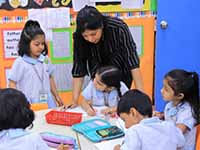
Montessori classrooms can be easily recognised by their engaging learning materials with students who demonstrate independent and enthusiastic attitudes. Various aspects of development – cognitive, social, physical and emotional are taken care of as the students blossom through their early childhood education.
● Reggio Emilia Approach — In this approach, children are considered curious and active learners who should be stimulated by their surroundings and encouraged to make discoveries at every opportunity. This approach requires educators to expose students to many different experiences and opportunities, particularly those that encourage self-expression and creativity.
It is based on four key principles, which are: emergent curriculum, in-depth projects, collaboration and representational growth. The teaching requires learning concepts to be represented in multiple forms like art, drama, music and so on. The teachers carefully track student growth as they also reflect on their own learning.
● Waldorf Steiner Method — The Waldorf Steiner Method was developed in the late 19th and early 20th centuries by scholar Rudolph Steiner. It is a holistic approach to education in which students are taught traditional subjects in non-traditional ways. This educational approach is largely focused on hands-on learning opportunities and sensory-based experiences.
The curriculum is based on three development stages of children: early childhood, until age seven, when kids learn best through play and physical activity; ages 7-14, when children learn through feelings and imagination; and the final stage when they learn through thinking.
Montessori-plus preschool teaching method at GIIS
The Global Montessori Plus (GMP) programme at GIIS caters to the needs of our early learners. Our experienced educators have customised the Maria Montessori method into a programme that provides additional value through an age-appropriate curriculum filled with opportunities to play and learn. The programme caters to students aged 2.5 years upwards.
Our Montessori-trained teachers support learning through the child’s formative years. The curriculum focuses on practical life, sensorial, language, maths and cultural studies, and multiple activities are used to motivate children throughout the entire programme.
It is based on our customised pedagogy of five pillars and the innovative 9GEMS educational framework that anchors the curriculum at every level. The preschool pedagogy consists of:
1. Excelerate Programme — Here the focus is laid on foundational skills, whether it is language, cognitive or numeracy skills.
2. Multifaceted Learning Experiences — This aspect of the curriculum focuses on providing students with learning experiences to help their overall development.
3. iCare — This is a values-based learning component that helps students become sensitive to real-world issues like global warming, waste management and more.
4. iPlay — An active part of the learning experiences, iPlay encourages social skills development while simultaneously helping students become more confident.
5. Future-Ready — The Future-Ready learning part of the pedagogy focuses on STEAM activities, hands-on experiments and technology-based assignments.
The Montessori Plus teaching method is a proven approach to early childhood education. It enables young learners to blossom as they understand more about themselves and the world around them. This foundation allows students to transition to formal schooling seamlessly and sets them up for long-term success.
Enhancing the preschool experience at GIIS
In addition to the lessons and activities conducted during the regular programme, the GMP Extended programme incorporates storytelling and manipulative sessions during the extended preschool hours (12.30-3.30pm).
Additionally, there are scheduled sessions on dance, speech and drama, art, free play and physical education, as well as creative fun, design thinking activities throughout the week – done on rotation basis. There’s adequate time for lunch, snacks, and a rest break in the afternoon session.
Mihee Kwon, parent of Minjoon, Grade K2 (GMP Extended programme), says: “After joining the GMP (Global Montessori Plus) programme, I can see my son’s development from every angle. He enjoys school and is really happy to be with his teachers and friends. He has lots of interactions (in school) and enjoys the variety of programmes.
Also read: How to choose the right preschool for your child? Factors to consider
“There are special activities, as well, like community help. He (Minjoon) shared it with me and that was very special to me. For the Extended programme, every Monday he does dancing, which he really enjoys,” Kwon added.
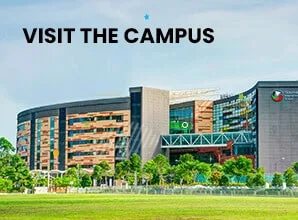
If you are keen to know more about Early Childhood education at GIIS, please don’t hesitate to schedule a campus tour with us.

Rema Rajiv
Ms Rajiv has been an Early Childhood educator and practitioner for the past 15 years at GIIS. She heads the Global Montessori Plus (GMP) Programme, supporting kindergarten students in their learning and holistic development to maximise the potential of every student. She has been instrumental in implementing developmentally age-appropriate curriculum that provides a strong foundation for lifelong learning. She is well-respected due to her rich experience in the field and passion for working with preschoolers, helping establish a good rapport with the parent community.