Global
All Cities
Where would you like to study? Select cities to refine your search.
Any Curriculum
Find a campus based on the curriculum offered.
Global
Global
All Cities
Where would you like to study? Select cities to refine your search.
Any Curriculum
Find a campus based on the curriculum offered.
Search

Tips on teaching your preschool child to be a critical thinker

Preschool Education

Thinking, we know, is in human nature! However, how we think is an important skill set that can be developed  through education. Thinking well is often associated with critical thinking but experts suggest that critical thinking is much more than this, and includes logic and reasoning.

Preschool students can develop their critical thinking skills by working on both their reasoning and problem-solving techniques. A classroom environment that emphasises story-based approaches, classroom interactions and outdoor activities will help them develop the building blocks they need to become adept critical thinkers.

What is Critical Thinking?

Critical thinking is a skill that every individual needs to master in order to succeed in their professional and personal lives. By being able to rely on data, analysis, evaluation, inference and reasoning, a person is able to make sound decisions as well as come up with innovative and creative solutions.

The importance of critical thinking as a 21st century skill lies in the fact that it needs to be honed and developed over time – starting as early as during early childhood education.

Characteristics of a Critical Thinker

The main characteristics of a critical thinker include:

● Having the ability to reflect on what was learned and think reasonably.

● Being confident enough to make decisions and passionate enough to learn new concepts.

● Having the ability to put things into context and the awareness to self-correct.

● Being able to engage in purposeful judgement based on analysis and reasoning.

● Being able to use their cognitive skills in a variety of settings.

Critical thinking skills during early childhood education

Recent educational research shows that even 3-year-olds can begin developing their critical thinking skills, largely because, at this age, they are already starting to attain knowledge through communication and gestures.

In order to establish a foundation for critical thinking in the future, preschool students should be enrolled in a play-based educational facility with a focus on visual and auditory experiential learning.

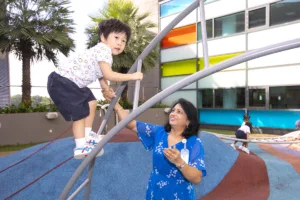
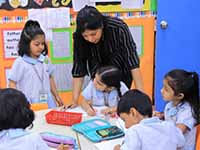
Playtime teaches preschool students how to be independent

Transforming preschool students into Critical Thinkers

No one is born a critical thinker. In fact, critical thinking can be a difficult skill for adults to master, which is why it’s important that young children begin building the foundation for critical thinking during their early childhood education.

These are a few ways that educators and parents can help preschool students become critical thinkers:

● Encourage preschool children to ask questions. They are naturally curious at this age, and their curiosity should be nurtured. When they do ask a question, make sure they receive a respectful and age-appropriate response. The responses can also be questions directing them to finding the answers themselves.

● Become their playmate. Preschool children learn through play, and they often model the behaviour of those around them. By playing with them, you are doing more than forging a bond with them; you are teaching them the hard work of being creative and using their imagination.

● Ask them to consider an alternative solution. This will help them understand that not every question has one distinct answer and will give them the ability to consider other possibilities.
● Hear them out. Encourage them to use their own words to showcase their understanding of a topic. You may prompt them by asking thought-provoking questions but do allow them to speak their minds.

● Give them opportunities to be independent. It can be so easy to help children by taking care of a task because you can do it faster. However, when you give them opportunities to be independent, they will naturally become confident and self-assured.

● Read with them and encourage them to tell the story themselves. Three-year-olds are probably not going to be reading on their own, but you can ask them to share what they think the story is about based on the pictures.

● Provide them with interactive STEAM activities. This will guide them as they identify problems, come up with their own solutions and test their theory in order to see the results.

Early Childhood Education at GIIS

At GIIS, we have created an early childhood programme that supports holistic development in a student-centred environment. Preschool students enjoy engaging in activities in an immersive classroom environment they can safely explore on their own terms. Our preschool is anchored by the award-winning Global Montessori Plus (GMP) programme, which is supported by five pillars:

Excelerate Programme: This pillar works to accelerate students’ speaking, reading, listening, writing and numeracy skills.

Multiple Intelligences: This pillar allows for multifaceted learning, based on Howard Gardner’s Theory of Multiple Intelligences through music, art, movement and more.

iCare: This pillar encourages students to become involved in their communities and the world around them.

iPlay: This pillar provides extensive opportunities for play-based learning.

Future Ready Learning: This pillar encourages the use of age-appropriate STEAM activities and introduces young learners to science, technology, engineering, art and mathematics.

By combining outdoor activities with a play-based curriculum, GIIS naturally develops critical thinking skills in preschool students.

Also read: How an international preschool is beneficial for your child

GIIS’ Preschool Extended programme:

Moreover, GIIS’ extended preschool hours from 9-3.30 pm supplement the regular 9-12.30 pm programme by offering extra time for enrichment, and includes a rotation of structured instruction in music, dance, drama, speech, storytelling, and more.

If you are keen to know more about preschool at GIIS, please feel free to book a campus tour today.

Rema Rajiv

Ms Rajiv has been an Early Childhood educator and practitioner for the past 15 years at GIIS. She heads the Global Montessori Plus (GMP) Programme, supporting kindergarten students in their learning and holistic development to maximise the potential of every student. She has been instrumental in implementing developmentally age-appropriate curriculum that provides a strong foundation for lifelong learning. She is well-respected due to her rich experience in the field and passion for working with preschoolers, helping establish a good rapport with the parent community.​

Featured Blogs

GIIS

Your Child’s Journey to IBDP Success Starts Before Grade 11: A Parent’s Guide

While evaluating the IB Diploma programme in Singapore for their children, parents center the conversation around Grade 11 and 12. It is during these final two high school years that students write their Extended Essays, dive deep into Theory of Knowledge (TOK) and prepare for final examinations.

CBSE Results

IBDP Results 2026: What Parents Should Consider Before Choosing an IB School in Singapore

Choosing the right international school for your child is one of the most critical academic decisions a parent can make. With the release of the May 2026 International Baccalaureate Diploma Programme (IBDP) results, parents across Singapore are evaluating school performance metrics to determine where their child will thrive best.

GIIS

How GIIS Students Achieved Outstanding IBDP Results in 2026: A Look at the Learning Approach

Choosing the right senior secondary curriculum requires more than academic rigour. Students also need an environment that nurtures critical thinking, global perspectives, personal growth, and university readiness. For families evaluating the IB diploma programme in Singapore, the May 2026 International Baccalaureate Diploma Programme (IBDP) examination results offer clear evidence of how structured academic mentoring and personalised pedagogy lead to top-tier university readiness.

GIIS

Moving to Singapore with Children: A Complete School Guide for Expat Families (2026)

Relocating to Singapore is an exciting milestone for any family. Alongside finding a new home, settling into a different culture, and adapting to a new lifestyle, one of the biggest decisions parents face is choosing the right school for their children.

Top Scholarships

Dr APJ Abdul Kalam Global Skills Scholarship

Eligibility:

Talent Based - Technology

More from same author
Trending Blogs

GIIS

Your Child’s Journey to IBDP Success Starts Before Grade 11: A Parent’s Guide

While evaluating the IB Diploma programme in Singapore for their children, parents center the conversation around Grade 11 and 12. It is during these final two high school years that students write their Extended Essays, dive deep into Theory of Knowledge (TOK) and prepare for final examinations.

CBSE Results

IBDP Results 2026: What Parents Should Consider Before Choosing an IB School in Singapore

Choosing the right international school for your child is one of the most critical academic decisions a parent can make. With the release of the May 2026 International Baccalaureate Diploma Programme (IBDP) results, parents across Singapore are evaluating school performance metrics to determine where their child will thrive best.

GIIS

How GIIS Students Achieved Outstanding IBDP Results in 2026: A Look at the Learning Approach

Choosing the right senior secondary curriculum requires more than academic rigour. Students also need an environment that nurtures critical thinking, global perspectives, personal growth, and university readiness. For families evaluating the IB diploma programme in Singapore, the May 2026 International Baccalaureate Diploma Programme (IBDP) examination results offer clear evidence of how structured academic mentoring and personalised pedagogy lead to top-tier university readiness.

GIIS

Moving to Singapore with Children: A Complete School Guide for Expat Families (2026)

Relocating to Singapore is an exciting milestone for any family. Alongside finding a new home, settling into a different culture, and adapting to a new lifestyle, one of the biggest decisions parents face is choosing the right school for their children.

GIIS

Why GIIS SMART Campus Singapore Stands Out as a Future-Ready School

As technology and global careers continue to evolve, parents are looking for future-ready schools that offer more than academics. GIIS SMART Campus Singapore combines academic excellence, global curricula, innovative learning, and holistic development to prepare students for lifelong success.

GIIS

GIIS SMART Campus Singapore: Programmes & Admissions Guide for Punggol Families (2026)

As more families move into Punggol, Sengkang, and the North-East region of Singapore, the demand for high-quality international education continues to grow. Parents today are looking for schools that combine academic excellence, future-ready learning, global curricula, and holistic development.

GIIS

How to Choose the Best Primary School in Singapore: A Parent’s Complete Guide (2026)

The primary school years lay the foundation for a child's future success, shaping not only academic achievement but also confidence, character, curiosity, and a lifelong love of learning. Choosing a school that combines strong academics with holistic development helps children build the knowledge, skills, and values they need to thrive in an ever-changing world.

GIIS

Primary School in Singapore: A Parent’s Guide to Choosing the Right School (2026)

Choosing the right primary school is one of the most important decisions parents make for their child’s future. Primary education forms the foundation for academic success, personality development, confidence, communication skills, and lifelong learning habits. In Singapore’s highly competitive education landscape, parents today are looking beyond academics and focusing on schools that offer holistic development, innovation, global exposure, and a nurturing environment.

Search
History Menu Icon

Our vision is to become a global role model for teaching and learning.

History Menu Icon Secondary

Since its inception in 2002, GIIS has spread quality education through 17 campuses across the globe.

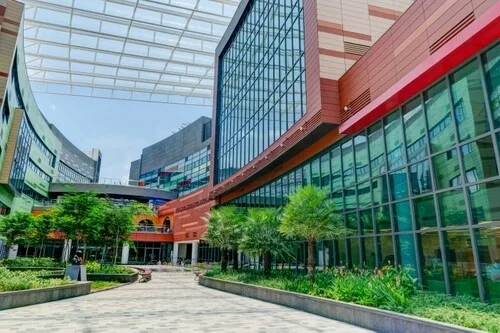
Global Indian International School Singapore smart campus learning environment

SMART Campus

A green, tech-enabled campus with extensive sports facilities that enables a holistic education

  • Kindergarten program at GIIS Singapore smart campus

    Montessori education with a modern touch.

  • Primary school curriculum at GIIS Singapore

    International primary programmes with best holistic learning.

  • Secondary school students learning at GIIS Singapore

    International middle school programmes with best foundation for high school.

  • High school education and curriculum at GIIS Singapore

    International high school programmes with beat launchpads for university.

21st century learning campus at GIIS Singapore

Facilities which are collaborative, creative and adaptable to individual needs.

Holistic education approach with 9 Gems at GIIS Singapore

Award-winning framework for all-round student development

Co-curricular activities at GIIS Singapore

Extra-curricular activities are those activities, often sports-based, that take place outside of the GIIS classroom

Extra curricular activities at GIIS Singapore

Talent shows, performances, competitions, clubs and additional classroom work.

Admission Process Icon

Get an overview of the admissions process

Campus Tour Icon

Register for a tour of the campus to learn more about the school first hand

Book Meeting Icon

You can talk to our Admissions Counsellor online or in-person, as per your convenience.

Admissions Form Icon

Find all forms related to admissions procedure here

Fees Icon

Get information on our fee structure for different grades

Scholarship Icon

Thank you for considering GIIS as a prospective school for your child. Our goal is to make the admissions.