Global
All Cities
Where would you like to study? Select cities to refine your search.
Any Curriculum
Find a campus based on the curriculum offered.
Global
Global
All Cities
Where would you like to study? Select cities to refine your search.
Any Curriculum
Find a campus based on the curriculum offered.
Search
The advantages of learning a Second Language in school

The advantages of learning a Second Language in school

Language Programmes

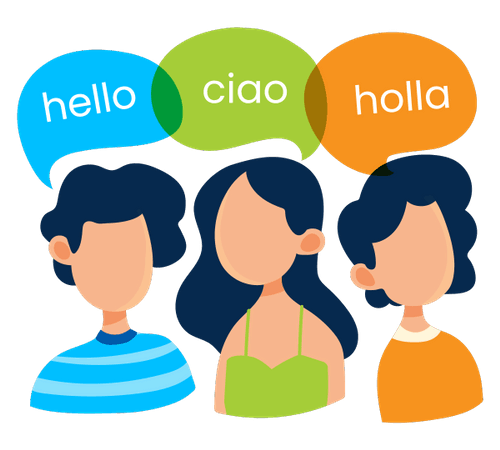
According to research, as much as 75% of the world’s population can speak at least two languages. The second language in school could be a foreign language or the mother tongue in many cases. Learning a foreign language is always a strong advantage for anyone who wants to make a solid contribution in today’s global community.

Having a robust foundation in mother tongue is said to benefit students in numerous ways, including fostering essential skills such as critical thinking and literacy skills. Knowing multiple languages helps your child become more productive and successful in school and later in life.

‍

Top five benefits of learning a Second Language

Among the many advantages to learning a second language, below are the key takeaways:

1. Enhanced memory

Learning a second language helps with brain development and memory enhancement. Memory is like a muscle that must be flexed and strengthened. Learning a second language helps students use their memory and recall in the most efficient way possible.

2. Improved communication skills

When learning a second language – a foreign language or the mother tongue in many cases – students get to learn reading, listening, writing and speaking the language. The knowledge of vocabulary, pronunciation, and right choice of words in the second language makes students better communicators, a skill that follows them from childhood into adulthood.

3. Awareness of new cultures

Learning a second language involves developing awareness of the culture that produced that language. Cultural awareness helps students become better global citizens; it also helps students learn empathy, kindness and appreciation for new ways of doing things.

4. Improved focus

Children who learn a second language enjoy improved focus. This helps them become better students, makes them more productive in the workplace and ensures greater success later in life.

5. More opportunities

Knowledge of languages is a common requirement for many jobs and can also be a requirement at certain schools around the world. Children who know how to speak a second language have more opportunities and will continue to enjoy those global employment opportunities throughout their lives.

‍

‍

Second Language options at GIIS

Students at GIIS have the opportunity to learn a variety of second languages, including French, Mandarin, Spanish, Tamil, Hindi and English as a Second Language (ESL), under the Cambridge curriculum and later in IBDP.

French. French is offered at GIIS for kindergarten (K1-2), primary and secondary school students in IB Primary Years Programme (IB PYP), Cambridge Lower Secondary and higher secondary programmes (CLSP and IGCSE), IB Diploma Programme (IBDP), and Indian central board curriculum (CBSE).

Tamil/Hindi. Tamil/Hindi programmes are offered to students from kindergarten (K1-2). The programmes support students as they develop their language skills for their mother tongue or as a second language skill.

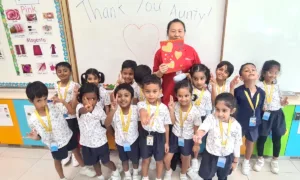
Mandarin. Students have the option to learn Mandarin right from kindergarten (k1-2). It is also offered in the IB PYP and CLSP at GIIS. Primary students acquire oral and written skills over a five-year period. Students are also taught a deeper understanding of traditions and cultural perspectives in Mandarin-speaking communities.

Spanish (Ab Initio). For Spanish (Ab Initio) offered to IBDP students, no prior knowledge is required to opt for it. During lessons, students learn to appreciate Spanish culture while also learning how to read, write, listen and speak the language.

English. As part of the Cambridge curriculum, students in both lower and higher secondary schools (CLSP and IGCSE) have the option to opt for English as a second language (ESL) where they get weekly lessons and support.

‍

Also read: 5 ways GIIS helps students fall in love with a second language

‍

Language options at GIIS by grade

Students at GIIS have the opportunity to choose one of these languages and study it for approximately 2.5 hours per week.

● Kindergarten choices: Hindi / Tamil/ French/ Mandarin

● IB PYP (1-5) choices: Hindi / French / Mandarin/Tamil

● CBSE (1-10) choices: Hindi / Tamil / French

● CLSP (6 – 8) choices: Hindi / Tamil / French / Mandarin

● IGCSE (9 – 10) choices: Hindi / Tamil / French/ Mandarin

● IBDP (11-12) choices: Hindi / Tamil / French / French ab initio / Spanish ab initio‍

● CBSE (6-8) additional 3rd language choices: Hindi / Tamil / Sanskrit
‍

‍

Benefits of Language Programmes at GIIS

There are many benefits of learning a second language at GIIS. Our comprehensive programmes help students in:

● Enhancing their oral, reading and writing skills in a new language

● Increasing cultural awareness and appreciation

● Developing a global mindset

● Building opportunities for future in a global economy

‍

At GIIS, we offer high-level support to students in their endeavours to learn a new language to ensure that our students are positioned to become productive global citizens.

If you are keen to learn more about the language programmes at GIIS, please feel free to connect with our friendly admissions counsellors.

‍

Deepika
Deepika Sodhi

Ms. Deepika Sodhi, Principal, GIIS East Coast Campus is a seasoned education leader with over 25 years of teaching experience, including 15+ years in Cambridge and IB programmes, and 10 years in CBSE.

She holds a Master's degree in Physics with a specialisation in Electronics, a Bachelor’s in Education, and an Honours Diploma in Software Management. Her teaching career spans India and Singapore.

Ms. Sodhi's achievements include being GATE (Graduate Aptitude Test in Engineering) qualified and a Gold Medalist in Physics, Lead ISO Auditor, a member of both the International Schools Network and the International Baccalaureate Educator’s Network.

In her past roles at GIIS, she served as Head of Science and Physics, Cambridge IGCSE Coordinator, Cambridge Exam Officer, and IB Examiner.

Ms. Sodhi is passionate about innovation, inclusivity, and student success. In her free time, she enjoys reading and volunteering with the Singapore Red Cross.
Featured Blogs

Secondary School

How International Schools Develop Future-Ready Students Through Advanced Presentation Skills

Most international schools build presentation skills by making students speak, perform and defend ideas in front of real audiences, repeatedly and from an early age. At GIIS in Singapore, this happens through the international and Indian curricula, including IB, Cambridge and CBSE and 9GEMS framework. Students also practise these skills through performances, competitions and clubs.

School

How International Schools in Singapore Develop Life Skills Through Different Teaching Approaches

Many international schools in Singapore teach life skills by embedding practical competencies such as problem-solving, emotional regulation and teamwork directly into personalised academic frameworks. Rather than using one-size-fits-all instruction, most top institutions adapt life skill development to match visual, discussion-based and hands-on learning activities.

GIIS

How Do International Schools Prepare Students for University Applications from Grade 9 & 10?

Parents researching Singapore's international schools often ask the same question: when should university planning actually begin? The honest answer is earlier than most families expect. By the time a student reaches Grade 12, the subjects they took, the activities they pursued and the guidance they received years earlier have already shaped what doors are open to them.

GIIS

What Does “Holistic Education” Actually Mean in a Singapore International School?

In a Singapore international school like GIIS, holistic education means academics sit alongside eight other areas of development — sport, arts, leadership, innovation, community service, personality growth, skills, and values — inside one structured framework. It isn't a marketing phrase; it's how the timetable and activities are actually organised. It's natural to wonder what it actually means for your child. Ask ten different parents and you'll probably hear ten different answers — and that's okay. This guide breaks down the meaning of holistic education in plain language, explains what holistic learning looks like day to day and shows how it compares to a traditional, exam-first model.

Top Scholarships

Dr APJ Abdul Kalam Global Skills Scholarship

Eligibility:

Talent Based - Technology

More from same author
Trending Blogs

Secondary School

How International Schools Develop Future-Ready Students Through Advanced Presentation Skills

Most international schools build presentation skills by making students speak, perform and defend ideas in front of real audiences, repeatedly and from an early age. At GIIS in Singapore, this happens through the international and Indian curricula, including IB, Cambridge and CBSE and 9GEMS framework. Students also practise these skills through performances, competitions and clubs.

School

How International Schools in Singapore Develop Life Skills Through Different Teaching Approaches

Many international schools in Singapore teach life skills by embedding practical competencies such as problem-solving, emotional regulation and teamwork directly into personalised academic frameworks. Rather than using one-size-fits-all instruction, most top institutions adapt life skill development to match visual, discussion-based and hands-on learning activities.

GIIS

How Do International Schools Prepare Students for University Applications from Grade 9 & 10?

Parents researching Singapore's international schools often ask the same question: when should university planning actually begin? The honest answer is earlier than most families expect. By the time a student reaches Grade 12, the subjects they took, the activities they pursued and the guidance they received years earlier have already shaped what doors are open to them.

GIIS

What Does “Holistic Education” Actually Mean in a Singapore International School?

In a Singapore international school like GIIS, holistic education means academics sit alongside eight other areas of development — sport, arts, leadership, innovation, community service, personality growth, skills, and values — inside one structured framework. It isn't a marketing phrase; it's how the timetable and activities are actually organised. It's natural to wonder what it actually means for your child. Ask ten different parents and you'll probably hear ten different answers — and that's okay. This guide breaks down the meaning of holistic education in plain language, explains what holistic learning looks like day to day and shows how it compares to a traditional, exam-first model.

Search
History Menu Icon

Our vision is to become a global role model for teaching and learning.

History Menu Icon Secondary

Since its inception in 2002, GIIS has spread quality education through 17 campuses across the globe.

Global Indian International School Singapore smart campus learning environment

SMART Campus

A green, tech-enabled campus with extensive sports facilities that enables a holistic education

  • Kindergarten program at GIIS Singapore smart campus

    Montessori education with a modern touch.

  • Primary school curriculum at GIIS Singapore

    International primary programmes with best holistic learning.

  • Secondary school students learning at GIIS Singapore

    International middle school programmes with best foundation for high school.

  • High school education and curriculum at GIIS Singapore

    International high school programmes with beat launchpads for university.

21st century learning campus at GIIS Singapore

Facilities which are collaborative, creative and adaptable to individual needs.

Holistic education approach with 9 Gems at GIIS Singapore

Award-winning framework for all-round student development

Co-curricular activities at GIIS Singapore

Extra-curricular activities are those activities, often sports-based, that take place outside of the GIIS classroom

Extra curricular activities at GIIS Singapore

Talent shows, performances, competitions, clubs and additional classroom work.

Admission Process Icon

Get an overview of the admissions process

Campus Tour Icon

Register for a tour of the campus to learn more about the school first hand

Book Meeting Icon

You can talk to our Admissions Counsellor online or in-person, as per your convenience.

Admissions Form Icon

Find all forms related to admissions procedure here

Fees Icon

Get information on our fee structure for different grades

Scholarship Icon

Thank you for considering GIIS as a prospective school for your child. Our goal is to make the admissions.