Global
All Cities
Where would you like to study? Select cities to refine your search.
Any Curriculum
Find a campus based on the curriculum offered.
Global
Global
All Cities
Where would you like to study? Select cities to refine your search.
Any Curriculum
Find a campus based on the curriculum offered.
Search

Exam stress: Easy to practice mental self-care tips for students

Student Well-being

Many students experience stress and anxiety before or during exams. This stress can take a toll on student well-being and academic performance. Exam anxiety can affect students physically and emotionally and, in some cases, can affect them academically for years. In this article, we sit down with Ms Sabahat Fatima, GIIS’ student counsellor, to ask her about common queries from students on how to manage and overcome exam anxiety.

1. Why can’t I remember what I have prepared for the exams even though I am thorough when studying?

When your brain is feeling anxiety or stress, the rational part of your brain is overcome by your emotions. As a result, when emotions take over, you may be unable to recall or recollect the things that you need to remember.

It helps to take a break for five minutes. Pause, breathe, drink water and start by coming up with basic points.

Calmly ask yourself questions. What do you remember?

Start by recalling what you do know, even if it’s only one or two words. This will help you recall the rest of what you know. If, after taking a five or ten-minute break, you still can’t remember, move on to the next question.

2. What if I do not get the pass marks?

Marks are very important because you need to go to the next grade – but they’re not the sole purpose of exams.

Sometimes people have underlying reasons they can’t get the grades they need. For someone who is having trouble with this, it’s important to ask why. Knowing why you’re having a hard time getting good marks can help you determine how to get the marks you’re trying to get. Explore the problem with an expert, like a teacher or counsellor. Ask questions such as:

● Is this a recent problem, or is it long-term and ongoing?

● Do you know the answers to the questions but simply can’t express them?

● Do you not remember the answers at all?

Poor marks may be a symptom of a larger problem. By finding and addressing the larger problem and getting appropriate support for it, it is possible to raise your subject grades.

3. I am afraid my exam scores might be disappointing to my parents. What should I do?

It’s not unusual for students to be afraid of disappointing their parents. Many students address this by delaying telling their parents when there is a problem – but doing this only makes the problem worse. When you’re having a hard time getting high marks, the best thing you can do is to tell your parents there is a problem.

It also helps to be proactive. For example, tell your parents you’re having a problem, but have a potential solution to discuss with them. This could be an additional tuition class outside of school, studying with peers or asking a teacher in school for support when needed. By proposing a solution to your parents, you make the conversation easier for them and you.

Students should customise their study schedules to get the maximum benefit

4. I cannot sleep the night before my math (could be another subject) exams. What should I do?

Anxiety can prevent people from sleeping, but unfortunately, tiredness can prevent you from performing well on exams. If you have exam anxiety, you’re almost certain to have trouble sleeping before an exam. Some students try to address this problem by taking dramatic steps like drinking multiple cups of coffee or studying for 8-9 hours continuously before the exams. Taking dramatic steps, just before the examination day, can be counterproductive.

Start by taking just one step to improve your sleep before an exam. For example: maybe you take a nap every afternoon. On the day before an exam, try not to nap during the day. This will make you extra tired so that you can sleep longer and deeper at night.

Taking small steps to improve sleep is better than trying to change your entire routine the night before an exam. Drastic measures taken the night before an exam can worsen the problem.

5. Does it help to revise on the exam day morning?

There’s no fixed way of studying. For example, some people may perform better when they revise in the morning; others may get little value from this practice because their brain is less productive in the morning. So it’s most important to ensure that you use a learning technique that works for you – whether that’s revising in the morning or getting extra sleep in the morning.

Schedule realistically, organise breaks

Students are often worried about scheduling and organising breaks. They’re concerned about getting enough time for studying – but they’re also aware they need breaks, and they’re not sure how to schedule this. Here’s how you can get started:

● Make a realistic schedule.

● Plan breaks that are half, or almost half, as long as the amount of time you plan to spend studying.

● Schedule breaks in every session.

● Customise your study schedule to your needs and what works for you, regardless of your friends’ study schedules.

Quick daily check-up tips for students

Have internal checks with yourself. Explore your emotions and know why you’re feeling what you’re feeling. If you’re experiencing a lag in your day-to-day routine, ask yourself why. Here are some tips:

● At the end of each day, think of three things that went well during the day. Perhaps you could even start a gratitude journal to give you perspective.

● Once you’ve thought of three things that went well, think of three things you could have improved.

● Avoid the impulse to think derogatory thoughts about yourself.

How GIIS helps students

GIIS helps students by fostering positive student/teacher relationships and promoting two-way communication between our staff and students. We’ve also created the Happiness Index, implemented the GIIS Healthline, and instituted a no-questions-asked, open-door policy for our students to meet with our counsellors, whenever they want to be heard in private. (For GIIS Singapore, the healthline number is +65 9723 4938.)

Most of all, we’re focused more on student growth rather than student failure to prevent our students from feeling the pressure that can prevent them from achieving their academic and life goals.

Also read: How to foster student wellbeing? Here’s what we do at GIIS

Singapore is a nation focused on mental well-being, and international schools in Singapore are increasingly focused on providing mental health care to students.

At GIIS, we’ve implanted a variety of policies that promote good student mental health and wellness.

If you are keen to learn more about our healthy school life at GIIS, please don’t hesitate to reach out to our friendly admissions counsellors.

Sabahat Fatima

Sabahat Fatima has completed her Masters in Applied Psychology with specialisation in counselling. She has worked in both clinical as well as school settings. She has successfully researched into the field of educational psychology, focusing on academic confidence and learning environment. She is a member of Singapore Association of Counselling. She is further exploring how positive psychology can shape and benefit young minds. She is the Behaviour Counsellor at the GIIS Smart Campus, Singapore.

Featured Blogs

Cambridge IGCSE

Cambridge IGCSE Results 2026: Everything Students and Parents Need to Know

If your child is preparing to enter Grade 9 or Grade 10, you have likely already encountered the term ‘IGCSE results’ in parent meetings, school communications, and open days. For those currently comparing IGCSE schools in Singapore, one practical question often stands out: how can a school's results be verified as genuinely reliable, rather than simply a marketing claim

IGCSE

Where Can You Study Cambridge IGCSE in Singapore? Best Schools, Fees & Admissions

Cambridge IGCSE is offered in Singapore mainly through private international schools, since local MOE schools follow the Singapore-Cambridge GCE syllabus instead. Among the IGCSE schools in Singapore, Global Indian International School (GIIS) Singapore is one of the most established options, offering the Cambridge IGCSE programme for Grades 9 and 10 (ages 14–16) at its SMART Campus in Punggol, with a consistent track record of A* and distinction results.

IGCSE Results

Understanding Your Cambridge IGCSE Results: A Complete Guide to Grades, Grading Scales and What Your Results Mean

Cambridge IGCSE results are graded on a scale from A* (highest) to G (lowest), based on a student's Uniform Mark achieved in each subject. An A* reflects a mark of 90–100%, while a G reflects 20–29%. Grades are issued per subject, not as an overall aggregate and are recognised by universities and employers in more than 160 countries.

GIIS

Mid-Year & Transfer Admissions: Moving Your Child to a Singapore International School (2026)

Relocating to Singapore rarely happens on a school's neat academic calendar. A posting can start in June, a lease can begin in September, a visa can clear in November—and somewhere in between, a child still needs a classroom, a timetable and a group of friends. This is the reality behind expat school admissions mid year in Singapore and it's a far more common situation than most parents expect.

Top Scholarships

Dr APJ Abdul Kalam Global Skills Scholarship

Eligibility:

Talent Based - Technology

More from same author
Trending Blogs

Cambridge IGCSE

Cambridge IGCSE Results 2026: Everything Students and Parents Need to Know

If your child is preparing to enter Grade 9 or Grade 10, you have likely already encountered the term ‘IGCSE results’ in parent meetings, school communications, and open days. For those currently comparing IGCSE schools in Singapore, one practical question often stands out: how can a school's results be verified as genuinely reliable, rather than simply a marketing claim

IGCSE

Where Can You Study Cambridge IGCSE in Singapore? Best Schools, Fees & Admissions

Cambridge IGCSE is offered in Singapore mainly through private international schools, since local MOE schools follow the Singapore-Cambridge GCE syllabus instead. Among the IGCSE schools in Singapore, Global Indian International School (GIIS) Singapore is one of the most established options, offering the Cambridge IGCSE programme for Grades 9 and 10 (ages 14–16) at its SMART Campus in Punggol, with a consistent track record of A* and distinction results.

IGCSE Results

Understanding Your Cambridge IGCSE Results: A Complete Guide to Grades, Grading Scales and What Your Results Mean

Cambridge IGCSE results are graded on a scale from A* (highest) to G (lowest), based on a student's Uniform Mark achieved in each subject. An A* reflects a mark of 90–100%, while a G reflects 20–29%. Grades are issued per subject, not as an overall aggregate and are recognised by universities and employers in more than 160 countries.

GIIS

Mid-Year & Transfer Admissions: Moving Your Child to a Singapore International School (2026)

Relocating to Singapore rarely happens on a school's neat academic calendar. A posting can start in June, a lease can begin in September, a visa can clear in November—and somewhere in between, a child still needs a classroom, a timetable and a group of friends. This is the reality behind expat school admissions mid year in Singapore and it's a far more common situation than most parents expect.

GIIS

Choosing Subjects for IGCSE: A Parent’s Guide to Streams, Options & Future Careers

By age 14, most children have never had to make a decision that shapes their next ten years. Choosing IGCSE subjects is exactly that decision and for parents, it often arrives with more questions than answers. Which subjects matter for university? Does dropping a science close doors? Is a 'safe' combination actually the right one?

GIIS

Your Child’s Journey to IBDP Success Starts Before Grade 11: A Parent’s Guide

While evaluating the IB Diploma programme in Singapore for their children, parents center the conversation around Grade 11 and 12. It is during these final two high school years that students write their Extended Essays, dive deep into Theory of Knowledge (TOK) and prepare for final examinations.

CBSE Results

IBDP Results 2026: What Parents Should Consider Before Choosing an IB School in Singapore

Choosing the right international school for your child is one of the most critical academic decisions a parent can make. With the release of the May 2026 International Baccalaureate Diploma Programme (IBDP) results, parents across Singapore are evaluating school performance metrics to determine where their child will thrive best.

GIIS

How GIIS Students Achieved Outstanding IBDP Results in 2026: A Look at the Learning Approach

Choosing the right senior secondary curriculum requires more than academic rigour. Students also need an environment that nurtures critical thinking, global perspectives, personal growth, and university readiness. For families evaluating the IB diploma programme in Singapore, the May 2026 International Baccalaureate Diploma Programme (IBDP) examination results offer clear evidence of how structured academic mentoring and personalised pedagogy lead to top-tier university readiness.

Search
History Menu Icon

Our vision is to become a global role model for teaching and learning.

History Menu Icon Secondary

Since its inception in 2002, GIIS has spread quality education through 17 campuses across the globe.

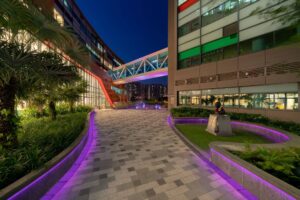
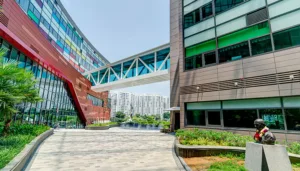
Global Indian International School Singapore smart campus learning environment

SMART Campus

A green, tech-enabled campus with extensive sports facilities that enables a holistic education

  • Kindergarten program at GIIS Singapore smart campus

    Montessori education with a modern touch.

  • Primary school curriculum at GIIS Singapore

    International primary programmes with best holistic learning.

  • Secondary school students learning at GIIS Singapore

    International middle school programmes with best foundation for high school.

  • High school education and curriculum at GIIS Singapore

    International high school programmes with beat launchpads for university.

21st century learning campus at GIIS Singapore

Facilities which are collaborative, creative and adaptable to individual needs.

Holistic education approach with 9 Gems at GIIS Singapore

Award-winning framework for all-round student development

Co-curricular activities at GIIS Singapore

Extra-curricular activities are those activities, often sports-based, that take place outside of the GIIS classroom

Extra curricular activities at GIIS Singapore

Talent shows, performances, competitions, clubs and additional classroom work.

Admission Process Icon

Get an overview of the admissions process

Campus Tour Icon

Register for a tour of the campus to learn more about the school first hand

Book Meeting Icon

You can talk to our Admissions Counsellor online or in-person, as per your convenience.

Admissions Form Icon

Find all forms related to admissions procedure here

Fees Icon

Get information on our fee structure for different grades

Scholarship Icon

Thank you for considering GIIS as a prospective school for your child. Our goal is to make the admissions.