Have you ever thought that today’s world could benefit from more effective leaders? Those leaders who lead by example, demonstrate integrity, make hard decisions, empower others, are kind and thoughtful and yet command respect. They could make the world a better place to live and work for millions of its inhabitants. As a parent, you may find yourself thinking along these lines.
And if your children are to grow up in a world that’s kind and forgiving, they will need strong leaders who have empathy for others. Or, possibly, they’ll learn to be these people. But cultivating strong leadership skills begins long before high school graduation.
The role of leadership in Secondary School education
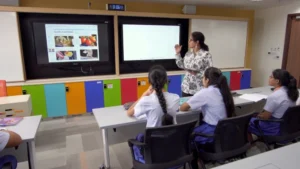
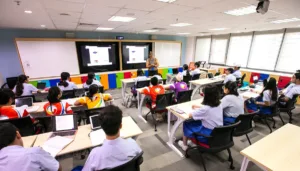
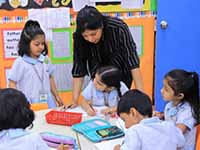
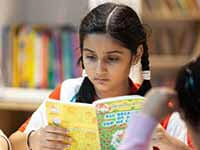
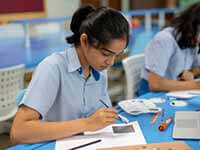
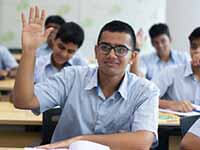
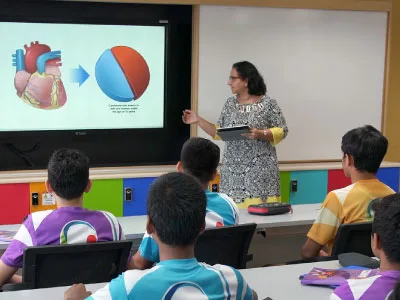
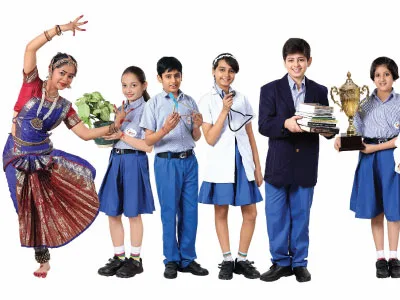
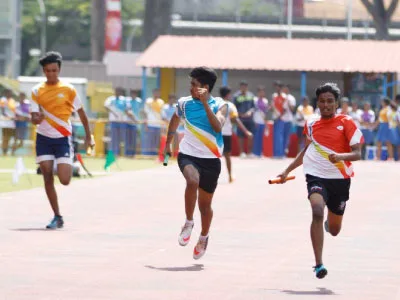
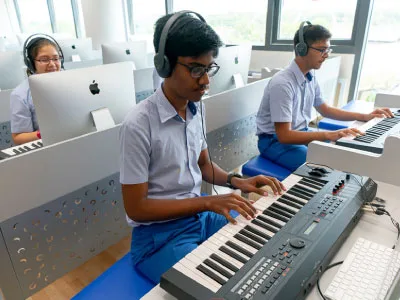
Secondary school is the perfect environment for students to develop strong leadership skills. In fact, at GIIS, students have numerous opportunities to lead. For example, roles in the student council, and positions such as Head Boy and Head Girl, House Captain, prefects and other leadership roles, teach students what it means to have active positions of authority.
Through opportunities like these, they learn the importance of leading with grace and experience the roles that empathy and kindness play in leadership. Ideally, they’ll carry this knowledge with them into their communities and into the world to bring about positive change through strong leadership.
As a parent, you may wonder why GIIS places such emphasis on leadership when secondary school students are already so busy with academics and extracurriculars such as sports, art or music. And the answer may surprise you: Once students show leadership capabilities in the classroom, they tend to pursue these roles throughout academics, often because they feel their teachers expect them to do so.
● Improved communication skills
● Higher self-esteem
● Improved skills in critical thinking and innovation
● Greater emotional intelligence
● Stronger decision-making skills
● Improved judgement and discernment
● Conflict resolution and problem solving approach
Essentially, learning how to be a strong, effective leader benefits students in and out of the classroom and may have an impact that lasts long beyond the secondary school years.
Also read: 21st Century competencies that prepare your child for the future

How GlIS teaches students to become strong leaders
In our secondary years’ programmes (like CLSP and Cambridge IGCSE programme), GIIS students have ample opportunities to take on leadership roles. For instance, each year, students have the opportunity to run for various student council positions.
These positions are filled through an election, and the students who are running can nominate themselves for the positions that most interest them. They may or may not get elected to fill these roles, but learning how to canvas and pitch for themselves as well as deal with failure is just as important as learning how to win with humility.
Student-led School Clubs
Our many student-led clubs provide additional opportunities for students to hone and polish their leadership skills. Currently, secondary school students at GIIS can join a variety of fun and exciting clubs that are geared toward their personal interests, including:
● Econs and Biz Youth Club — A group for global thinkers who are interested in the world economy and issues affecting international business
● Astronomy Club — For astronomy buffs to increase their knowledge through research, exploration and competition
● Creators Club — For technology-minded students who enjoy participating in STEM workshops, events and competitions
● GIIS Law Society — The club for students who wish to explore legal literacy
● TEDx Club — For public speakers and idea innovators who motivate and inspire through public address
● Co-op Club — Appealing to students who are interested in public outreach and community service
Moreover, our students have shown their zest to take action against climate change by working on various sustainability projects, thinking about things that are beyond their immediate circle of effect.
Most groups include between 25 and 30 members and are student-led with the help of a teacher-in-charge, who helps plan activities, prepare reports and manage finances.
The school also encourages students to write up white papers and proposals for new clubs.
School Events
Aside from these opportunities to become active participants in school clubs, our students can take part in school-sanctioned events and inter-school competitions. Examples include:
Leadership Lecture Series: Popular as LLS, the event provides GIIS students a chance to interact with leaders from different fields on varied topics including sports, culture, politics, art, science and more.
As a result, students become motivated and engaged. Communication is sharpened and children learn to listen and think on their feet, thereby, enhancing their critical thinking skills. They learn about what it takes to become a top contender in a variety of competitive fields.
Model United Nations: GIIS students take on the roles of delegates from various nations. They come together with students from other schools to debate and discuss issues affecting the world. They arrive at potential solutions to the problems they are addressing, such as global warming, world hunger and more.
Model United Nations helps students fine-tune leadership skills and improve public speaking, research and presentation skills. The organising team members learn to work under pressure, balance multiple views and perspectives, synergize as a team to meet with the objectives and outcomes set up for the event.
Jhankaar: Jhankaar is a dance competition that hones students’ skills in dancing, choreography, presentation, creativity, music, costume and accessory selection and more. It’s a talent competition intended to drive confidence and allow students to showcase their individual skills and talents.
Global Indian Stars: Global Indian Stars is a singing competition that takes place over several weeks. As the competition progresses, students face greater challenges and face off against more talented peers. As a result, they learn what it takes to compete and to have confidence in their individual talents.
Leadership, for many, is about stepping out of their comfort zone and pushing to excel in areas they may have previously avoided. It means becoming a better communicator, a more fluent debater or a more confident decision-maker. It’s about learning to have faith in your own abilities and the abilities of others.
Lastly, it’s about balancing kindness, assertiveness and competence to become a highly effective leader. At GIIS, we help students realise their true potential and invite you to join us. Contact an admissions advisor today for more information.

Melissa Maria
GIIS Singapore SMART Campus principal, Ms Melissa Maria’s journey as an educator started when she was only 16 and continued in the field after she completed her Master’s degree in History and Bachelor’s degree in Education. For over 25 years now, she has been at the forefront of introducing new ideas and methodologies to education. She is also the City Coordinator for Singapore, selected by the CBSE Board for Grade 10 and 12 exams, 2021, managing two other international schools besides GIIS. With numerous achievements sprinkled across her distinguished career, Ms. Maria has been recognised for her efforts as a Mindef volunteer by the Singapore government.