In the high-pressure academic environment of Singapore, parents often prioritize grades above all else. However, as the fast-changing world continues to push the boundaries of excellence, the ability to cope with and thrive during uncertainty is the true key to long-term success. While a high GPA might open the door to a top university, it is a student’s mastery of essential life skills for high school students that determines how well they navigate the challenges of adulthood.
Our education system must nurture students who are not just exam-smart, but adept in critical thinking and problem-solving. These skills provide the necessary “armour” for students as they transition from the classroom to the boardroom. This guide explores the most critical competencies teenagers need today, why they are vital in the Singaporean context, and how parents and educators can work together to foster them.
Understanding 21st-Century Competencies in Singapore
When we discuss “high school in Singapore”, we are typically referring to the Secondary, Junior College, or International Baccalaureate (IB) years. During this pivotal stage, students face significant transitions. The Singapore Ministry of Education (MOE) has long emphasized 21st Century Competencies, which include civic literacy, global awareness, and cross-cultural skills.
Educational institutions, whether government-run or private international schools, must teach students skills that enable them to stay on top of life’s demands. Schools in Singapore that focus on these significant abilities help students become all-rounded individuals prepared for a globalized economy.

What Exactly Are Life Skills?
Life skills are a set of psychosocial competencies and interpersonal skills that help people make informed decisions, solve complex problems, think creatively and critically, communicate effectively, show empathy, and build healthy relationships.
According to the World Economic Forum’s Future of Jobs Report, the in-demand skill groups that are expected to gain significant prominence by 2030 include resilience, flexibility, and self-management. These skills are becoming increasingly critical as global macrotrends- such as technological advancements, economic uncertainty, demographic shifts, and the green transition – reshape the labor market. As employers adjust to these transformations, the workforce will need to embrace these adaptive skills to navigate the evolving landscape of work.
The Top 10 Essential Life Skills for High School Students
Developing these competencies requires a partnership between the school and the home. Here is a detailed breakdown of the skills your child needs to ace their future:
1. Creative and Critical Thinking
The ability to “think outside the box”or creative thinking is highly valued in today’s innovation-driven world. In Singapore, where we are moving toward a “Smart Nation” initiative, creativity is a primary driver of the economy. Critical thinking and analysis improve a student’s ability to analyze and comprehend complex problems. Instead of rote memorization, students should be encouraged to ask “why” and “how,” helping them find rational, evidence-based solutions to real-world issues.
2. Collaboration and Teamwork
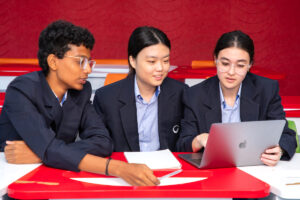
Learning how to work with others is a non-negotiable 21st-century skill. As students move through secondary school and into pre-university programmes, there is a continuous need for peer collaboration. Whether it is a group project in the IB Diploma Programme or a school-based assignment, students must learn to navigate different personalities, delegate tasks, and work toward a shared goal. This mimics the modern workplace, where cross-functional teams are the norm.
3. Effective Communication Skills
Effective communication enables a student to bolster trust, reduce misunderstandings, and achieve objectives. In a digitally connected world, this involves more than just speaking clearly; it includes:
- Active listening.
- Digital etiquette (Netiquette).
- The ability to convey complex ideas in a virtual environment.
- Public speaking and presentation skills.
4. Sound Decision-Making
High school is a period of defining moments. Students must choose their subject streams, university programmes, and potential career paths. The ability to weigh pros and cons, consider long-term consequences, and make sound decisions is one of the most essential life skills for high school students. Developing this skill early prevents “decision paralysis” later in life.
5. Financial Literacy: Managing Money Wisely
Gone are the days when financial literacy was only for working adults. In a global financial hub like Singapore, students need to be prepared early. High schoolers should understand:
- The basics of budgeting and saving.
- The difference between “needs” and “wants.”
- The concept of compound interest and long-term investing. Effective management of finances allows students to reach their personal goals without the burden of unnecessary debt.
6. Time Management and Organization
As the saying goes: “Either you run the day, or the day runs you.” With the heavy workload of the Singapore curriculum, time management is a survival skill. Students need to learn how to:
- Prioritize tasks using tools like the Eisenhower Matrix.
- Break large projects into manageable steps.
- Balance academic requirements with extracurricular activities and rest.
7. Stress Management and Emotional Regulation
Academic pressure in Singapore can be intense. As students move to higher grades, the pressure to balance studies and CCAs (Co-Curricular Activities) can lead to burnout. Stress tolerance is now a key skill recognized by employers.
Students should be taught healthy coping mechanisms, such as mindfulness, daily goal setting, and knowing when to reach out for professional help. Managing stress is directly related to long-term emotional well-being.
8. Self-Assessment and Reflection
Self-reflection builds perspective. It allows students to understand their strengths and weaknesses. By reflecting on their performance, what went well and what could be done differently, students develop a “growth mindset.” This prepares them to face challenges with a solution-oriented approach rather than a defeatist one.
9. Resilience: The Ability to Bounce Back
Failure is an inevitable part of life. Resilience is the ability to accept failure with grace and learn from mistakes. In an environment that often stigmatizes “coming in second,” teaching students that failure is a data point, not a dead end, is crucial. Resilient students are more likely to take the risks necessary for innovation.
10. Empathy and Cultural Intelligence
In a multicultural society like Singapore, empathy is the glue that holds communities together. The ability to understand and share the feelings of others is a vital “soft skill.” Education systems play a key role in fostering inclusive mindsets, ensuring that the leaders of tomorrow are compassionate and globally aware.
How Parents Can Support Life Skill Development at Home
While schools provide the framework, the home is the primary laboratory for practicing these skills. Here are actionable tips for parents:
- Encourage Autonomy: Allow your teenager to manage their own schedule and face the natural consequences of their choices.
- Open Dialogue: Discuss global news and financial decisions at the dinner table to build critical thinking and financial literacy.
- Model the Behavior: If you want your child to manage stress well, show them how you handle your own professional challenges with resilience.
The GIIS Approach: Holistic Excellence Through 9GEMS
At Global Indian International School (GIIS), we recognize that academic excellence is only one facet of a student’s journey. Our educational philosophy is rooted in the 9GEMS framework, a proprietary model designed to foster all-rounded development.
We emphasize sports, creativity, leadership, and universal values alongside our international curricula (including Cambridge IGCSE and IB). By integrating these essential life skills for high school students into our daily pedagogy, we ensure that our graduates are not just ready for university, but ready for life.
“Our focus is on nurturing leaders who are empathetic and resilient. Through our various leadership programmes and community service initiatives, students learn that true success is measured by the positive impact they have on others.”
Frequently Asked Questions (FAQs)
1. Why are life skills important for high school students in Singapore?
While Singapore has a world-class academic system, life skills bridge the gap between classroom knowledge and real-world application. They are essential for university admissions, career progression, and mental health management.
2. At what age should students start learning financial literacy?
Basic concepts can start in primary school, but high school is the ideal time to introduce complex topics like budgeting, interest rates, and the ethics of consumption, as students begin to handle their own allowances and part-time earnings.
3. Can life skills really be “taught,” or are they innate?
Most life skills are “soft skills” that can be nurtured through practice, reflection, and exposure. While some students may be naturally more empathetic or organized, a structured school environment and parental support can significantly improve these competencies in any student.
4. How do international schools like GIIS incorporate life skills into the curriculum?
At GIIS, we use the 9GEMS framework to ensure skills like leadership, entrepreneurship, and ethics are woven into the academic experience. This includes project-based learning, inter-school competitions, and dedicated mentorship sessions.
Preparing your child for the future involves more than just checking their homework. It involves equipping them with the tools to handle life’s ups and downs with confidence.
Would you like to see how we implement these skills in our classrooms? Book a campus tour today or speak with our admissions counselors to learn more about our holistic approach.

Shubhdarshani Mitra
Shubhdarshani has over 10 years of experience in content creation, curation and editing. She has worked for Indian newspapers, school magazines and international news websites where she worked closely with the leadership on the execution and communication of the content strategy. Aside from work, she’s a passionate B&W photographer and storyteller.