Global
All Cities
Where would you like to study? Select cities to refine your search.
Any Curriculum
Find a campus based on the curriculum offered.
Global
Global
All Cities
Where would you like to study? Select cities to refine your search.
Any Curriculum
Find a campus based on the curriculum offered.
Search

How the IBDP’s TOK encourages critical thinking among students

IBDP

The IB Diploma Programme (IBDP) consists of three core components, one of which is the Theory of Knowledge — which is commonly referred to as the TOK. As a key DP component, TOK helps students to reflect on the knowledge they already possess. It encourages students to be aware of their perspectives, and critically reflect on their own beliefs.

The students think deeply about various areas of knowledge – the differences and commonalities, which underpins the subjects that they study as part of DP. The focus is not so much on acquiring new knowledge under this mandatory component, as thinking about the nature, scope and limitations of the process of knowing, emphasising critical thinking under IB’s core element.

Recent findings from the University of Oxford show that IB students exhibit stronger critical-thinking skills than their counterparts. Being one of the top 21st-century competencies, with a potential to determine individual and collective success, it’s a much sought-after skill by parents, students, schools and universities.

Here is what you need to know about the TOK within the IBDP and how it will help develop your child’s critical-thinking skills.

TOK structure:

The central question of the TOK course is “How do we know what we know?” But other questions that students will contemplate throughout their studies include:

● What counts as evidence?

● How do we know that this is the best model?

● What does this theory mean in a real-world scenario?

As students ponder these questions, they begin to discuss their answers with their classmates and instructor. As a result, they develop an appreciation for a diverse range of thought, and they learn to understand how a person’s background or culture can influence their view of the world. In addition, students start to develop a better understanding of their own personal and ideological theories.

Course elements:

Core theme: Knowledge and the knower; enables students to reflect on themselves as knowers and thinkers.

Optional themes: Students need to opt for two out of five themes. 

1. Knowledge and technology

2. Knowledge and language

3. Knowledge and politics

4. Knowledge and religion

5. Knowledge and indigenous societies

Areas of knowledge: Students have to study these five subject areas.

1. History

2. The human sciences

3. The natural sciences

4. The arts

5. Mathematics

TOK focuses on:

Developing a deeper understanding among students about various tools that humans use to become aware and gain knowledge. The process of knowing can include language, emotion, reason or perception.

● Exposing students to ambiguous and uncertain questions with several possible answers. In the ToK, students get to know that knowledge is not finite — and that knowledge sometimes changes over time. Students learn to push their boundaries and ask questions, probing the nature of knowledge by analysing previously made claims, evaluating evidence, and asking their own questions.

● Student engagement to foster open-mindedness and cross-cultural understanding. It also prompts students to consider the significance of values and responsibilities.

Assessment of TOK

The TOK assessment consists of two parts:

● Internal assessment: Theory of knowledge exhibition

● External assessment: Theory of knowledge essay on a prescribed title

Internal assessment:

For the internal assessment, done by the schoolteacher and moderated by the IB at the end of the DP, students have to create an exhibition of three objects along with commentaries on how TOK is evident in the world around us. The weightage is 33%.

Sample essay titles:

● How important are the opinions of experts in the search for knowledge? Answer with reference to the arts and one other area of knowledge.

● Is the division of the natural sciences and mathematics into separate areas of knowledge artificial?

● To what extent do you agree with the claim that “knowledge is of no value unless you put it into practice” (Anton Chekhov)? Answer with reference to two areas of knowledge.
External assessment:

For the external assessment, marked by IB examiners, students need to write an essay on one of the six topics, as prescribed by the IB for that particular examination session. The weightage is 67%.

Sample exhibition prompts:

● On what grounds might we doubt a claim?

● What role do experts play in influencing our consumption or acquisition of knowledge?

● How can we distinguish between knowledge, belief and opinion?

IBDP at GIIS

GIIS has offered the IBDP to its students for the last 17 years, and it has been a very successful programme. All of our faculty members are IB-trained professionals. They continue to pursue regular training opportunities to stay up-to-date on the latest IBDP offerings and objectives.

Beyond that, our faculty members are encouraged to be IB examiners, and we are proud that more than 70 per cent of our staff members are IB examiners. With an excellent team of staff members there to support them, GIIS students are able to leverage the state-of-the-art resources available on campus and successfully complete the IBDP.

Our track record proves that we are committed to the success of all of our students. In the 2021 cohort alone, we had 16 World Toppers and 9 Near-Perfect Scorers. Our results continue to soar higher with our students pursuing higher education in top colleges across the world.

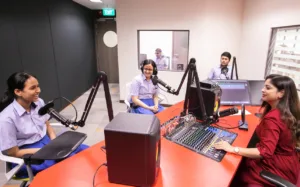
Listen to our podcast: IB Diploma Programme for a brighter future

At GIIS, we are proud to offer the IBDP, and we see first-hand how the Theory of Knowledge encourages our students to begin thinking more critically.

Book a campus tour today to learn more about the IBDP at GIIS.

Information shared under some sections of this blog is as quoted in the IB TOK subject brief.

Deepa Chandrasekaran

Ms. Deepa Chandrasekaran is a highly-qualified and experienced teacher at GIIS Singapore since 2007. With more than 10 years of experience as the IBDP coordinator at GIIS, Ms. Deepa is well-versed with the IB Diploma curriculum, subject-selection counselling, examinations, teacher orientation and training. She teaches Higher Level and Standard Level Economics in the DP, and is passionate about creating a stimulating learning environment for DP students.
Featured Blogs

GIIS

Extra-Curricular Activities (ECA) at GIIS Singapore: Sports, Arts & Clubs Guide

A child’s growth extends far beyond academics. At Global Indian International School (GIIS) Singapore, Extra-Curricular Activities (ECAs) and Co-Curricular Activities (CCAs) are thoughtfully designed to nurture leadership, creativity, teamwork, confidence, and physical wellbeing alongside academic excellence.

IB Curriculum

IB Schools in Singapore: Top Schools, Fees & How to Choose (2026)

Choosing the right IB school in Singapore is one of the most important decisions for families seeking an internationally recognised education. With Singapore being home to some of Asia’s leading International Baccalaureate (IB) schools, parents today have access to a wide range of institutions offering strong academics, global exposure, and holistic learning environments.

Singapore Education System

PSLE vs International School Singapore: Which Path is Right for Your Child?

Every parent wants to choose the educational pathway that will best support their child’s confidence, happiness, academic growth, and future opportunities.

CBSE

Secondary School Fees in Singapore: CBSE, IGCSE & IB Compared (2026-27)

Choosing the right secondary school in Singapore involves balancing academic quality, curriculum options, future opportunities, and affordability. With multiple international curricula available, including CBSE, IGCSE, and IB, parents often compare tuition fees alongside campus facilities, learning approaches, and long-term value.

Top Scholarships

Dr APJ Abdul Kalam Global Skills Scholarship

Eligibility:

Talent Based - Technology

More from same author
Trending Blogs

GIIS

Extra-Curricular Activities (ECA) at GIIS Singapore: Sports, Arts & Clubs Guide

A child’s growth extends far beyond academics. At Global Indian International School (GIIS) Singapore, Extra-Curricular Activities (ECAs) and Co-Curricular Activities (CCAs) are thoughtfully designed to nurture leadership, creativity, teamwork, confidence, and physical wellbeing alongside academic excellence.

IB Curriculum

IB Schools in Singapore: Top Schools, Fees & How to Choose (2026)

Choosing the right IB school in Singapore is one of the most important decisions for families seeking an internationally recognised education. With Singapore being home to some of Asia’s leading International Baccalaureate (IB) schools, parents today have access to a wide range of institutions offering strong academics, global exposure, and holistic learning environments.

Singapore Education System

PSLE vs International School Singapore: Which Path is Right for Your Child?

Every parent wants to choose the educational pathway that will best support their child’s confidence, happiness, academic growth, and future opportunities.

CBSE

Secondary School Fees in Singapore: CBSE, IGCSE & IB Compared (2026-27)

Choosing the right secondary school in Singapore involves balancing academic quality, curriculum options, future opportunities, and affordability. With multiple international curricula available, including CBSE, IGCSE, and IB, parents often compare tuition fees alongside campus facilities, learning approaches, and long-term value.

IB Curriculum

What is the IB Curriculum? A Parent’s Simple Guide to PYP, MYP & Diploma (2026)

Choosing the right curriculum is one of the biggest decisions parents make for their child’s future. With more families in Singapore exploring international education pathways, the International Baccalaureate (IB) curriculum has become one of the most respected and future-focused learning frameworks globally.

CBSE

What is CBSE? A Complete Guide for Parents in Singapore

For Indian families relocating to Singapore, choosing the right curriculum is one of the most important educational decisions. Many parents prefer the CBSE curriculum because it offers academic continuity, strong conceptual learning, and preparation for competitive examinations such as JEE and NEET.

Admission Tips

How to Apply to an International School in Singapore: Step-by-Step Guide (2026)

Navigating the landscape of international education in the Lion City requires careful planning. Whether you are looking for how to apply for international school in Singapore or managing your budget around international school fees in Singapore, this guide provides a clear, validated roadmap for your family’s transition.

CBSE

CBSE vs IGCSE vs IB: Which Curriculum is Right for Your Child in Singapore?

Choosing the best curriculum in Singapore is not about finding the “single best” board; it is about finding the right fit for your child’s learning style and your family’s long-term plans. Whether you are considering CBSE vs IGCSE in Singapore schools or looking ahead to the IB Diploma, each pathway offers distinct advantages for different types of learners.

IB Program

IB Diploma in Singapore: Schools, Fees, Subjects & University Results (2026-27)

Singapore remains the global powerhouse for the International Baccalaureate (IB) Diploma Programme (DP). As we move into the 2026-2027 academic year, the landscape is evolving with new curriculum updates in the sciences and history, alongside a shift toward digital assessments.

Search
History Menu Icon

Our vision is to become a global role model for teaching and learning.

History Menu Icon Secondary

Since its inception in 2002, GIIS has spread quality education through 17 campuses across the globe.

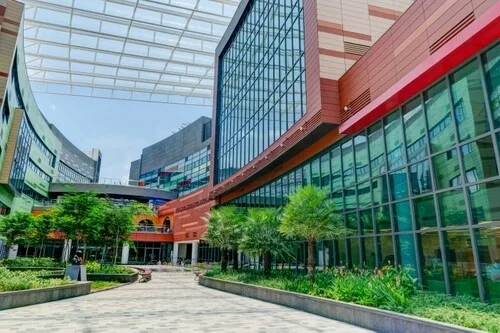
Global Indian International School Singapore smart campus learning environment

SMART Campus

A green, tech-enabled campus with extensive sports facilities that enables a holistic education

  • Kindergarten Menu Image

    Montessori education with a modern touch.

  • Primary School Menu Image

    International primary programmes with best holistic learning.

  • Secondary School Menu Image

    International middle school programmes with best foundation for high school.

  • High School Menu Image

    International high school programmes with beat launchpads for university.

21st Century Learning Campus

Facilities which are collaborative, creative and adaptable to individual needs.

Holistic Education Menu

Award-winning framework for all-round student development

CCA Menu Image

Extra-curricular activities are those activities, often sports-based, that take place outside of the GIIS classroom

ECA Menu Image

Talent shows, performances, competitions, clubs and additional classroom work.

Admission Process Icon

Get an overview of the admissions process

Campus Tour Icon

Register for a tour of the campus to learn more about the school first hand

Book Meeting Icon

You can talk to our Admissions Counsellor online or in-person, as per your convenience.

Admissions Form Icon

Find all forms related to admissions procedure here

Fees Icon

Get information on our fee structure for different grades

Scholarship Icon

Thank you for considering GIIS as a prospective school for your child. Our goal is to make the admissions.