Global
All Cities
Where would you like to study? Select cities to refine your search.
Any Curriculum
Find a campus based on the curriculum offered.
Global
Global
All Cities
Where would you like to study? Select cities to refine your search.
Any Curriculum
Find a campus based on the curriculum offered.
Search
Top reasons for choosing the IB PYP curriculum for your child

Top reasons for choosing the IB PYP curriculum for your child

Primary School

The International Baccalaureate Primary Years Programme (IB PYP) is a future-focused curriculum that promotes inquiry-based learning, nurturing children to take charge of their education. It is a curriculum framework based on the premise that students are agents of their own learning. It has a student-centered approach and encourages overall child development, igniting a lifelong love for learning and preparing children to tackle real-world problems.

‍

‍

Top reasons for choosing IB PYP

Parents choose the IB Primary Years Programme for numerous reasons. Here are some of its top benefits for children in primary school.

‍

1. Discover Inquiry-Based Education

Inquiry-based learning teaches children to grasp concepts and their nuances. Instead of memorising facts, children learn how to ask questions, process the information and reflect on solutions. Teachers guide and facilitate learning rather than tell children what or how to think. This approach equips children to think outside the box and solve real-world problems.

‍

2. Master Collaborative Learning

Through the IB PYP, children first learn to trust their abilities and mind. Then they participate in group and team activities with peers and teachers. The process lays the foundation for collaboration, communication and other essential interpersonal skills.

‍

3. Foster Critical and Creative Thinking

Children in the IB PYP learn how to analyse information, look at challenges from various angles and solve problems. Developed during inquiry-based learning, these critical and creative thinking skills develop a child’s confidence. Children can also apply the same abilities to various academic subjects and extracurricular activities.

‍

4. Cultivate Responsibility

The student-centred IB PYP equips children to become responsible and autonomous learners with a global mindset. Instead of receiving information like a sponge, children must work to learn. As a result, they discover how to take ownership of their learning and pride themselves on a job well done.

‍

5. Hone Communication Skills

The IB PYP prompts children to express themselves in various ways using multiple languages. As they work independently and in groups, they develop verbal, written and listening skills. In addition, children practise communication as they process information, discuss findings and share conclusions.

‍

6. Embrace an International Mindset

Open-mindedness, empathy and compassion are essential skills for thriving in the world and will remain so. Children naturally cultivate these and other skills as part of the IB PYP learner profile. While discovering concepts, children understand how to see issues from different perspectives, value a global mindset and care about issues and people.

‍

Also read: Inquiry based learning – Long-term benefits for students

‍

‍

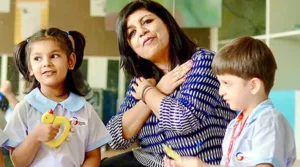
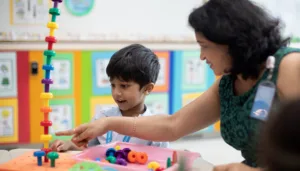
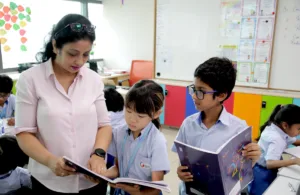
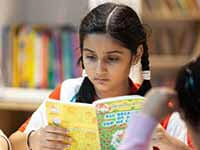
Students at GIIS inquiring about a concept

‍

IB PYP at GIIS

If these benefits of the IB PYP sound intriguing, take a look at the IB Primary Years Programme at GIIS, Singapore.

‍

21st-Century Skills

To succeed in higher education and the workplace, your child needs a well-rounded education, which is why we prioritise the 4 C’s—Critical Thinking, Collaboration, Communication and Creativity—of 21st-century education. Our classroom activities, workshops, exhibitions, service projects and other events support the development and growth of our students. As a result, your child gains skills that equip them for success at school and beyond.

‍

Multicultural Impact

Our student body comprising students from over 40 nationalities creates a unique space that invites your child to embrace a global mindset. While learning, playing and discovering alongside children from different regions, cultures and nations, your child gains invaluable experience. As a result, your child is more empathetic and prepared to live and work in the global economy.
‍

‍

Nurturing Teachers

In addition to understanding the IB PYP framework and implementing it through the course of the PYP, our trained and qualified teachers know how to stimulate, appreciate and reward children. They are passionate about this educational approach and constantly learn new ideas and techniques they can use in the classroom. Your child receives constant support from facilitators who guide and nurture.

‍

Empowering Facilities

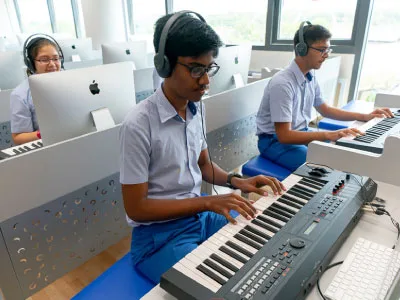
Our facilities add depth and increase support as your child completes projects, explores concepts and engages in inquiry-based learning. Students have access to collaborative learning spaces, separate areas for music, dance and sports at both our Punggol and East coast campuses. In addition, our SMART campus has innovation rooms, skills-based studios and digital classrooms that motivate students to learn and explore new things each day.

‍

The IB PYP includes a framework that supports your child’s educational journey. The learner and the learning community together create a nurturing educational environment that promotes a love of learning.

If you are keen to learn more about IB PYP at GIIS, please don’t hesitate to contact our admissions counsellors.

‍

Odaia B Ranido

Ms. Ranido is the IB Early Years and PYP coordinator for GIIS Singapore. She has over 20 years of teaching experience in different international and bilingual schools in Southeast Asia. She spent the last 11 years leading the implementation of the IB Primary Years Programme (PYP) as a coordinator and teacher. She completed her Masters of Arts in Education from Sheffield Hallam University, UK in 2015. Ms. Ranido joined the Global Indian International School, EC Campus in July, 2019.
Featured Blogs

GIIS

How Do International Schools Prepare Students for University Applications from Grade 9 & 10?

Parents researching Singapore's international schools often ask the same question: when should university planning actually begin? The honest answer is earlier than most families expect. By the time a student reaches Grade 12, the subjects they took, the activities they pursued and the guidance they received years earlier have already shaped what doors are open to them.

GIIS

What Does “Holistic Education” Actually Mean in a Singapore International School?

In a Singapore international school like GIIS, holistic education means academics sit alongside eight other areas of development — sport, arts, leadership, innovation, community service, personality growth, skills, and values — inside one structured framework. It isn't a marketing phrase; it's how the timetable and activities are actually organised. It's natural to wonder what it actually means for your child. Ask ten different parents and you'll probably hear ten different answers — and that's okay. This guide breaks down the meaning of holistic education in plain language, explains what holistic learning looks like day to day and shows how it compares to a traditional, exam-first model.

GIIS

How Much Homework Should International School Students Have at Each Grade Level?

As a general guideline, many educators reference roughly one hour of homework for average 13 year olds, per night, though this varies significantly with curriculum stage and the intensity increases once students move into pre-university programmes like the IB Diploma. What matters more than the exact hours is whether homework fits inside a school's broader approach to balance.

GIIS

How Are Students Evaluated in Singapore International Schools Beyond Board Exams?

Many International schools in Singapore evaluate students through a mix of ongoing formative checks, term-based summative assessments and periodic external benchmark tests. A student's report card reflects data gathered across the whole year, rather than one high-stakes sitting. This is the core difference between international school assessment in Singapore and systems built around exams like the PSLE or O-Levels.

Top Scholarships

Dr APJ Abdul Kalam Global Skills Scholarship

Eligibility:

Talent Based - Technology

More from same author
Trending Blogs

GIIS

How Do International Schools Prepare Students for University Applications from Grade 9 & 10?

Parents researching Singapore's international schools often ask the same question: when should university planning actually begin? The honest answer is earlier than most families expect. By the time a student reaches Grade 12, the subjects they took, the activities they pursued and the guidance they received years earlier have already shaped what doors are open to them.

GIIS

What Does “Holistic Education” Actually Mean in a Singapore International School?

In a Singapore international school like GIIS, holistic education means academics sit alongside eight other areas of development — sport, arts, leadership, innovation, community service, personality growth, skills, and values — inside one structured framework. It isn't a marketing phrase; it's how the timetable and activities are actually organised. It's natural to wonder what it actually means for your child. Ask ten different parents and you'll probably hear ten different answers — and that's okay. This guide breaks down the meaning of holistic education in plain language, explains what holistic learning looks like day to day and shows how it compares to a traditional, exam-first model.

GIIS

How Much Homework Should International School Students Have at Each Grade Level?

As a general guideline, many educators reference roughly one hour of homework for average 13 year olds, per night, though this varies significantly with curriculum stage and the intensity increases once students move into pre-university programmes like the IB Diploma. What matters more than the exact hours is whether homework fits inside a school's broader approach to balance.

GIIS

How Are Students Evaluated in Singapore International Schools Beyond Board Exams?

Many International schools in Singapore evaluate students through a mix of ongoing formative checks, term-based summative assessments and periodic external benchmark tests. A student's report card reflects data gathered across the whole year, rather than one high-stakes sitting. This is the core difference between international school assessment in Singapore and systems built around exams like the PSLE or O-Levels.

Search
History Menu Icon

Our vision is to become a global role model for teaching and learning.

History Menu Icon Secondary

Since its inception in 2002, GIIS has spread quality education through 17 campuses across the globe.

Global Indian International School Singapore smart campus learning environment

SMART Campus

A green, tech-enabled campus with extensive sports facilities that enables a holistic education

  • Kindergarten program at GIIS Singapore smart campus

    Montessori education with a modern touch.

  • Primary school curriculum at GIIS Singapore

    International primary programmes with best holistic learning.

  • Secondary school students learning at GIIS Singapore

    International middle school programmes with best foundation for high school.

  • High school education and curriculum at GIIS Singapore

    International high school programmes with beat launchpads for university.

21st century learning campus at GIIS Singapore

Facilities which are collaborative, creative and adaptable to individual needs.

Holistic education approach with 9 Gems at GIIS Singapore

Award-winning framework for all-round student development

Co-curricular activities at GIIS Singapore

Extra-curricular activities are those activities, often sports-based, that take place outside of the GIIS classroom

Extra curricular activities at GIIS Singapore

Talent shows, performances, competitions, clubs and additional classroom work.

Admission Process Icon

Get an overview of the admissions process

Campus Tour Icon

Register for a tour of the campus to learn more about the school first hand

Book Meeting Icon

You can talk to our Admissions Counsellor online or in-person, as per your convenience.

Admissions Form Icon

Find all forms related to admissions procedure here

Fees Icon

Get information on our fee structure for different grades

Scholarship Icon

Thank you for considering GIIS as a prospective school for your child. Our goal is to make the admissions.