Article Summary
- 9GEMS™ is a whole-person educational framework that balances academic achievement with physical, creative, social and personal development.
- Its nine domains are academics, sports, skills, arts, innovation, leadership, personality development, involvement in the community and universal values.
- This framework encourages holistic development and enables children to identify their individual strengths through exposure to a variety of experiences inside and outside the classroom.
Education is not only a child’s performance in examination. And it’s about helping children communicate confidently, work with others, explore their creativity, develop healthy habits and learn to contribute positively to the world around them.
This larger idea of education is the framework of 9GEMS™. Created by the Global Indian International School (GIIS), it provides students with an opportunity to develop in nine interconnected areas, combining academic learning with sports, creativity, leadership, values and the acquisition of practical skills.
What Is the 9GEMS™ Framework?
The 9GEMS™ framework is an educational approach that attempts to move learning beyond syllabus-focused academics. It provides students with the opportunity to develop in various ways simultaneously, rather than solely focusing on school grades as a measure of progress.
The framework includes nine development dimensions: Academic Excellence, Sports Excellence, Skills Development, Visual and Performing Arts, Entrepreneurship and Leadership, Innovation and Creativity, Personality Development, Community and Care, and Universal Values.
This is a simple idea; each child has different abilities and interests. One student may enjoy solving mathematical problems while another may thrive on the sports field, on stage or while leading a team. 9GEMS™ gives students the chance to develop these strengths by exposing them to different experiences, but with a strong academic foundation.
This is also reflective of the general trend in education. Research by the OECD highlights that competencies such as creativity, critical thinking, collaboration and communication are as important as subject knowledge.
9GEMS™ – Areas of Focus
Each GEM targets a different aspect of student growth:
Academic Excellence – Develops solid academic foundations through rigorous, experiential and technology-enhanced learning.
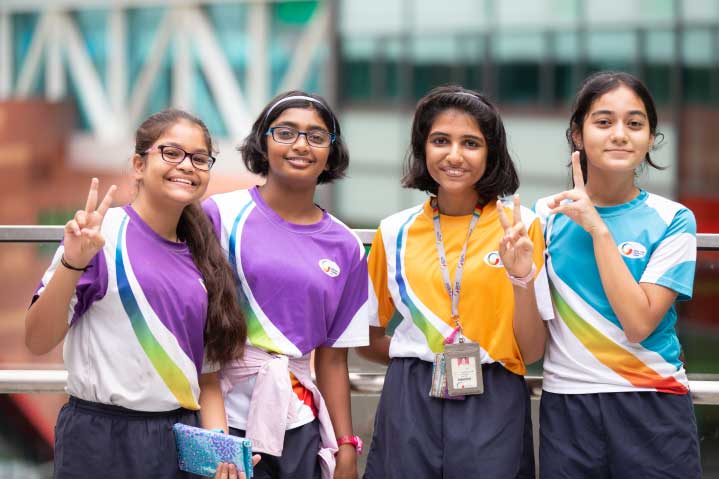
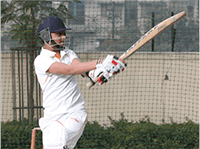
Sports Excellence – Encourages physical fitness and builds teamwork and collaboration.
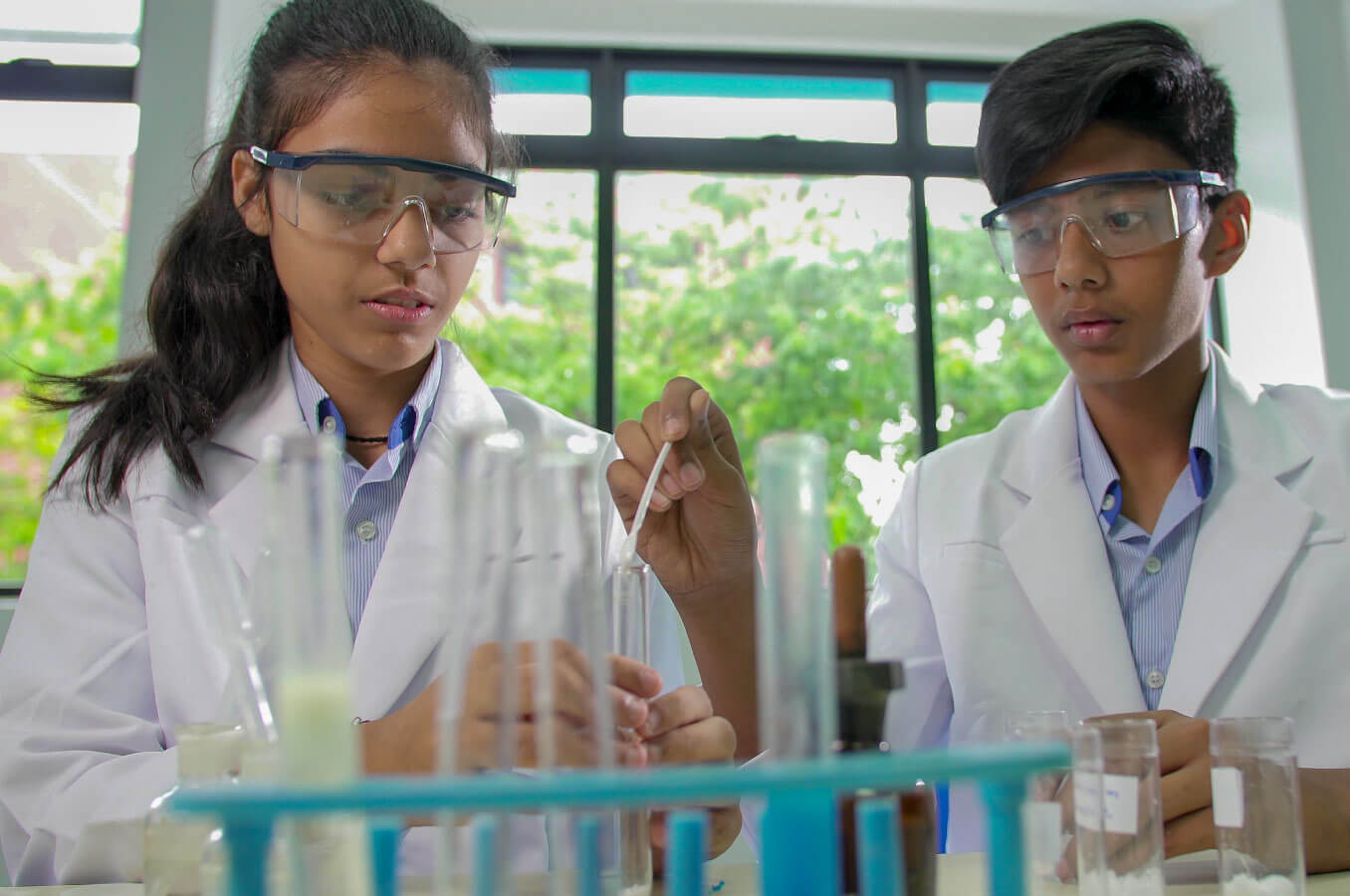
Skills Development – Students are able to explore interests and practical abilities through hands-on experiences.
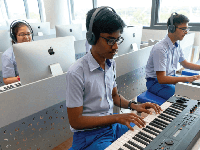
Visual and Performing Arts – Provides opportunities for students to express themselves in areas that include music, dance and drama.
Entrepreneurship and Leadership – It motivates the students to be self-confident, take the lead and exercise leadership.
Innovation and Creativity – Encourages curiosity, problem-solving and critical thinking through creative challenges.
Personality Development – Fosters positive qualities like self-awareness, responsibility and empathy.
Community and Care – Encourages student involvement in community activities and awareness of the importance of giving back to others.
Universal Values- Encourages kindness, respect, peace, empathy and social responsibility.
Infographic idea: Show visually how the framework links different aspects of development, with the student in the middle and the nine GEMS around it.
How 9GEMS™ Works for Holistic Development
Holistic development acknowledges the fact that children require opportunities to develop intellectually, physically, creatively, socially and emotionally.
Thus, the elements of 9GEMS™ are designed to complement rather than compete with each other. A classroom project could improve academic knowledge and problem-solving, while sport may improve teamwork and perseverance. Self-expression and confidence can be developed in the performing arts, and children can practise empathy and responsibility in community activities.
The value of providing students with these broader opportunities is supported by research. The OECD’s Survey on Social and Emotional Skills found connections between students’ social-emotional skills and outcomes such as academic success, life satisfaction and career aspirations. It also shows that students engaged in extracurricular activities such as sports or the arts are more likely to report higher levels of creativity and curiosity.
| 9GEMS™ Area | Key Skills Developed | Examples of Experiences |
| Academic Excellence | Critical thinking, knowledge application | Classroom and experiential learning |
| Sports Excellence | Teamwork, discipline, collaboration | Sports and athletics |
| Skills Development | Communication, practical abilities | Hands-on learning |
| Visual & Performing Arts | Creativity, expression, confidence | Music, dance and drama |
| Entrepreneurship & Leadership | Initiative, leadership, decision-making | Workshops and team projects |
| Innovation & Creativity | Problem-solving, curiosity | Creative challenges |
| Personality Development | Self-awareness, empathy | Mindfulness and group activities |
| Community & Care | Compassion, responsibility | Community events and charity initiatives |
| Universal Values | Respect, empathy, social responsibility | Values-based activities |
Building Core Competencies with 9GEMS™
Skills development is a key objective of the framework.
Eventually, students will have to use their knowledge in situations where there are not necessarily textbook answers. They can use communication, collaboration, creativity, leadership and problem solving to help them get through these situations.
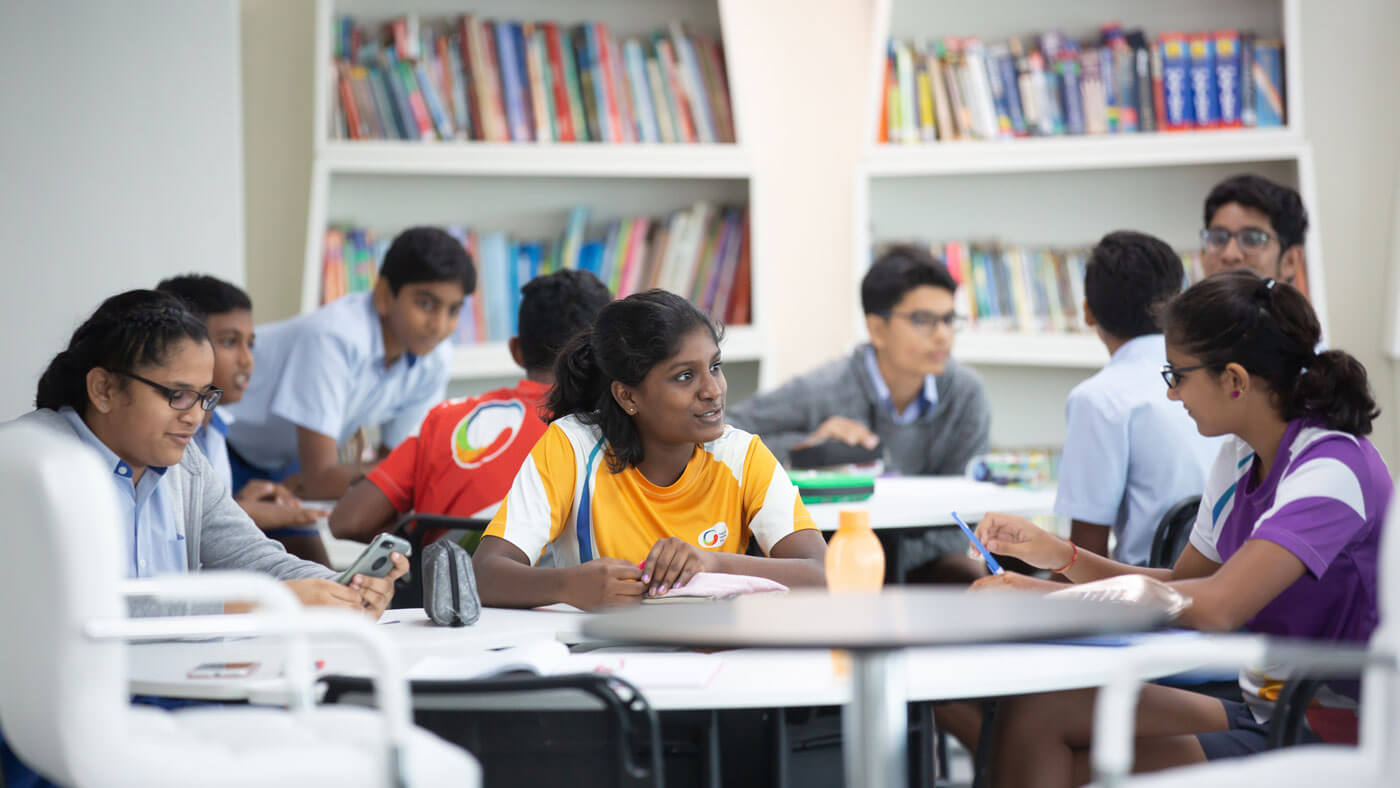
Children learn to listen to different points of view and to express their own ideas, for example, when they work on a group project. Being responsible for an event can build planning and leadership skills. Students can experiment, make mistakes and find alternative solutions through creative projects.
These experiences are in addition to—and not a substitute for—academic learning. Research on curriculum conducted by the OECD also shows that critical thinking and problem-solving are important elements of learning areas across the globe.
Advantages of a Broad Approach to Student Learning
Children don’t all draw their strength from the same place. Some get confidence on the stage, some on the sports pitch and others in building, designing, debating or helping their community.
A comprehensive strategy provides students with more opportunities to discover these interests. Different experiences over time can help them build confidence, adaptability, curiosity and a willingness to participate.
Most importantly, children can start to see that learning happens everywhere, not just in lessons.
How Parents Can Support Whole Child Development
Parents can also promote holistic learning by being interested beyond scores. Help your child enjoy trying new sports, arts, clubs or community activities, without expecting immediate success.
It also pays to concentrate on consistency rather than trying to fill every available hour with activity. Let children have enough time to explore what really interests them, to reflect on their experiences, and to develop their abilities slowly.
Final Words
The 9GEMS™ framework provides a more comprehensive lens of what student success can be. By blending academic excellence with sports, creativity, leadership, values, community engagement and skill development, it opens multiple channels for children to learn and grow.
For families who value academic learning and holistic development, understanding how 9GEMS™ is embedded into the daily life of the school can be an important part of choosing a school.
Interested in seeing 9GEMS™ in action? Find out about GIIS, talk to the admissions team or book a campus tour to see how the framework supports students at various stages of their education.
FAQs
- What is the 9GEMS™ framework?
9GEMS™ is GIIS’s holistic education framework, which goes beyond academics. It combines academic excellence with sports, arts, life skills, innovation, leadership, personality development, community engagement and universal values.
2. What are the nine areas of the 9GEMS™ framework?
The nine areas are Academic Excellence, Sports Excellence, Skills Development, Visual and Performing Arts, Entrepreneurship & Leadership, Innovation & Creativity, Personality Development, Community & Care and Universal Values.
3. How does 9GEMS™ support holistic development?
The framework offers opportunities for students to develop academic, physical, creative, social and personal abilities through classroom learning and co-curricular and extracurricular activities.
4. What skills can students develop through 9GEMS™?
Depending on their activities and experiences, students can practise communication, teamwork, leadership, creativity, critical thinking, problem solving, empathy and other transferable skills.
5. Why is holistic development important for students?
Holistic development recognises that school knowledge is just one aspect of a child’s development. Offering opportunities to develop social, emotional, creative and practical skills can help students to be more confident in participating in school and to prepare them for a wider range of experiences outside of it.