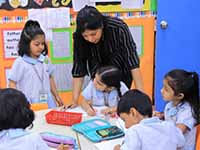
There was a time when learning and playing were two separate activities for children. Over the years, educators and parents have realised that play is essential for learning, especially for young children. Play can inspire interest and enrich learning experiences while children develop key skills such as experimentation, teamwork, self-expression, and inquiry. Play can make a deep, lasting impression on children. It allows children to learn a lot about themselves, and because it’s fun, children tend to get engrossed in any playful activity they engage in.
For Theoretical Purposes, Let Us Begin by Understanding What Play is?
Play can be described as a physical or mental activity undertaken purely for enjoyment. It consists of self-amusement activities that are child-directed. Usually, it is spontaneous, enjoyable, and through it, children learn about the world and the process of interaction. Think of playing as a learning tool that teaches young children what is acceptable and how to be resilient in the wake of a rapidly evolving environment.
Different Play
There are different plays that children can engage in either in their school in Singapore or at home, such as manipulative or functional play. Here, manipulative does not have negative connotations. It is described as manipulative because a child learns to manipulate a toy or pieces of a toy using their hands while playing. This type of play enables children to learn about things and how they work. The manipulative play also does not involve toy manipulation; it is exploratory, meaning it includes manipulating their environment or even people. Examples of manipulative play include stacking blocks, rolling, or throwing a ball.
On the other hand, creative or free play is any form of play that allows a child to express themselves, such as imaginative play, painting, drawing, or playing with play dough. Often mistaken for imaginative play, the creative play seeks to enhance creative activities that help a child develop life skills. On the other hand, imaginative play includes activities where children engage in role-playing, make-believe, or act out different scenes.
Benefits of Play
Other than helping children develop vital life skills, here are a few more benefits of play
● It fosters creativity by allowing children to express themselves freely. For instance, through creative play, preschools in Singapore encourage children to participate in activities they enjoy by creating something from personal experience or emotions.
● It helps children interact and understand things in the adult world by tinkering with an unknown object to learn how it works.
● Play allows children to practice what they are learning. For instance, while playing with blocks, children can work on counting, colours, or shapes.
● It helps them develop their emotional health by combining feelings and tasks. When children act, role play, or paint, it is a chance for them to express their feelings. Play helps them express difficult emotions, such as grief and sadness. Through these playing activities, children learn to express themselves, allowing them to engage more in society and develop the skills to control their behaviour.
● It helps children develop intellectually by fostering mental and cognitive growth. Through play, children can learn and try out new ideas, various ways of thinking or problem-solving. By reading, preschoolers can learn about basic math or language skills. As they get older, these activities get more challenging, presenting a new challenge that helps children hone their intellect.
● Play plays a considerable role in the physical development of children, especially younger ones. As they engage in playful activities such as manipulative play, they grow their gross and fine motor skills. As they get older, these activities help hone other skills, such as developing hand-eye coordination.
● Lastly, play helps children develop their language and communication skills. As they play, children often experiment with words they have heard without the fear of getting embarrassed. Pretend play is especially great for this because as they mimic characters and use the words they listen to, children get to understand what these words might mean. As they play, you may notice them talking to each other; these are the words they pick up reading or listening to others. They help build their vocabulary and imagination. Play creates a safe, supportive place for children to develop their communication skills.
Creative Activities to Help Children Learn Through Play
Play may or may not have set goals and is usually spontaneous, voluntary, and involves some form of make-believe. Think of these activities as invitations to play that either create or foster play. Some have immense play potential, while others require more deliberate action. They include:
1. Playing in the sand
Children love playing in the sand. It provides a good way for them to learn, develop their creativity, self-confidence, and physical development. By scooping, sifting, pouring, and digging, children can learn how things work and work their little muscles honing their coordination. By playing with others, they learn about teamwork, sharing, taking turns, and social skills.
2. Water play
Much like playing in the sand, water play gives children the freedom to experiment and learn about materials. It’s great for showing them that actions cause reactions. Add in the physical development they get, and water play is easily a firm favourite.
3. Playing with Modelling Materials
Playdough, modelling clay, sand, or slime have immense play potential. Not only do they help develop hand strength, but they also help develop their fine motor skills, creative muscles, and hand-eye coordination. These materials provide endless hours of uninterrupted play.
4. Dress up and role-playing
Pretend play is an ideal way for young children to learn about different roles and understand the adult world. By letting them dress up and even giving them necessary props, you will discover their inner budding talents and interests. It also helps little ones understand the importance of self-care through different aspects such as self-dressing, which are essential for preschool students. Another element of dress-up includes using dolls to play. Rather than dressing up themselves, they can dress up their dolls and enhance their role-playing. Playing with dolls or action figures allows children to develop their social play, imagination, and self-expression.
5. Drawing or painting
Collect some art supplies, drawing paper, pencils, paints, brushes, or crayons and let them play. Drawing and painting are great ways for children to express themselves and experience the world in a sensory way. By working with their hands, they hone their pre-writing skills while learning about colours, mixing, and other skills such as cleaning up after. You can ask them to create drawings or paintings that you can showcase in a class gallery. This shows them you value their creations and will encourage them to do more.
6. Making music and dancing
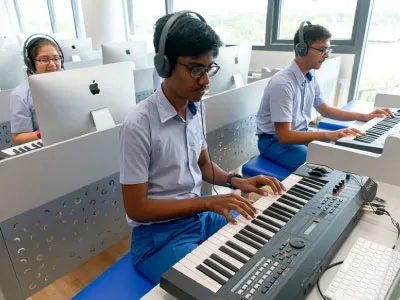
Everyone enjoys music and dancing; children are no different. Singing and dancing help the little ones develop their language and listening skills, body coordination, rhythm, strength, flexibility, and literacy skills. They are also great ways of developing different concepts such as counting, vocabulary, and so on.
7. Outdoor play
The outdoors provides endless play opportunities and is a great way to promote their health. Children have the place to run, jump, climb, or even swing, quenching their innate need to move. Besides boosting their gross motor skill and physical development, the outdoors present great opportunities for exploration of the world. While outside, children learn about the environment, different creatures that can be found in their immediate surroundings, which form the beginnings of biology. It also helps develop self-confidence, independence, curiosity, and resilience through risk-taking.
8. Create a busy box
Find a cardboard box and fill it with life string in different colours and sizes, paper scraps, patty pans, sticks, blocks, stickers, straws, or anything else you can find. It is incredible to see how simple items can engross children. It is a great way to encourage productive solo play and initiate curiosity. Give them the freedom to go to the box and find something to play with whenever they want, and the result can be equally heartwarming or hilarious.
9. Use toys to tell stories.
Sock puppets, dolls, or action figures are great ways to spice up a story time. You can switch it up and use everyday items to create storytelling toys. Grab a few kitchen or toilet rolls, plastic bottles, etc., and draw faces on them. You can do a whole project out of it and involve the children in helping you create these toys. Throw on some paper clothes and stick on some cotton wool for hair, and you will have unique storytelling assistance.
10. Using blocks, shape sorters, or jigsaw puzzles
Along with aiding in physical development, these toys help lay the foundation for logical and spatial thinking. Children learn about shapes, order, sizes, and colours.
Remember, with toys, less is more. Giving children a lot of toys reduces the quality of their play. Instead, offer them a few toys and let their imagination run wild as they discover different ways to play with a few toys. Also, grant them enough time to be creative – but do not tell them to be creative. As much as you want them to learn, planning out every second of the day stifles their creativity. Play is essential to learning as it connects the logical and creative parts of the brain. With these creative play activities, you can help enhance their learning in a fun, enjoyable way.

Team GIIS
Team GIIS is a group of enthusiastic writers who bring the vibrant world of GIIS in Singapore to life through engaging blog posts. Dedicated to highlighting the school’s teaching methodology, innovative learning environment, and diverse curriculum options like IB, Cambridge and CBSE, they aim to connect with parents, educators and students, sharing insights and stories that inspire and inform the school community.