Our education system has continuously evolved, seeking innovative methods to enhance student learning. One such method that has gained traction over time is the spiral learning method. This approach is particularly beneficial for school kids, including those studying in a secondary school in Singapore. This blog post will delve into the Spiral Learning Method, its meaning, and its numerous advantages for students.
What is a Spiral Learning Method?
The Spiral Learning Method is an instructional strategy that involves revisiting the same topics or themes repeatedly over time. Each time the student goes through the same concept or topic, there’s an increase in complexity, which reinforces previous learning. This method contrasts with the traditional linear approach, where a topic is taught once and rarely revisited.
Key features of the spiral learning method
- Incremental complexity: Topics are introduced at a basic level and gradually become more complex with each revisit.
- Reinforcement: Regular revisits to topics ensure students reinforce and consolidate their knowledge.
- Interconnected learning: The method highlights the connections between different topics, helping students see the bigger picture.
- Adaptive learning pace: The repeated exposure allows students to learn at their own pace, making it easier to grasp challenging concepts.
Advantages of the Spiral Learning Method in secondary schools
Secondary schools in Singapore and other educational institutions worldwide can significantly benefit from implementing the Spiral Learning Method. Here are some advantages:
1. Improved knowledge retention
Students often forget what they have learned after the lesson if the topics are not revisited. The Spiral Learning Method addresses this issue by regularly revisiting topics, which help in long-term retention of knowledge. For instance, a student in a Singapore school or any other educational institution, when learning about algebra using this method will be able to better delve into its complexities, thus solidifying their understanding.
2. Better understanding of complex concepts
Complex concepts can be intimidating for students. The Spiral Learning Method breaks these concepts into smaller, manageable parts and revisits them periodically. This incremental approach makes it easier for students to grasp difficult topics without feeling overwhelmed.
3. Encourages active participation
The method encourages active participation from students. As they revisit topics, they can engage in discussions, ask questions, and apply their knowledge in different contexts. This active engagement fosters a deeper understanding and makes learning more interactive and enjoyable.
4. Builds a strong foundation
A strong foundation is crucial for advanced learning. This method ensures students have a good grasp of the basics before moving on to more advanced topics. This strong foundation is particularly important in mathematics and science, where understanding fundamental concepts is key to mastering more complex material.
5. Personalised learning experience
Students have different learning paces and styles. It accommodates these differences by allowing students to revisit topics multiple times. This personalised approach ensures that no student is left behind and everyone has the opportunity to understand the study material thoroughly.
Implementing the spiral learning method in secondary schools in Singapore
Implementing the Spiral Learning Method requires careful planning and a structured curriculum. Here’s how schools can integrate this method effectively:
1. Curriculum design
Developing a curriculum incorporating the Spiral Learning Method is crucial. The curriculum should outline key topics to be revisited throughout the academic year. Each revisit should increase in complexity and build on previous knowledge. For example, a science curriculum might start with basic concepts in biology and then revisit these concepts with more detailed studies of cellular structures, genetics, and human anatomy as students progress through the grades.
2. Teacher training
Educators need to be well-versed in the principles of the Spiral Learning Method to effectively deliver the curriculum. Training programmes should focus on how to break down complex topics into manageable parts and how to plan lessons that build upon each other. Teachers should also learn strategies to assess student understanding at each stage and provide feedback that helps students connect with revisited topics.
3. Assessment and feedback
Regular assessments are critical to this method. These assessments should be designed to evaluate students’ understanding of topics at different levels of complexity. Formative assessments, such as quizzes and in-class activities, can provide immediate feedback and identify areas where students may need additional support. Summative assessments, like end-of-term exams, should test the cumulative knowledge students have gained through repeated exposure to topics.
4. Interactive learning materials
It should incorporate various interactive learning materials to keep students engaged. Multimedia presentations, hands-on activities, and collaborative projects can make learning more dynamic and interesting. For instance, science lessons might include virtual lab simulations, group experiments, and field trips that reinforce classroom learning. These materials not only help in retaining student interest but also provide practical applications of theoretical concepts.
5. Parental involvement
Engaging parents in the learning process can enhance the effectiveness of the Spiral Learning Method. Schools can organise workshops and information sessions to explain the method and its benefits. Providing parents with resources and strategies to support their children’s learning at home can reinforce the topics covered in school. For example, parents can be encouraged to discuss classroom topics with their children, help with homework, and provide additional learning materials related to the studied subjects.
Real-world applications of the spiral learning method
GIIS Singapore’s innovative Spiral Learning Method, inspired by a methodical spiral structure, ensures students delve deeper into subjects with each revision. This approach fosters lifelong learning and paves the way for exceptional academic outcomes.
To illustrate this method, consider the following examples:
- Mathematics: Students begin with basic algebraic equations, gradually progressing to complex equations and quadratic equations. This iterative approach reinforces foundational knowledge while introducing new concepts.
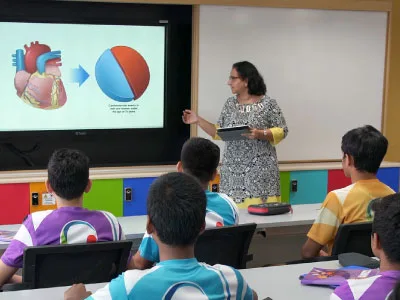
- Science: Starting with cell biology basics, students revisit the topic to explore cell division and genetics, creating a comprehensive understanding of biological processes.
- Languages: By gradually building on vocabulary and sentence structure, students develop language proficiency through repeated exposure and increased complexity.
These examples demonstrate how the Spiral Learning Method empowers students to master subjects progressively, resulting in a strong foundation and a deeper appreciation for the interconnectedness of knowledge.
Addressing common concerns about the spiral learning method
While the Spiral Learning Method offers numerous advantages, some educators and parents may have concerns. Let’s address a few common concerns:
1. Concern: Is the spiral learning method too repetitive?
Response: While the method does involve revisiting topics, each revisit is designed to be more complex than the previous one. This progression prevents lessons from becoming monotonous and keeps students challenged and engaged.
2. Concern: Can this method be applied to all subjects?
Response: Yes, the Spiral Learning Method can be adapted for all subjects. The key is to structure the curriculum so each revisit builds on previous knowledge, regardless of the subject matter.
3. Concern: Will students feel overwhelmed by the repeated topics?
Response: On the contrary, the Spiral Learning Method aims to reduce cognitive load by breaking down complex topics into smaller, manageable parts. The repeated exposure helps reinforce learning, making it less likely for students to feel overwhelmed.
Conclusion
The Spiral Learning Method is a powerful instructional strategy that can greatly benefit students. By revisiting topics with increasing complexity, this method enhances retention, improves understanding, encourages active participation, builds a strong foundation, and provides a personalised learning experience.
If you want to know more about the curriculum choices and pedagogical approach at GIIS, please feel free to contact our admissions counsellors.
Team GIIS
Team GIIS is a group of enthusiastic writers who bring the vibrant world of GIIS Singapore to life through engaging blog posts. Dedicated to highlighting the school’s teaching methodology, innovative learning environment, and diverse curriculum options like IB, Cambridge and CBSE, they aim to connect with parents, educators and students, sharing insights and stories that inspire and inform the school community.