As the world continues to change, critical thinking has emerged as an indispensable skill for students, professionals and leaders alike. As parents continue to seek the best education for their children, especially those pursuing the IGCSE curriculum or considering secondary schools admission in countries such as Malaysia, gaining an understanding of critical thinking and learning how to nurture it matters a lot.
At GIIS Kuala Lumpur (GIIS KL), we not only focus on academic excellence but also on establishing a strong foundation for 21st-century skills, incorporating activities that promote critical thinking ability. In this article, we will talk about what critical thinking entails, why it matters and how students can develop it.
What is Critical Thinking?
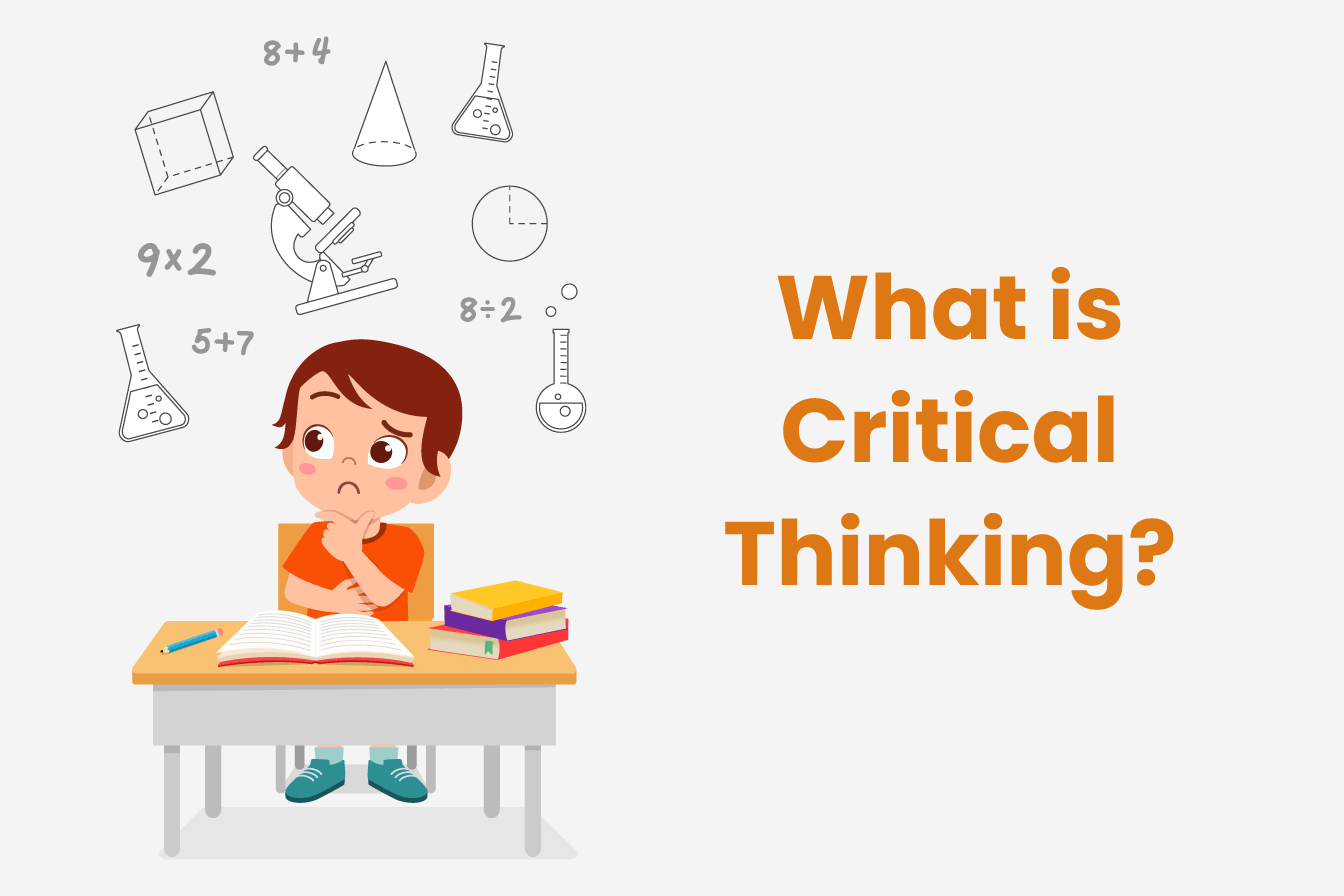
Critical thinking refers to the ability to think with clarity and rationality and understand the logical connection between ideas. It is a process of reflective and independent thinking that allows individuals to understand problems, evaluate information and make better decisions based on facts rather than on assumptions or emotions. Critical thinking is not just about what you think, but also about how you think.
Pro Tip: Critical thinking is a mindset as well as a skill. You must start by questioning assumptions and gathering evidence before making inferences.
How to Improve Critical Thinking Skills
Developing critical thinking ability demands persistent effort and a strategic approach. Whether your child has just joined a secondary school or is preparing for IGCSE exams, these are the ways by which your child can sharpen this essential skill:
- Encourage active learning through inquiry-based activities
- Involve your child in group discussions that will challenge them to consider multiple viewpoints
- Promote curiosity by encouraging your child to ask “why” and “how” often
According to edutopia.org, educators who focus on activities related to problem-solving, debates and reflection often produce more thoughtful and engaged learners.
Pro Tip: Encourage your child to engage in constructive arguments with peers. This will help build analytical reasoning while teaching respectful discourse.
The Importance of Critical Thinking
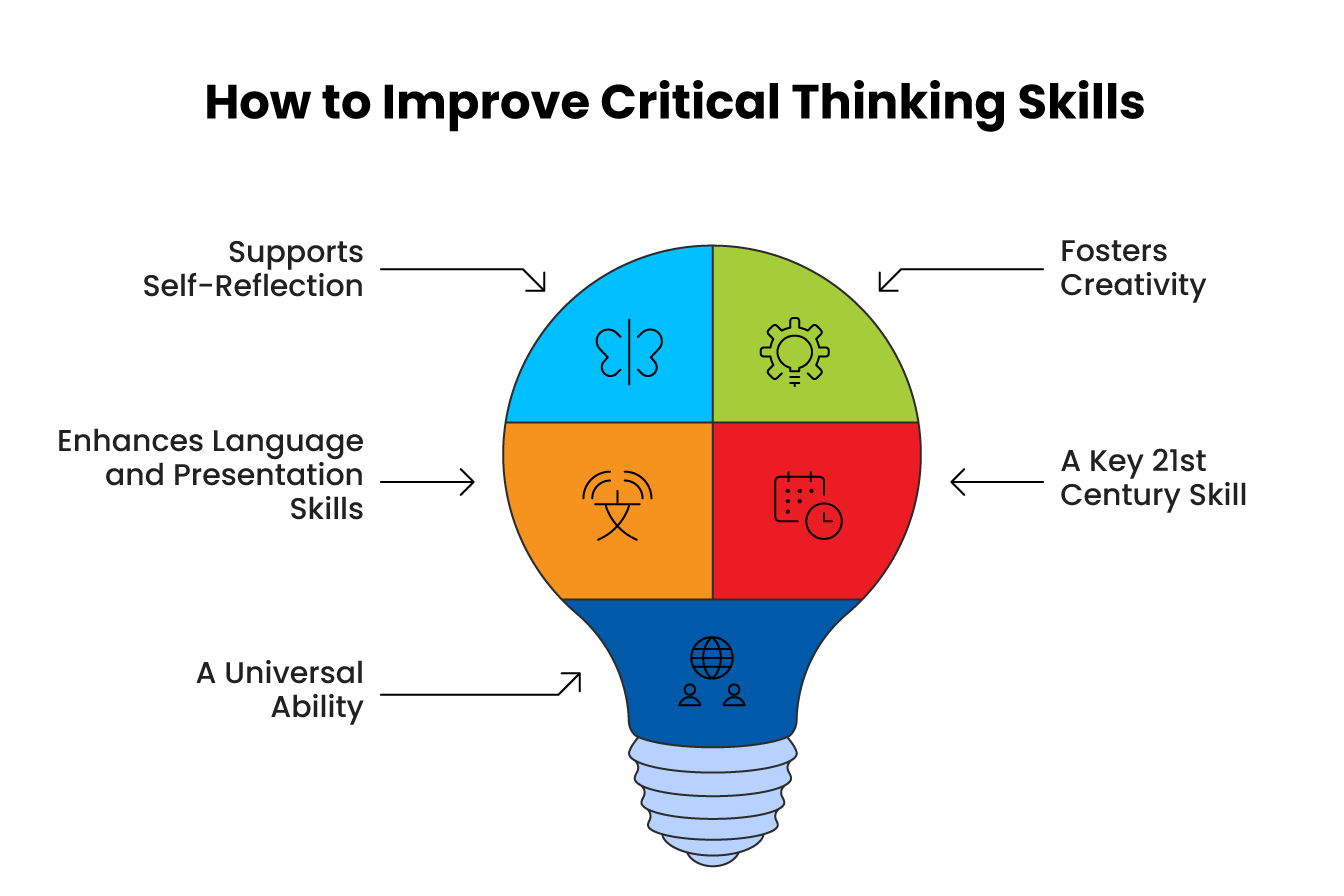
1. Supports Self-Reflection
Critical thinking boosts self-awareness and the ability to assess one’s thoughts, biases and decisions.
2. Fosters Creativity
When students analyse and question norms, they are able to generate innovative solutions and ideas — a trait that’s held in high regard in any academic or career path.
3. Enhances Language and Presentation Skills
Thinking critically allows students to structure their thoughts logically, which, in turn, helps them improve written as well as verbal communication.
4. A Key 21st Century Skill
As noted by aac&u.org, employers view critical thinking as one of the most desired skills in candidates. In an era dominated by automation, cognitive flexibility and reasoning are invaluable skills.
5. A Universal Ability
This skill transcends subjects and disciplines. Whether it’s science, literature or the arts, critical thinking is applied across all subjects and it prepares students for global citizenship.
12 Effective Tips to Improve Critical Thinking
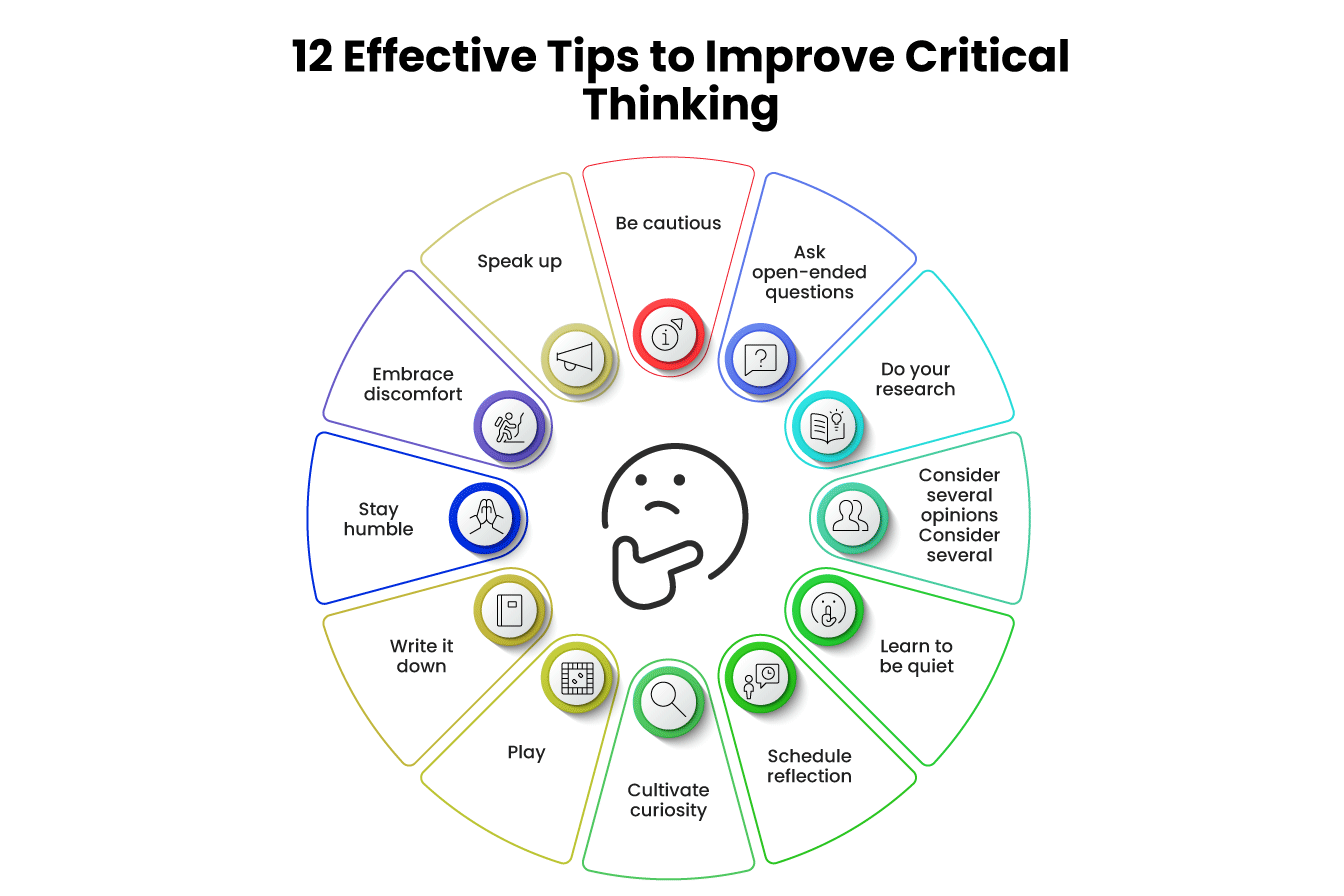
- Be cautious: Avoid concluding without evidence.
- Ask open-ended questions: Open-ended questions promote deep thoughts.
- Do your research: Collect information from diverse sources before arriving at any conclusion.
- Consider several opinions: This will let you broaden your perspective.
- Learn to be quiet: It’s important to listen to others to understand their perspectives.
- Schedule reflection: Allot some time to analyse your experiences.
- Cultivate curiosity: Ask questions even when you know the answers.
- Play: Play games such as chess and strategy puzzles to boost your logical reasoning skills.
- Write it down: Maintain a journal to keep your thoughts organised clearly.
- Speak up: Share ideas and welcome constructive criticism.
- Stay humble: Acknowledge that there’s always more to learn.
- Embrace discomfort: Growth may lie outside your comfort zones.
Pro Tip: Let your child participate in decision-making activities at home.
How to Practise Critical Thinking Skills at Work
As learners graduate and move into professional settings, critical thinking becomes even more important.
Unexpected Delays and Budgets
Addressing time and resource constraints demands problem-solving and proper evaluation of priorities.
Differing Opinions
In teams, critical thinking helps assess varying perspectives without bias, and this further promotes collaboration and innovation.
Pro Tip: Encourage your teenage child to go for internships or leadership roles in school clubs. These real-world exposures will help them organically fine-tune their critical thinking ability.
Start Building Your Critical Thinking Skills Today!
So, how to develop critical thinking skills? Well, the journey starts with small, careful steps. By understanding how to practise critical thinking skills, students build resilience, adaptability and confidence — all while thriving in schools, universities and beyond.
At GIIS Kuala Lumpur, we integrate the IGCSE curriculum with global best practices, nurturing students who not only excel academically but also think independently and act responsibly in real-world situations – a key effect of enhanced critical thinking ability. Through project-based learning, interdisciplinary assignments and global exposure, our students stand out from the crowd.
Ready to empower your child’s future with the right skills?
Explore admission options and curriculum highlights at GIIS KL. Equip your child with the mindset to thrive in any environment. Remember, the thinkers of today become the leaders of tomorrow.
Also Read: Know Everything About an International School for Your Child’s Future