
This is an era when digital tools dominate the workplace, but still the classic work notebook remains a powerful tool for productivity, clarity and creativity. Whether you’re a student or a working parent juggling responsibilities, knowing how to organise your work notebook can improve time management and focus.
Just like how children benefit from structured learning environments at GIIS Kuala Lumpur (GIIS KL), one of the best international schools in kuala lumpur, they can make the most of a bit of structured order in their daily routine too. And it often starts with something as simple as a properly-maintained notebook.
Reasons Why You should Organise a Work Notebook the Smart Way
An organised notebook is similar to a tidy and well-organised school bag for your child. When everything’s in the right place, it becomes easier for you to find what you need at a given moment and start a task immediately.
Clutter causes confusion. Whether you’re jotting down meeting minutes, reviewing to-do lists or managing multiple projects or homeworks, having a dedicated system helps you retrieve information instantly and act on tasks in a more efficient manner.
How Do You Organise Your Notebooks?
Before considering any specific style of notebook, take a moment to envision how you naturally think and work. Do you prefer a single notebook with sections or multiple notebooks for different tasks? Will you go for tab dividers or colour codes?
Here’s a quick checklist to get started:
- Choose a notebook size that matches your mobility—A5 for portability, A4 for space.
- Use index pages or sticky tabs for quick reference.
- Number your pages and reserve the first few for a table of contents.
- Choose a format: dot grid, lined or blank based on your preference.
- Use one pen colour for notes, another for actions or highlights.
Organise a To-Do List Notebook
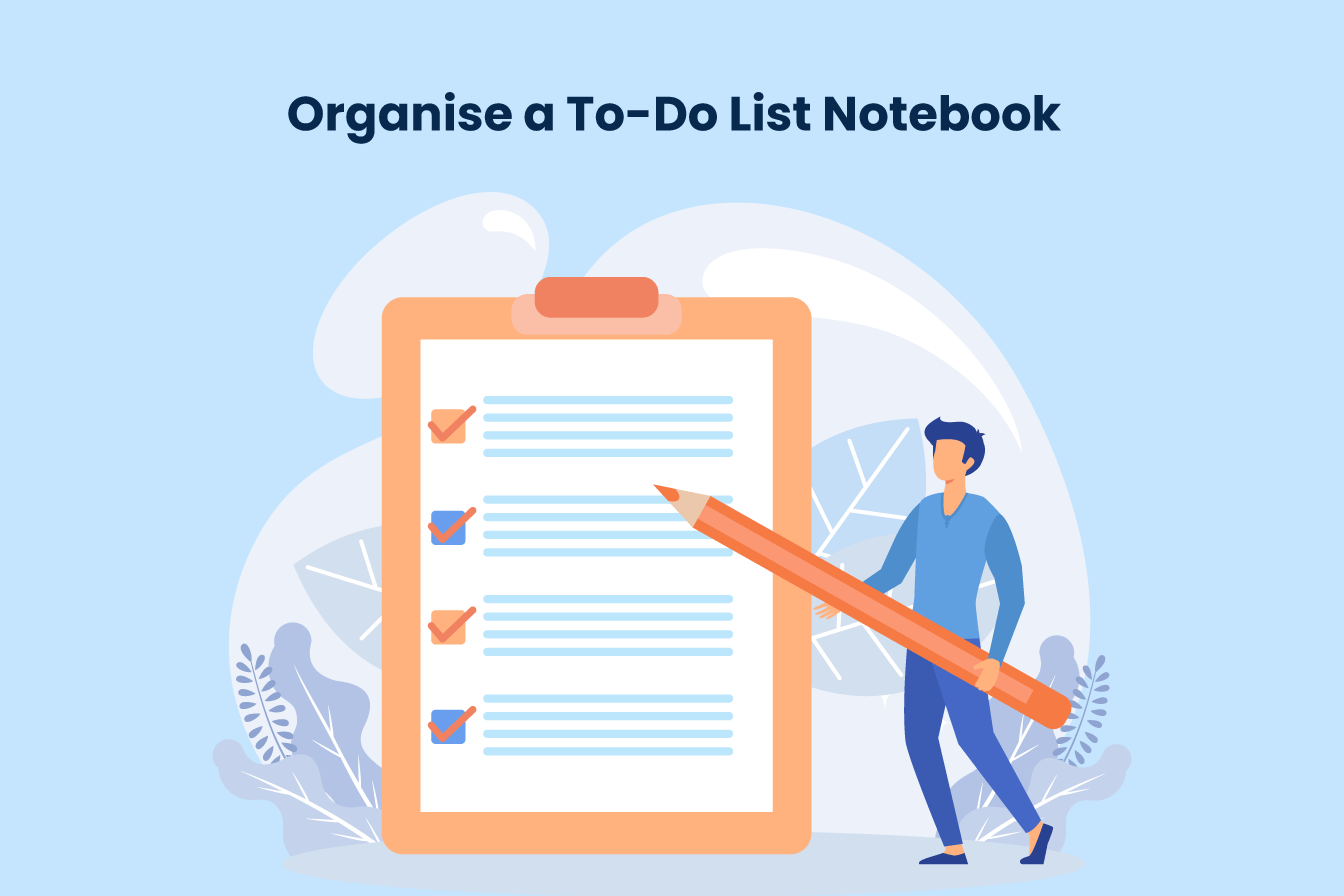
Maintain a to-do list notebook to keep your daily priorities and completed tasks in one place. This is ideal if you are managing multiple responsibilities or balancing work and parenting.
Tips:
-
- Use bullet journaling techniques for clear visual separation.
- Create sections for “Today”, “This Week” and “Later”.
- Add checkboxes next to each task for a sense of accomplishment.
- Consider maintaining a “Future Log” for long-term goals.
Pro Tip: As a parent, you can teach your child to make daily school checklists, and do the same for your professional life too.
Organise a Note-Taking Notebook
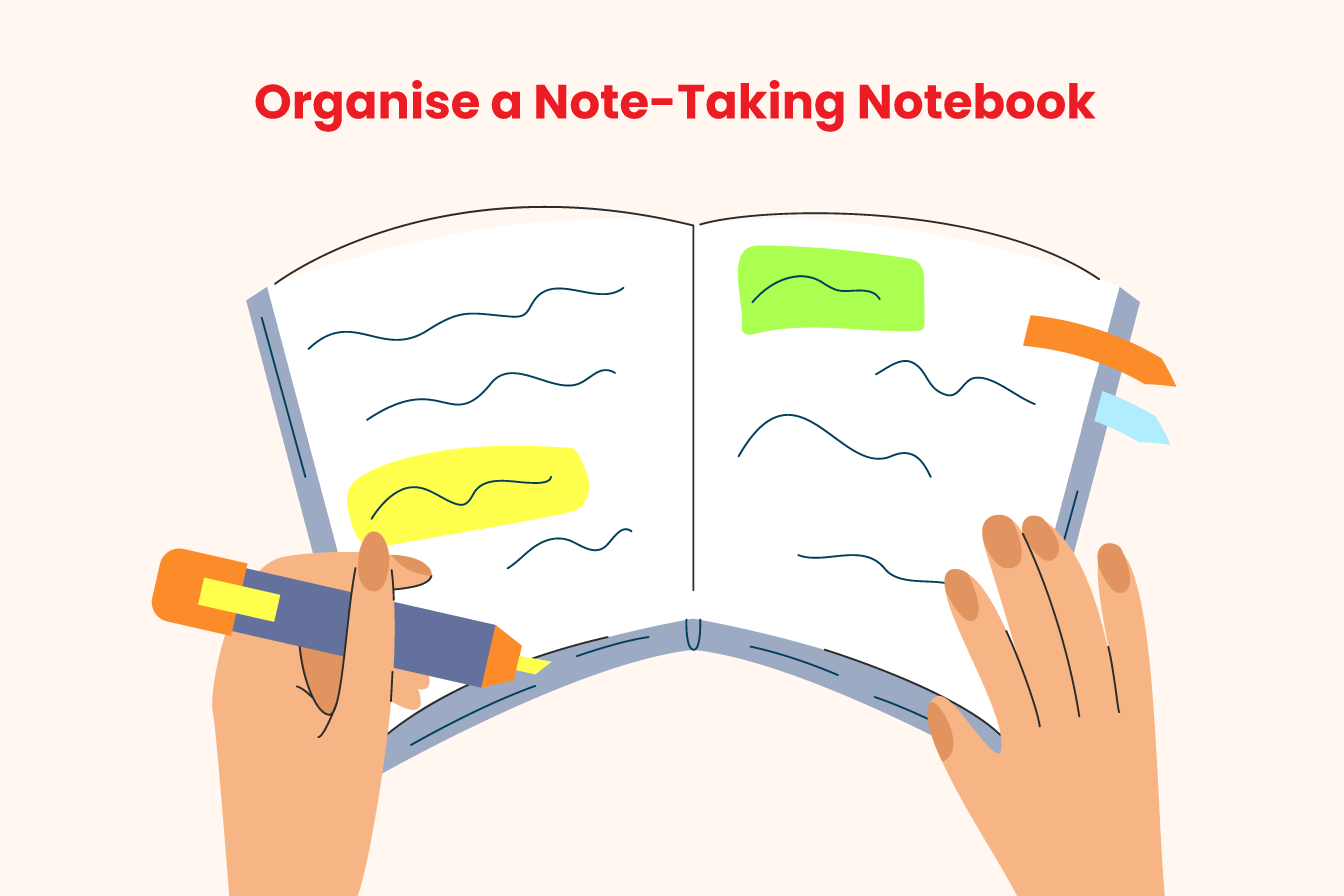
Whether you’re a student navigating school admissions or a professional attending seminars, a note-taking notebook will help you retain important ideas, definitions or summaries.
Tips:
- Divide your page into sections—cue, notes and summary.
- Label each entry with date and topic.
- Use abbreviations for speed and highlight key ideas.
At GIIS KL, our educators encourage strong note-taking habits among students as part of their structured learning methodology, ensuring better recall and exam readiness.
Organise a Notebook for Meetings
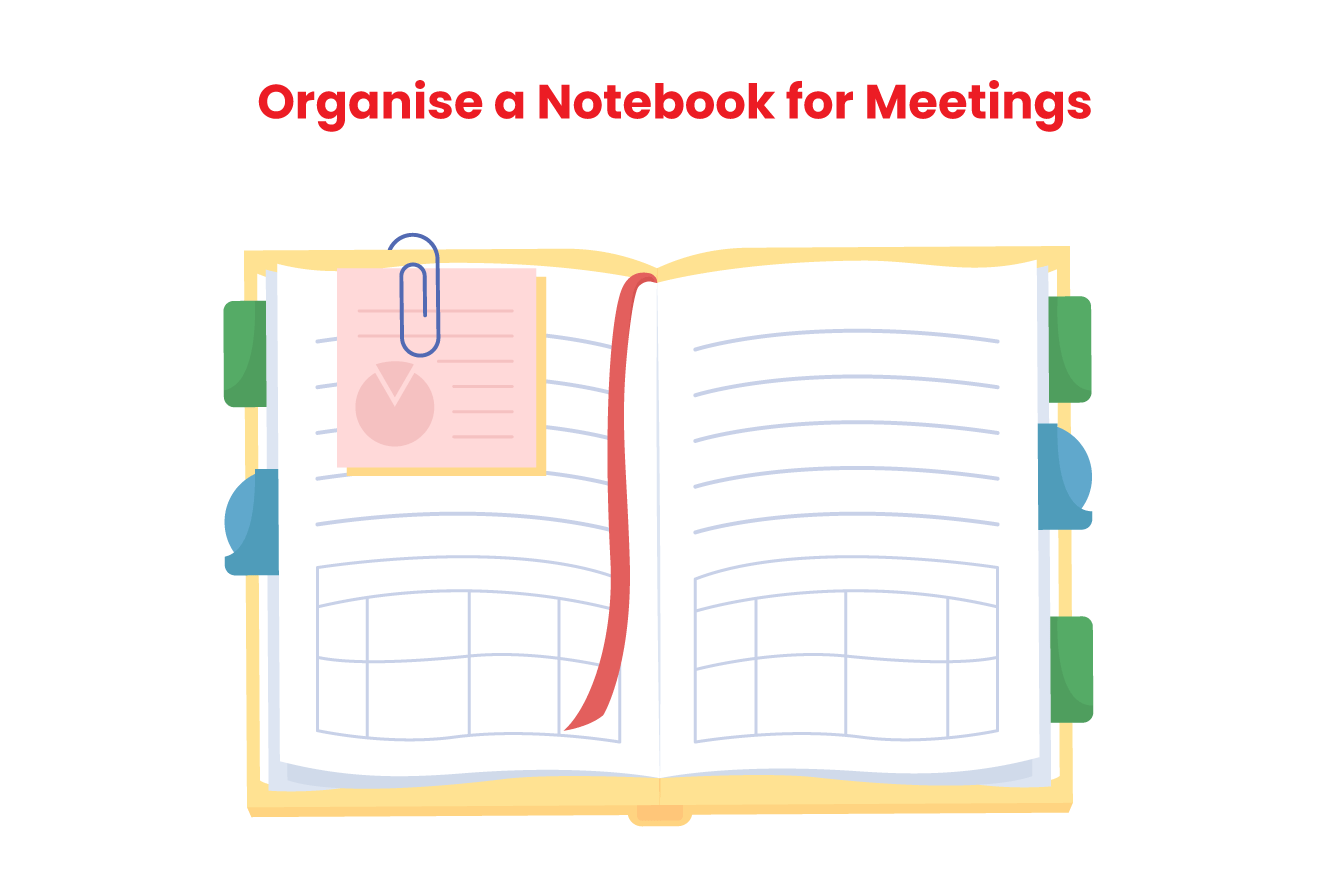
A meeting notebook ensures your conversations and decisions don’t disappear from your mind the moment the meeting ends.
Tips:
- Allot a notebook exclusively for meetings or reserve a section.
- Create a consistent layout: Date → Agenda → Notes → Action Items.
- Use one page per meeting for clarity.
Pro Tip: Involve your child in understanding meeting structures by comparing your work meetings to their school class schedules. It helps build mutual understanding and respect for time.
Organise a Project Notebook
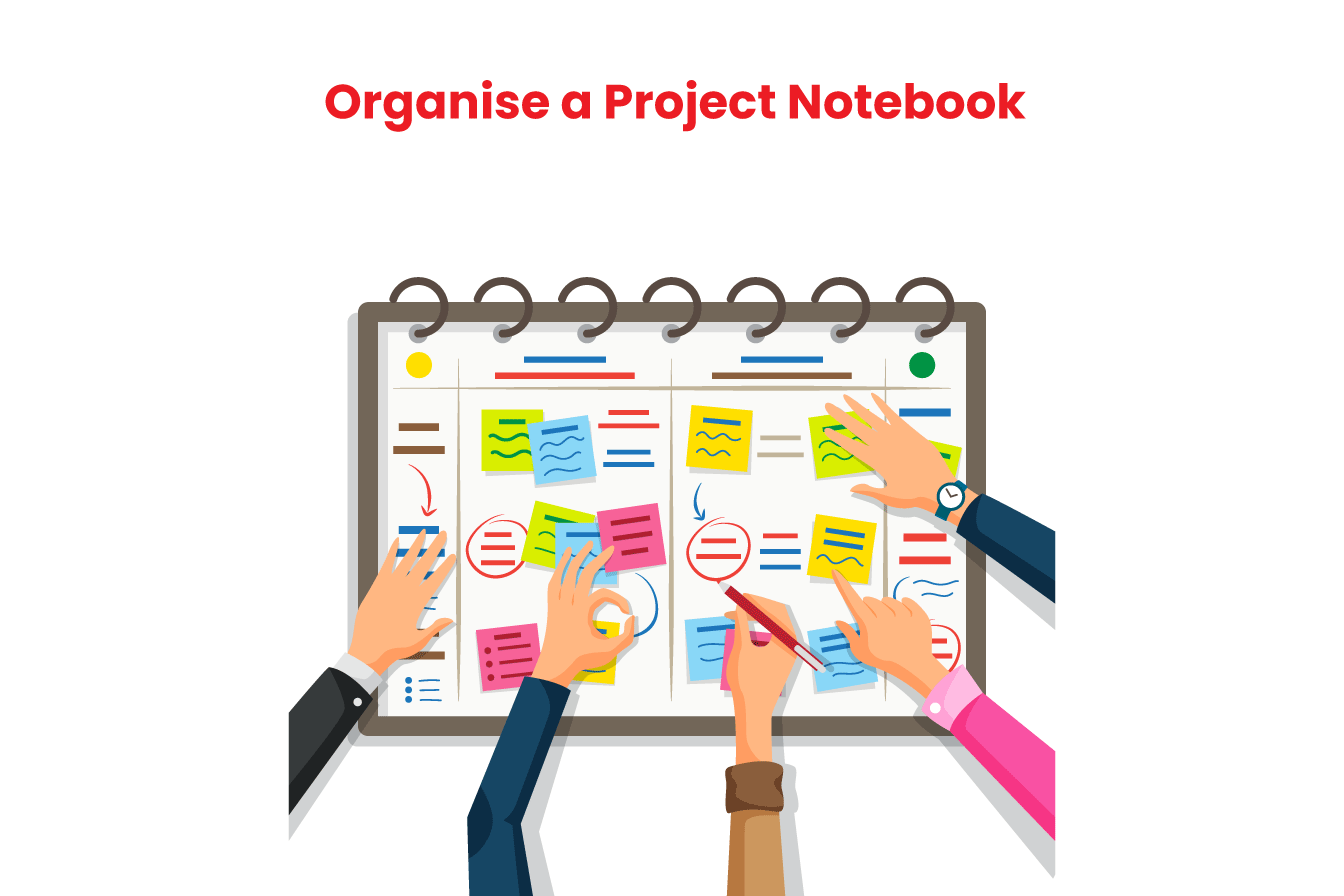
If you are managing multiple projects at work or school, a project notebook will help you keep plans, timelines and notes centralised and organised.
Tips:
- Start each project on a fresh page or section.
- Use colour-coded tabs for each project.
- List key milestones and progress updates chronologically.
Just as students at GIIS Kuala Lumpur track their academic projects for exhibitions or assignments, you too can benefit from visualising their progress.
Organise a Reference Notebook
A reference notebook is a go-to manual that stores essential information related to passwords, templates, email formats and even best practices.
Tips:
- Use alphabetised tabs or a detailed index.
- Keep this notebook neat—it’s your quick-access information hub.
- Reserve it for content you frequently refer to, not day-to-day notes.
If your child has a subject revision notebook, this works the same way—a single source to go back to when needed most.
Learn How to Organise a Notebook for Work
To summarise, here’s how to organise a notebook for work in a way that maximises efficiency:
- Segment your notebook by purpose: to-do, notes, meetings, projects, references.
- Use index pages, tabs or coloured sticky notes.
- Be consistent with your layout and note style.
- Keep it clean and minimal for maximum clarity.
Remember, an organised notebook is a reflection of a prepared mind. It saves time, reduces stress and boosts confidence—whether you’re in the boardroom or supporting your child through school life.
Notebook organisation isn’t just for the hyper-organised—it’s a simple and smart practice that boosts productivity and clarity. With a few easy customisations, your notebook can be transformed from a scribbled mess into a planning powerhouse.
At GIIS Kuala Lumpur, students are introduced to organisational skills early on as part of holistic education. These habits, instilled from a young age, prepare children not just for academic success but for life. Want to give your child the foundation of lifelong skills such as time management and organised thinking? Let your child discover the structured yet nurturing environment at GIIS KL—one of the top-rated schools in Malaysia. Drop us a comment, visit our website or book a campus tour to explore our facilities and talk to our admissions counselor.
Also Read: How to Prepare for Exams: A Complete Guide for Young Learners and Parents