If you are researching future-focused learning models, you have likely encountered the term STEAM education. But many parents still wonder: What is STEAM education? More importantly, what is STEAM education and why is it important for students in primary education and high school today?
In simple terms, STEAM education stands for Science, Technology, Engineering, Arts and Mathematics. It is an interdisciplinary approach where students learn by applying knowledge from multiple subjects to solve real-world problems. Instead of studying science or mathematics in isolation, students combine logic, creativity, innovation and collaboration.
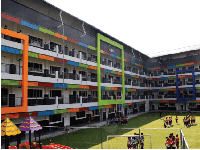
For families exploring international schools in Kuala Lumpur, this approach has become increasingly important. GIIS KL integrates structured academic programmes such as CBSE with experiential STEAM learning—giving students both strong foundations and future-ready skills.
What is STEAM Education in Practice?
So, what is STEAM Education inside the classroom?
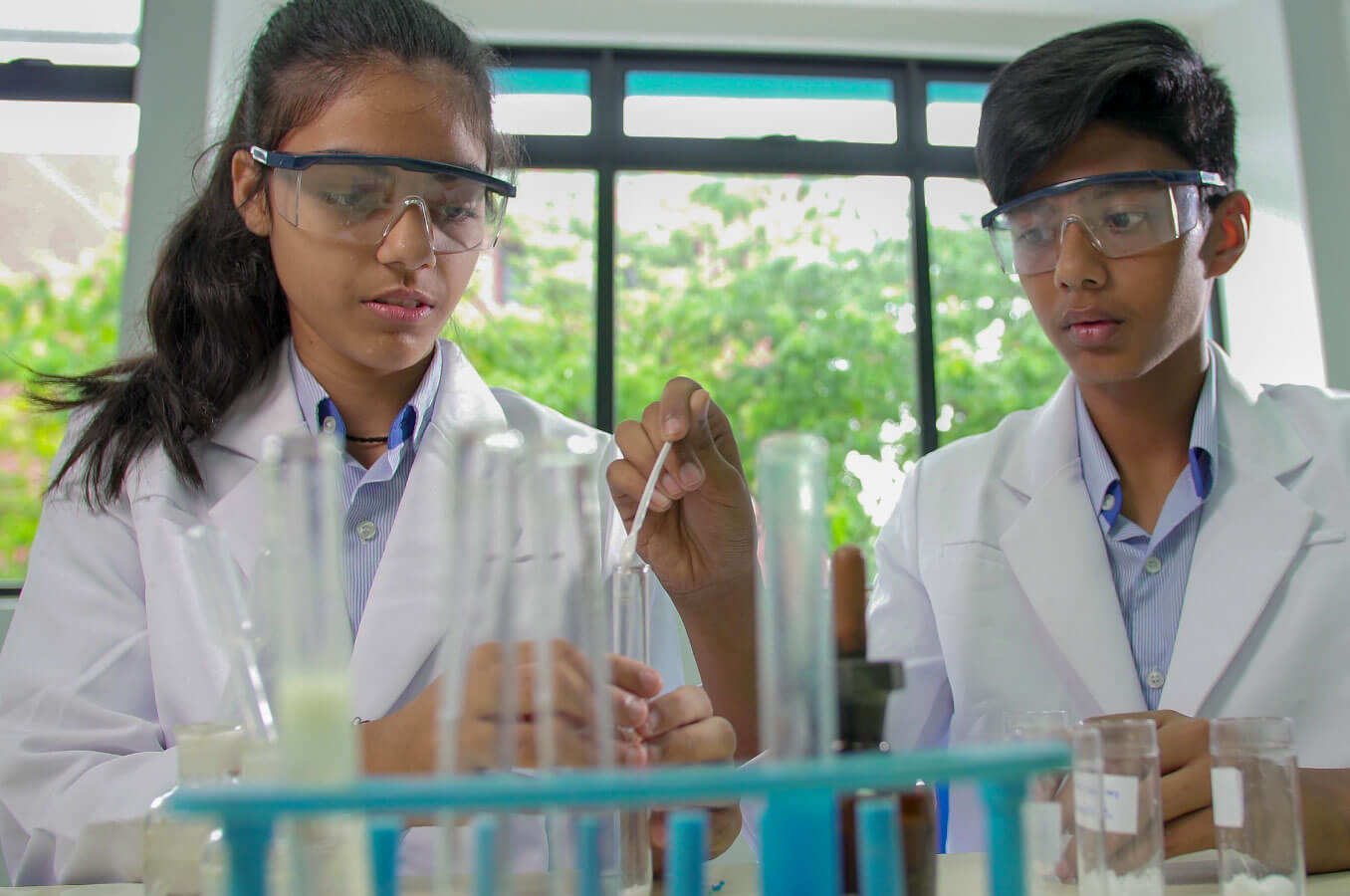
It moves beyond memorisation. Students build, test, design, experiment, present and improve ideas. A STEAM-based lesson could involve:
- Designing a sustainable city model (Science + Engineering + Arts)
- Coding a basic application (Technology + Mathematics)
- Creating a robotic prototype (Engineering + Innovation)
- Presenting findings through storytelling or visual design (Arts + Communication)
At the primary education level, STEAM builds curiosity. In high school, it becomes more analytical and career-oriented, preparing students for global university pathways.
What is STEAM Education and Why is it Important?
When discussing the importance of STEAM education, one key factor stands out: the future workforce demands adaptable thinkers, not just textbook learners.
STEAM education helps students develop:
- Critical thinking
- Creative problem-solving
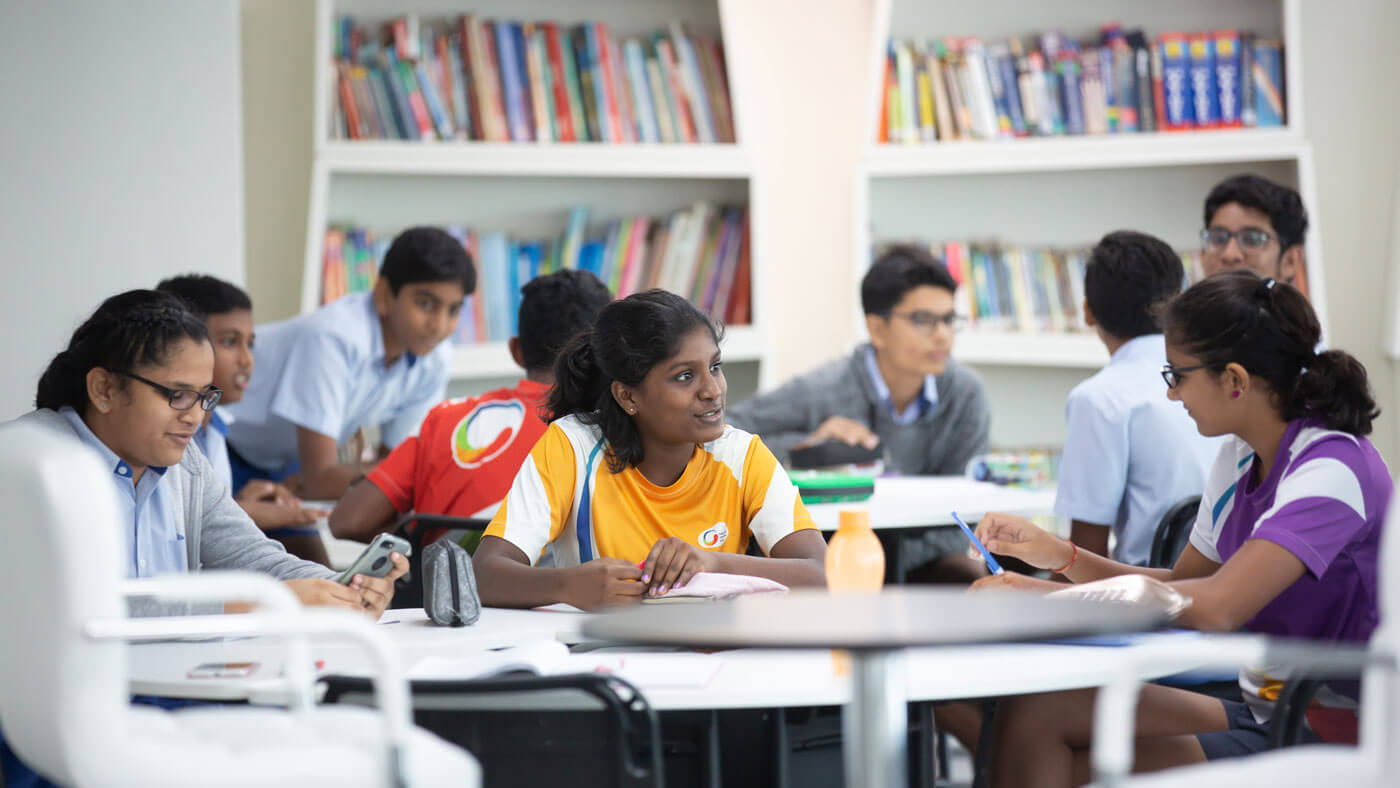
- Collaboration skills
- Digital literacy
- Research ability
- Innovation mindset
For globally mobile families—especially those choosing CBSE abroad—this combination is powerful. CBSE provides academic rigour and continuity, while STEAM adds application and innovation.
At GIIS Kuala Lumpur, this blend supports students in both academics and holistic development.
How STEAM Complements CBSE Abroad
Studying CBSE overseas offers strong benefits—especially for Indian expatriate families. When enhanced with STEAM, those benefits expand further.
1. Seamless Continuity and Transferability
CBSE’s standardised curriculum ensures smooth transitions across countries. STEAM projects provide continuity in applied learning even during relocations.
2. Globally Recognised and Accepted
CBSE certificates are widely accepted worldwide. When paired with STEAM-based portfolios and project work, students present well-rounded university applications.
3. Strong Academic Foundation
CBSE emphasises Mathematics and Science mastery. STEAM transforms theory into practical application, strengthening conceptual clarity.
4. English-Medium Instruction
Most CBSE international schools operate in English, helping students build strong academic communication skills—further enhanced through STEAM presentations and teamwork.
5. Holistic Development
STEAM integrates arts, technology and innovation with academics. Alongside sports and co-curricular activities, students gain leadership and collaboration skills.
6. Cultural Connection and Community
CBSE schools located in countries other than India maintain Indian cultural values while offering diverse peer environments. STEAM projects often encourage multicultural teamwork and global thinking.
7. Cost Advantage
Compared to other international curricula, CBSE is often more affordable. GIIS KL integrates STEAM into the curriculum, families receive both value and global readiness.
A–Z Glossary of STEAM Education Terms
Here is a comprehensive A–Z Glossary to help parents better understand STEAM education:
A – Arts Integration: Combining creative disciplines with technical subjects.
B – Blended Learning: Mixing digital tools with classroom teaching.
C – Critical Thinking: Analysing and evaluating information logically.
D – Design Thinking: A structured method to solve problems creatively.
E – Engineering Process: Planning, building, testing, and improving solutions.
F – Future Skills: Abilities needed for tomorrow’s careers, like adaptability and innovation.
G – Global Competence: Understanding and collaborating across cultures.
H – Hands-On Learning: Learning by doing rather than only reading.
I – Innovation: Turning creative ideas into practical solutions.
J – Job Readiness: Skills that prepare students for future careers.
K – Knowledge Application: Using academic concepts in real-life situations.
L – Logical Reasoning: Thinking systematically to reach conclusions.
M – Maker Mindset: Encouraging experimentation and building prototypes.
N – Numeracy: Practical application of mathematics skills.
O – Observation Skills: Analysing details to form insights.
P – Project-Based Learning: Long-term learning through structured projects.
Q – Questioning Mindset: Encouraging curiosity and enquiry.
R – Robotics: Designing and programming automated machines.
S – Scientific Enquiry: Investigating through experiments and research.
T – Technology Literacy: Understanding and effectively using digital tools.
U – University Preparation: Academic and skill readiness for higher education.
V – Visual Communication: Presenting ideas through diagrams, models, or design.
W – Workplace Skills: Collaboration, leadership, and communication abilities.
Y – Young Innovators: Encouraging students to think creatively from an early age.
Z – Zero-Fear Learning Environment: A supportive space where students feel safe to experiment and fail.
STEAM Across Primary Education and High School
In primary education, STEAM nurtures curiosity and exploration. Students experiment, build, and ask questions.
In high school, STEAM becomes more advanced—covering robotics, research projects, technology applications and innovation challenges. This directly supports university pathways in STEM and creative industries.
Final Thoughts
So, what is STEAM education? It is more than a teaching method—it is a mindset that prepares students for an evolving world.
When combined with the structure and global recognition of CBSE, STEAM provides balance: academic strength plus practical innovation.
If you are exploring international schools in Kuala Lumpur, consider how institutions like GIIS KL integrate STEAM into both primary education and high school programmes based on the CBSE and Cambridge curricula.
Discover how GIIS Kuala Lumpur combines CBSE excellence with future-ready STEAM education. Schedule a campus visit or speak to an admissions counsellor today to learn how your child can thrive in a competitive global environment.